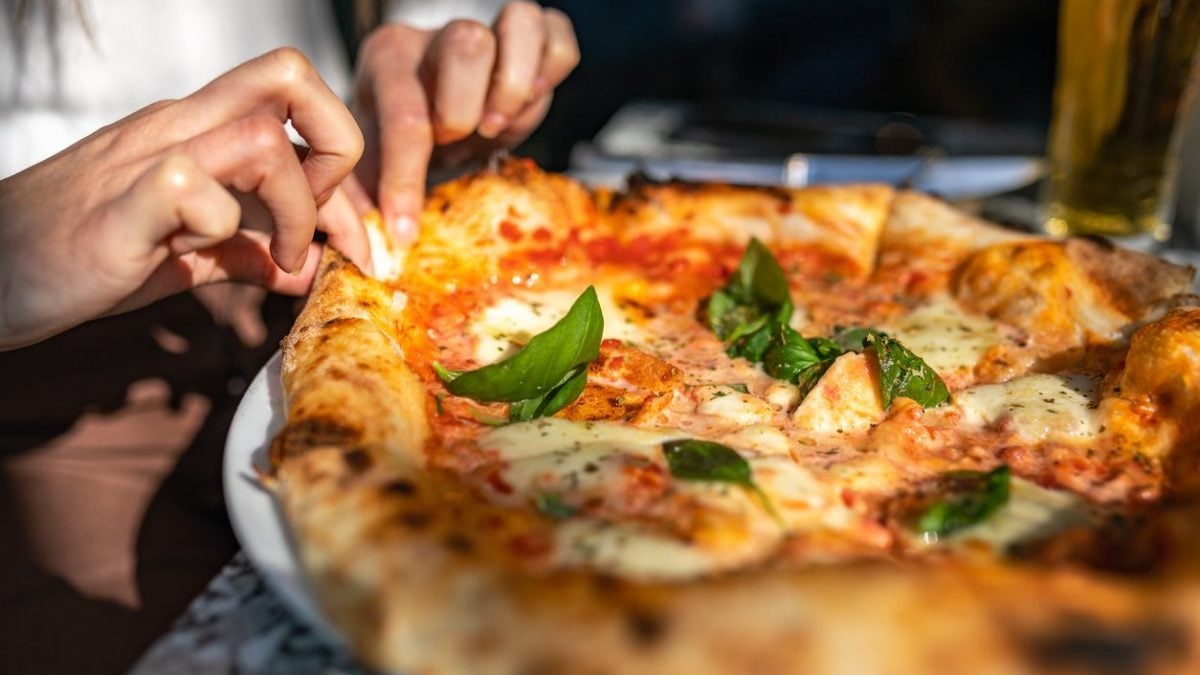
It's become increasingly popular lately, perhaps also due to the unjustified phobia of yeast, so let's try to understand once and for all what spontaneous dough fermentation is. It's a fascinating technique and practically inapplicable at a professional level, but a lot of fun to try at home, even if it's not always recommended or safe. This is because when we talk about spontaneous fermentation, we're referring to a process in which the dough rises thanks to the action of yeasts and bacteria present in the environment, therefore everything in the air and in the flour.
Spontaneous fermentation occurs when we use neither brewer's yeast nor sourdough starter in the dough. But how does our pizza rise? This process occurs through the proliferation of native microorganisms, which settle in the dough and trigger lactic and acetic fermentation. Unlike controlled leavening with external agents, spontaneous fermentation follows its own pace, influenced by factors such as temperature, humidity, and the quality of the raw materials. For this very reason, it can't be done in a pizzeria, and only a very few pizza chefs, all very skilled and experienced in the field, manage to reproduce these techniques on a large scale.
Discovering Spontaneous Fermentation
In a certain sense, we can compare spontaneous fermentation to the ancestral method of winemaking. It is probably the first leavening method discovered by man, so we can see it as a return to the origins of breadmaking. A process that requires passion, knowledge, and respect for nature's rhythms, but which can bring great satisfaction to those who practice it. Carrying out spontaneous fermentation is difficult because you create a veritable ecosystem in which different species of yeasts and bacteria coexist, interacting with each other and with the dough's ingredients, giving rise to unique and unrepeatable flavors, but not necessarily pleasant ones. This technique allows you to create a world, but that doesn't mean you'll then like the inhabitants of this world. Just like with natural wine: what you smell isn't always what you want to taste. However, it is a method that is becoming popular again among bread and pizza enthusiasts, thanks to its aromatic characteristics and the digestibility it gives to the final products. This doesn't mean it's good news: spontaneous fermentation can also be dangerous to your health, because allowing bacterial proliferation in shared environments is not without risks and shouldn't be taken lightly.

Why is it so complex? The difficulty lies in the initial "starter": unlike brewer's yeast, which contains a single yeast species (Saccharomyces cerevisiae), spontaneous fermentation involves an indefinite variety of microorganisms, including several species of yeast and lactic acid bacteria. These microorganisms produce organic acids, such as lactic acid and acetic acid, which help modify the pH of the dough, improving its shelf life and giving bread and pizza a slightly acidic and aromatic flavor. It is a slower and more delicate process than leavening with brewer's yeast. It requires time, care, and a good deal of experience to best manage the dough and achieve optimal results.
How Spontaneous Fermentation is Done
According to Consultapizza, "spontaneously fermented dough is born from the natural contamination of a mixture of water and flour with bacteria and yeasts free in the atmosphere, therefore with native endogenous and exogenous yeasts and bacteria, which establish themselves in the dough through very specific methods." These methods include "water roux" or tang zhong, an ancient Chinese method; the hydrolysis of cracked wheat starches; the pregelatinization of seeds; rye flour; and water and fruit fermentations. They are all effective, but let's look at them in detail.
1. The Tang Zhong Method

Tang zhong, also known as "water roux," is a method of Asian origin, perfected and popularized in the West by food blogger Yvonne Chen. Its popularity has grown exponentially in recent years, thanks to its ability to improve the texture and shelf life of homemade bread. It is a pre-dough made from water and flour, cooked at a temperature of 150°F/65°C. This cooking transforms the starch in the flour into a gel that, once cooled and added to the main dough, gives the bread extraordinary softness and elasticity.
It's not very difficult to make, but you have to be extremely precise. The ideal ratio is 1:5, that is, 1 gram of 00 flour to 5 grams of water. Flour and water are mixed and heated over low heat until they reach a temperature of 150°F/65°C. At this point, the mixture turns into a dense, glossy gel. It can also be made with wholemeal flours or ancient grains, using a 1:5 ratio of cracked wheat to water. In this case, the cooking temperature is 195°F/90°C, to obtain a gel that can be stored in the refrigerator for a week and used as an addition to the main dough, to improve its leavening and structure. The results give a more airy texture, greater durability, and a dough that is easier to shape.
2. The Hydrolysis of Starches

Hydrolysis is a transformation process during which starch, a complex carbohydrate, is broken down into simpler molecules, such as amylopectin, amylose, and especially maltose. This chemical reaction produces glucose monomers, a sign that hydrolysis has occurred successfully. It is done by taking cracked wheat flour, adding salt and almost boiling water (it should be around 195-203°F/90-95°C) . Once the chemical reaction has taken place, the dough must rest for a period of time that can vary between 18 and 20 hours, at a temperature of 68-75°F/20-24°C. During this rest, the dough will be enriched with complex aromas and flavors, thanks to the action of the yeasts and bacteria present in the environment. After the resting time, salt and the remaining flour are added to complete the recipe. The dough is then kneaded, folded in threes to encourage the development of the gluten and the incorporation of air, and left to rest for another 12 hours. Finally, the loaves are cut and left to rise until the cycle is complete. The basic chemical principle is identical to water roux, but this one is made hot, the other cold.
3. Pregelatinization of Seeds

Flaxseeds, chia seeds, wheat seeds, barley seeds, or spelt seeds are germinated in pre-gelatinized water. After about 48 hours, the seeds will have begun to germinate, and the water will have become an ideal environment for spontaneous fermentation. At this point, microorganisms present in the air—native yeasts and bacteria—come into play, feeding on the sugars present in the seeds and water, triggering natural fermentation. This process transforms the seeds and water into a true "natural yeast," rich in enzymes and nutrients.
The technique is very complex: to achieve good cross-fermentation and a dough rich in flavor, it is essential to ferment the dough en masse in a tub at a temperature of 80-82°F/27-28°C. During this phase, "folds" are made, namely triple and double inverted folds, to promote gluten development and the incorporation of oxygen, essential for the reproduction of microorganisms. Once the dough has doubled in volume, the loaves can be cut, which are left to rise for another 24 hours at a temperature of 75°F/24°C. This slow, natural leavening process allows the bread to develop an intense and complex flavor, with a crunchy crust and a soft, airy crumb.
4. Fermented Water

Fermented water is made with water, fruit (preferably apples, but other fruits like grapes, plums, or persimmons are also acceptable), and honey (or sugar). The fruit is washed, chopped, and placed in a bottle with water and honey. The bottle is shaken and left to steep for 5-7 days at room temperature, making sure to open it twice a day to release the gases and shake it. The water is ready when it darkens, bubbles form, and the fruit floats. At that point, it should be filtered through a sieve and stored in a glass jar in the refrigerator. The fermented water should be refreshed about once a week by adding water, apple, and honey, shaking, and letting it steep for two days.
It can be used in two ways: as a base for making a sourdough starter (mixing equal parts fermented water and flour and letting it rise until doubled in size) or by adding it directly to the dough (following the doses for brewer's yeast and keeping in mind that it will take longer to rise). It is suitable for any leavened preparation, both sweet and savory, and imparts a slightly fruity flavor.
Spontaneous Fermentation Vs. Sourdough Starter Vs. Brewer's Yeast
The benefits of this type of dough are limited to the flavor, with complex aromas and lactic and acidic notes. It's an extremely difficult dough to manage, and is only made professionally very few pizza chefs and bakers. It's highly inadvisable to make it in a pizzeria, and if you see "spontaneously leavened dough" on the menu, you're likely dealing with a scam. So keep your eyes peeled.
Cultures prepared in unsuitable environments and managed by professionals with no training in microbiology are inadvisable. The nature of these doughs makes the entire bread-making process "dangerous" because it's uncontrolled, creating health risks. This trend is emerging due to the yeast-free business bubble and the yeast hype we're increasingly reading about online. Moreover, if we take three perfectly made doughs—one spontaneously fermented, one with sourdough starter, and one with brewer's yeast—the differences aren't that obvious.
Spontaneous fermentation is a slower and more delicate process than leavening with brewer's yeast or sourdough starter. It requires time, care, and a good deal of experience to master the dough and achieve optimal results. It's not always recommended, and regardless, it shouldn't be "sold" as "yeast-free" pizza or bread. Not only because yeast, poor thing, shouldn't be demonized, but above all because yeast is present in this case too; it's just a different type of yeast than the one we're used to associating with our diet.
;Resize,width=767;)
