
Starbucks China has officially ended its open-door seating policy by rolling out a mandatory purchase requirement across its roughly 8,000 mainland coffeehouses.
Effective Thursday, October 22, 2026, the coffee giant placed uniform table signs reading "Starbucks business space, please make a purchase to be seated" in stores nationwide. The sweeping operational change marks the first time in the company's 27-year history in China that patrons must buy food or a beverage before taking a table. The move represents a major departure from Starbucks' historic global "Third Place" philosophy, which previously allowed visitors to sit in cafe dining rooms and use restrooms without any obligation to spend money.
Curbing Seat Congestion Amid Intense Domestic Coffee Competition
The decision directly addresses persistent store congestion caused by non-paying visitors using dining areas as free remote workspaces, study halls, and social lounges.
Prior to the policy change, retail estimates indicated that non-purchasing visitors occupied up to one-third of cafe seats during peak business hours, frequently leaving paying customers unable to find empty tables. The tightening also follows steep commercial pressures from fast-growing, value-focused domestic competitors such as Luckin Coffee. To reinforce its premium positioning alongside the new rule, Starbucks announced a simultaneous investment of over 300 million yuan (approximately $44.9 million) to upgrade cafe interiors, seating ergonomics, and store facilities across China.
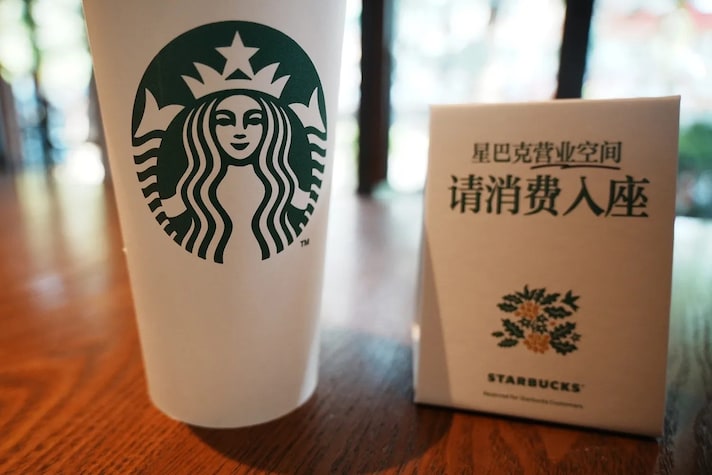
Enforcement Guidelines Exceptions And Social Media Reaction
Under corporate guidelines, store baristas are instructed to communicate the policy courteously rather than aggressively confronting non-paying visitors.
Because Chinese consumer protection regulations prohibit businesses from enforcing mandatory minimum spend amounts, Starbucks has not imposed a specific purchase price floor or a universal seating time limit. Additionally, the company established clear humanitarian exemptions across all domestic stores:
- Assistance And Shelter: Pregnant women, individuals with mobility impairments, and pedestrians seeking shelter from severe rain or adverse weather may rest without ordering.
- Frontline Community Workers: Food delivery couriers and on-duty security personnel are permitted to sit and recharge inside store dining rooms without making a purchase.
The rollout immediately sparked widespread debate across Chinese social media platforms like Weibo, where discussions centered on barista reminder frequencies and the changing nature of public commercial spaces.
Nevertheless, recent domestic consumer sentiment surveys show that roughly 70 percent of respondents support the restriction to protect table availability for paying patrons.

