
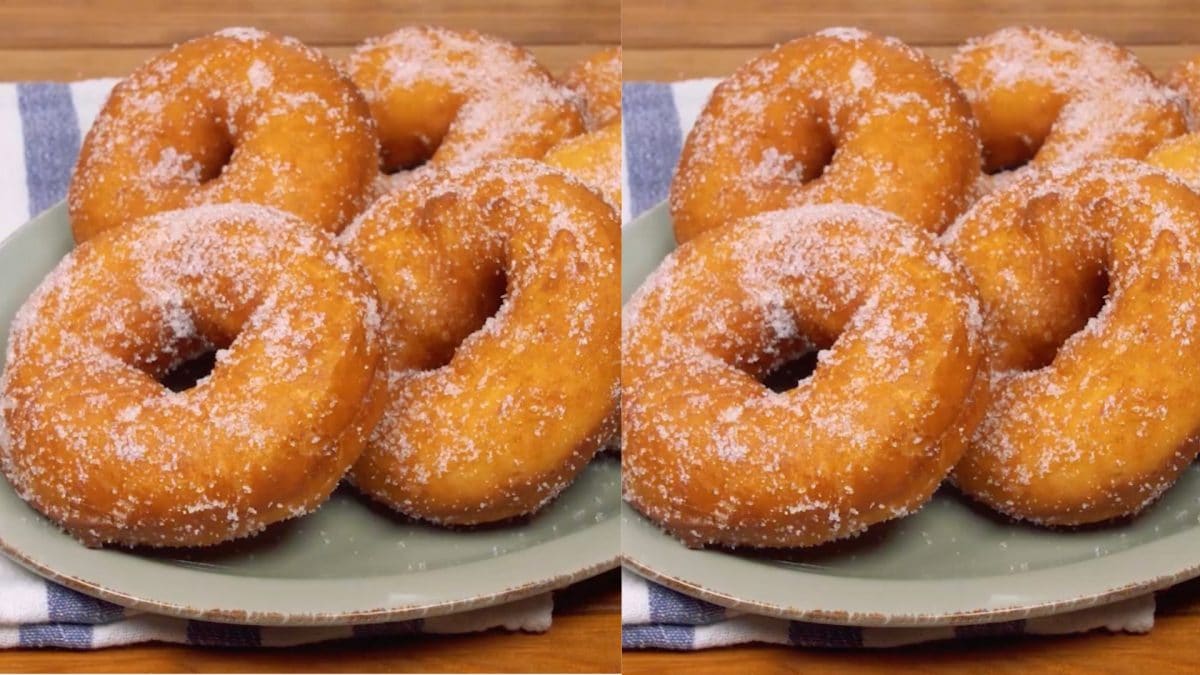
Potato doughnuts are one of those old-school treats that will remain delicious regardless of the era. Soft mashed potatoes melt into the dough, giving these doughnuts a tender crumb and a subtle sweetness that feels richer than a standard yeast dough. They’re perfect for slow weekends, celebrations, or anytime comfort baking feels necessary. If you love classic doughnuts, this is the kind of recipe that will earn a permanent place in your notebook.
What Are Potato Doughnuts?
Potato doughnuts are yeast-raised doughnuts made with boiled, mashed potatoes folded directly into the dough. The potatoes add moisture and structure, resulting in doughnuts that stay soft for longer and fry up evenly without drying out. This style of doughnut has roots in European home baking, where potatoes were often used to enrich bread dough. The result is a subtly sweet doughnut that feels both nostalgic.
Pro Tips for Perfect Potato Doughnuts
- Make sure the potatoes are completely cooled before mashing them into the dough.
- Use warm, not hot, milk when activating the yeast so it wakes up gently without being damaged.
- Don’t rush the proofing stages, as a well-risen dough is the secret to airy doughnuts.
- Fry at a steady medium temperature so the doughnuts cook through without browning too quickly on the outside.
Frequently Asked Questions
Can I use instant yeast instead of fresh yeast?
Yes, instant yeast can be used if fresh yeast isn’t available. Use about 2g of instant yeast to replace the 5g of fresh yeast. Mix it directly with the flour instead of dissolving it in milk first. The rise time may be slightly shorter, so keep an eye on the dough.
Why do my potato doughnuts feel heavy after frying?
Heavy doughnuts are usually the result of under-proofed dough or oil that’s too cool. The dough needs enough time to rise so it can trap air before frying. If the oil isn’t hot enough, the doughnuts absorb excess oil instead of puffing up.
Can I bake these instead of frying?
These doughnuts are designed for frying, which gives them their signature texture. Baking will work, but the result will be more like soft bread rolls than classic doughnuts. If baking, brush them with melted butter before and after baking to add richness.
What can I coat or serve these doughnuts with?
You can also dust them with powdered sugar or drizzle them with honey glaze. For something more unique, serve them with chocolate sauce or fruit preserves on the side. Their mild sweetness pairs well with almost any topping.
How to Store Potato Doughnuts
You can store leftover doughnuts at room temperature for up to 2 days. If you want them to last longer, refrigeration is possible, but it may slightly dry them out. Freshly fried is best, but reheating helps revive them nicely. You can also freeze them once completely cooled.
Ingredients
How to Make Potato Doughnuts

In a bowl, combine milk, yeast, and flour. Stir until smooth and lump-free, then cover the bowl and let it rest in a warm place for 1 hour.
In a bowl, combine milk, yeast, and flour. Stir until smooth and lump-free, then cover the bowl and let it rest in a warm place for 1 hour.

Mash the boiled potatoes, then add the softened butter, egg, sugar, and honey, and mix.
Mash the boiled potatoes, then add the softened butter, egg, sugar, and honey, and mix.

Add the yeast mixture and flour, and use dough hooks to knead. Brush with melted butter, cover, and let it rise until doubled in size.
Add the yeast mixture and flour, and use dough hooks to knead. Brush with melted butter, cover, and let it rise until doubled in size.

Divide the dough into 6 portions and shape each one into a doughnut. Place them on a generously floured board and let them rest for another 30 minutes.
Divide the dough into 6 portions and shape each one into a doughnut. Place them on a generously floured board and let them rest for another 30 minutes.

Heat oil in a deep pan over medium heat. Fry the doughnuts for 3-4 minutes, turning them so they cook evenly on both sides.
Heat oil in a deep pan over medium heat. Fry the doughnuts for 3-4 minutes, turning them so they cook evenly on both sides.

Once golden, remove and drain briefly before serving. Finish with sugar or enjoy them just as they are.
Once golden, remove and drain briefly before serving. Finish with sugar or enjoy them just as they are.
;Resize,width=767;)
