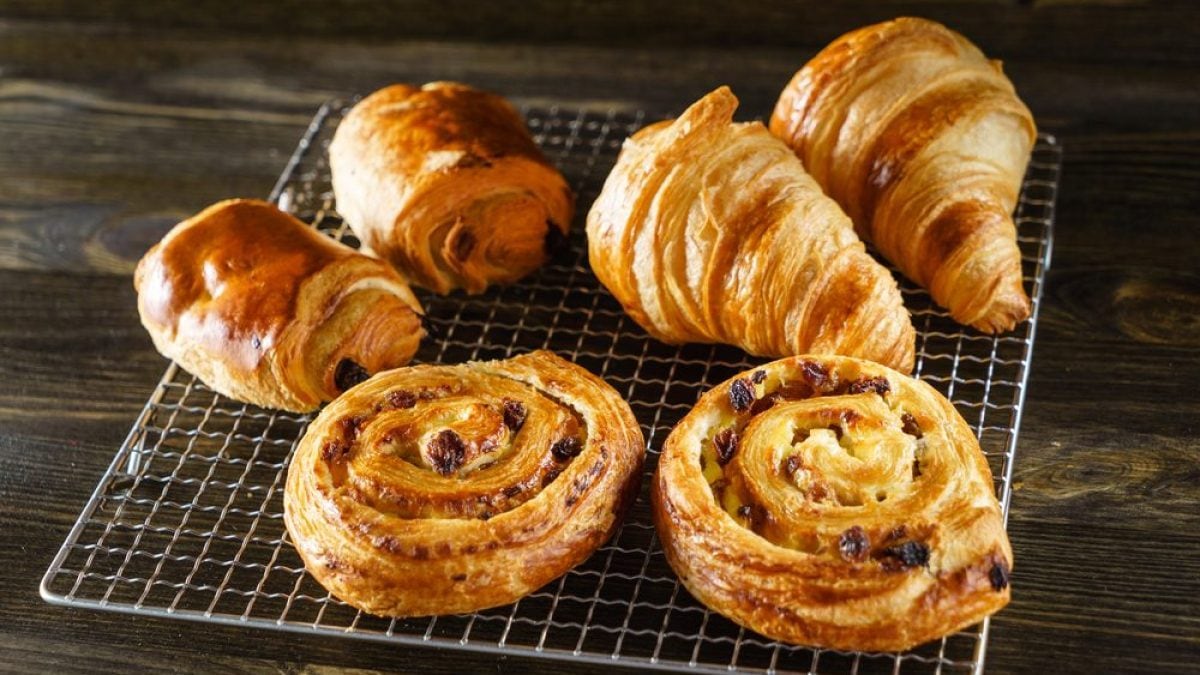
From the perfectly flaky pastry of French croissants to the cinnamon-scented spirals of Northern Europe, from hybrid desserts to contemporary creations: sweet pastries are a miniature theater of butter, sugar, and patience. Celebrating their diversity is TasteAtlas, the international platform dedicated to traditional gastronomic specialties, which has compiled a ranking of the world's best Viennoiseries based on the opinions of its community.
What, Exactly, is a Viennoiserie?
The term viennoiserie derives from the French and literally means "Viennese-style products." The etymology, in fact, refers to Vienna, the capital of Austria, where these preparations originate: it was precisely in the Habsburg city that, between the 17th and 19th centuries, a tradition of leavened dough enriched with butter and worked with more refined techniques than common bread developed.
Their diffusion in France is linked to a specific historical moment: in 1839, the Austrian entrepreneur August Zang opened a "Viennese" bakery in Paris, introducing specialties such as the kipferl, the ancestor of the croissant. French pastry chefs reworked these recipes, perfecting them with the use of lamination and transforming them into the iconic products we know today.
Over time, the term viennoiserie has become a label identifying a very specific category: preparations halfway between bread and pastry, made with leavened dough enriched with butter, eggs, milk, and sugar. The result is a unique texture, made of contrasts between a crumbly exterior and a soft interior, where technique plays as fundamental a role as the ingredients. Croissants, brioches, pain au chocolat, and many other specialties belong to this universe, which combines Central European tradition and French savoir-faire in one of the most beloved expressions of international breakfast.
From the buttery precision of French Viennese pastries to the richer and spicier preparations of Northern Europe, to the softer and more indulgent versions from our very own bakeries: the ranking reveals a world of diverse doughs, aromas, and traditions. What emerges is a common thread of technique, leavening, and simple ingredients transformed into small, everyday masterpieces, capable of conquering cultures and palates in every corner of the planet.
France emerges as the undisputed leader, with numerous specialties at the top of the list: croissants, pain au chocolat, brioche, and chouquettes tell the story of a refined and deeply rooted pastry-making tradition.
Alongside the great European classics, there is also room for international interpretations and modern creations such as the cruffin, a sign of a constantly evolving sweet universe, where technique and creativity continue to intertwine layer after layer.
1. Croissant (France)
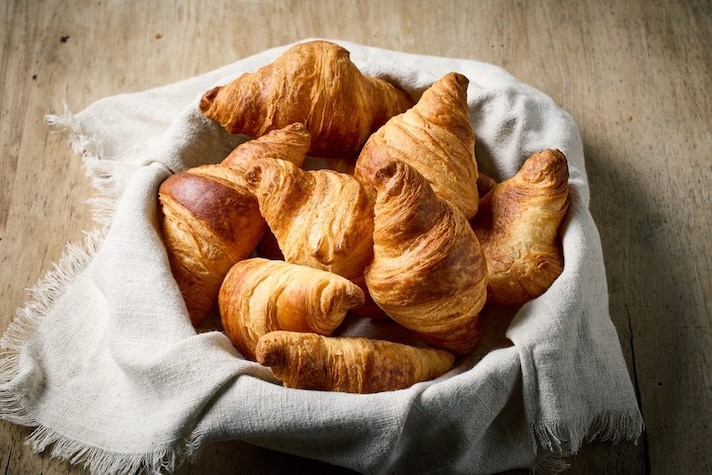
Golden, light, layered like a miniature edible architecture: the croissant is the epitome of Viennese cuisine. Made with leavened dough and high-quality butter, it should have a crisp crust and a soft, slightly springy interior. The aroma, when perfectly made, is half the experience.
2. Kanelbulle (Sweden)
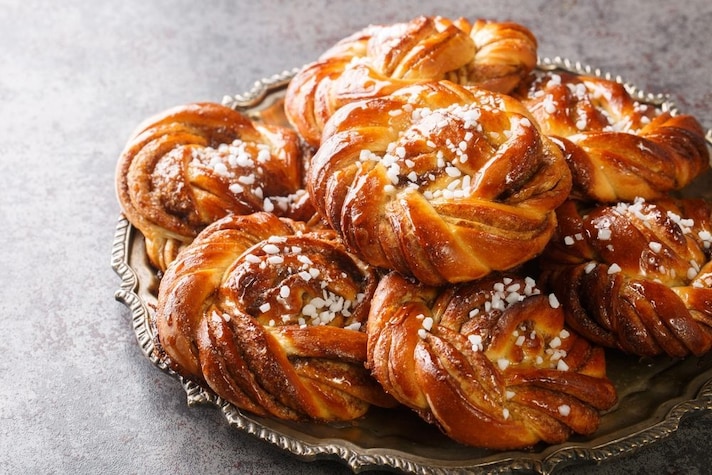
A symbol of Swedish fika, the kanelbulle is a soft and fragrant spiral, enriched with cinnamon and cardamom. A final touch of granulated sugar adds a crunchy note that contrasts with the soft, buttery dough.
3. Franzbrötchen (Germany)
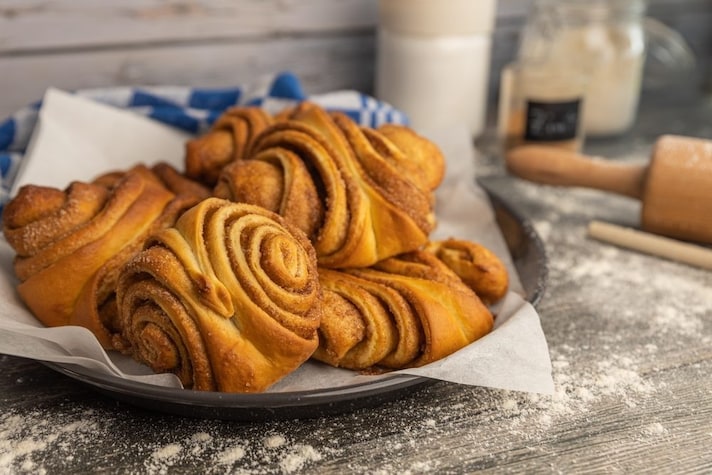
Originating in Hamburg, this dessert combines the structure of a croissant with the aromatic intensity of cinnamon. The Franzbrötchen is flattened and lightly caramelized, with a rich flavor and a texture that alternates between softness and light crunchiness.
4. Kouign-Amann (France)
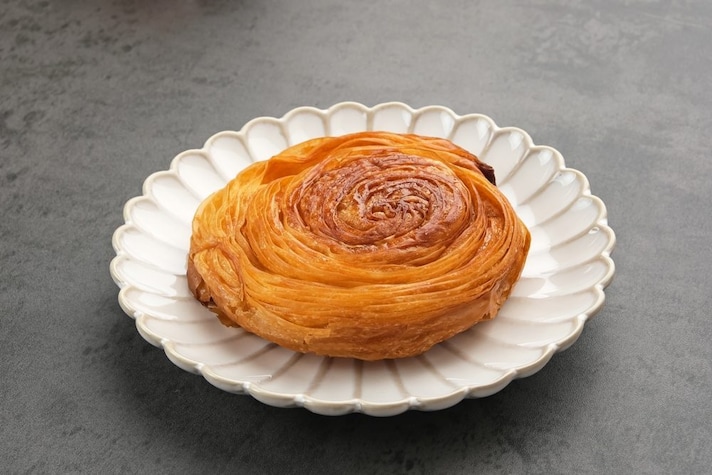
From Brittany comes one of the richest preparations: kouign-amann. Layers of pastry, butter, and sugar melt during baking, creating a crispy, caramelized surface, while the inside remains soft and almost melt-in-the-mouth.
5. Cinnamon Rolls (North America)
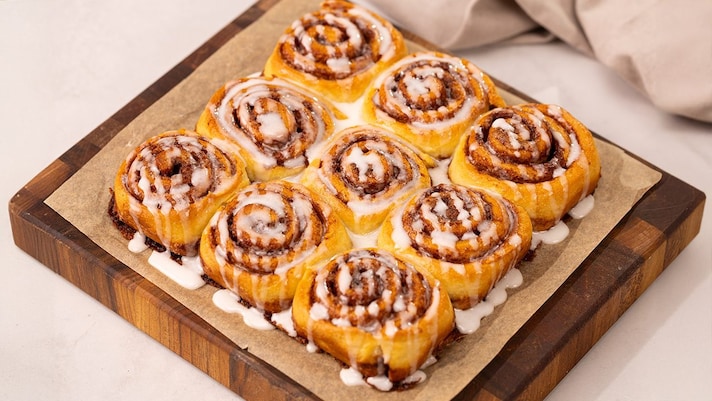
Larger, fluffier, and decidedly more indulgent than their European counterparts, American cinnamon rolls are often topped with an irresistible sugary glaze. A truly sweet and inviting cloud, perfect for indulgent breakfasts.
6. Pain au Chocolat (France)
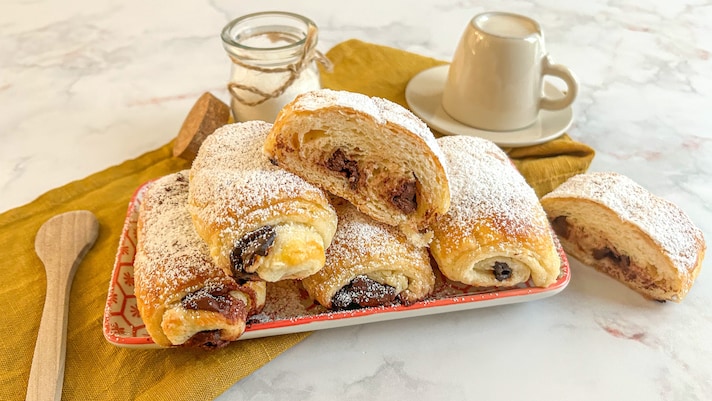
Elegant in its simplicity, pain au chocolat contains one or two sticks of dark chocolate, wrapped in a flaky, buttery croissant – like pastry. Popular throughout France and a staple of boulangerie breakfasts, it's prized for its balance of sweetness and the bitter notes of cocoa, making it less cloying than other baked goods.
7. Danish Pastry – Wienerbrød (Denmark)
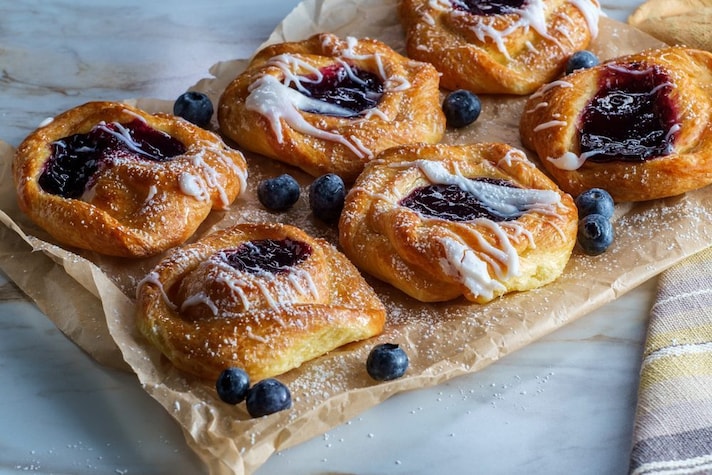
Danish pastry is famous for its versatility: twists, spirals, and geometric shapes enclose creams, jams, or fruit, while the laminated process gives it a crumbly, buttery texture, with thin layers that delicately flake when bitten.
8. Medialunas (Argentina)
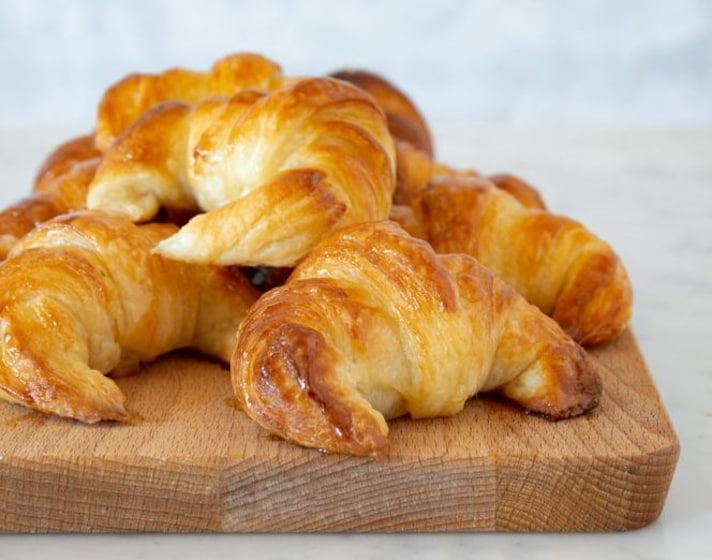
Argentine's version of the croissant, called medialunas, are smaller, sweeter, and often glazed with a light syrup. Soft and fragrant, they are a staple of Argentine breakfasts, traditionally accompanied by coffee or mate. They come in two main varieties: de manteca (softer and sweeter) and de grasa (lighter and slightly salty), both beloved for their delicate texture and enveloping flavor.
9. Brioche (France)
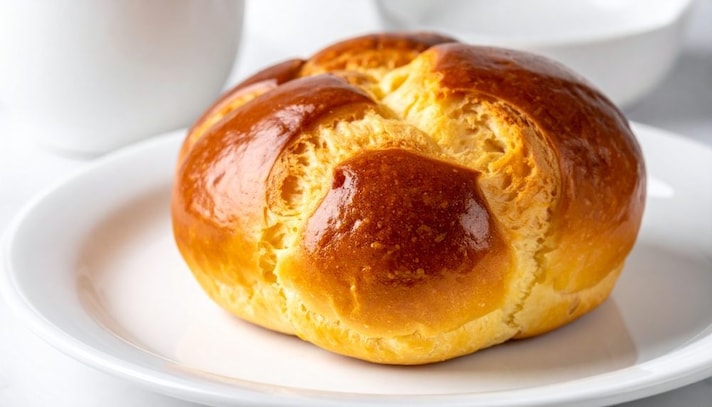
Soft and rich, French brioche is characterized by a high percentage of butter and eggs. The result is a velvety texture and a delicately sweet flavor, perfect both plain and filled. In France, it is enjoyed for breakfast or as a snack, often accompanied by jams or spreads.
10. Chouquette (France)
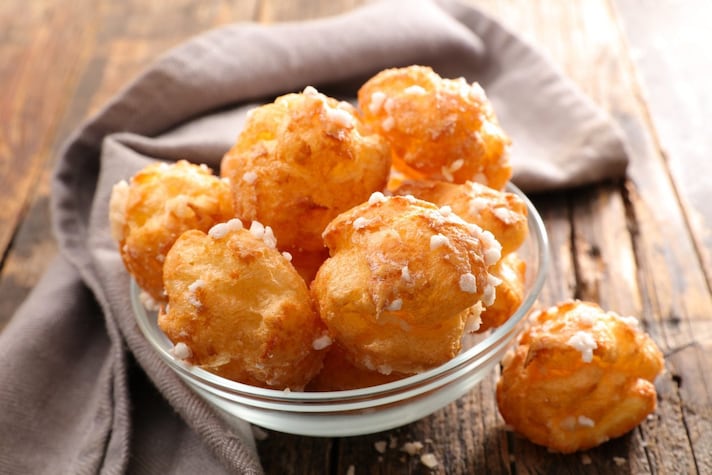
Small, light and airy puffs, dusted with pearl sugar that retains its crunch while baking. Simple yet irresistible, chouquettes are a typical French bakery snack, often sold in bags to share… or simply enjoy on their own.
11. Chaussons aux Pommes (France)
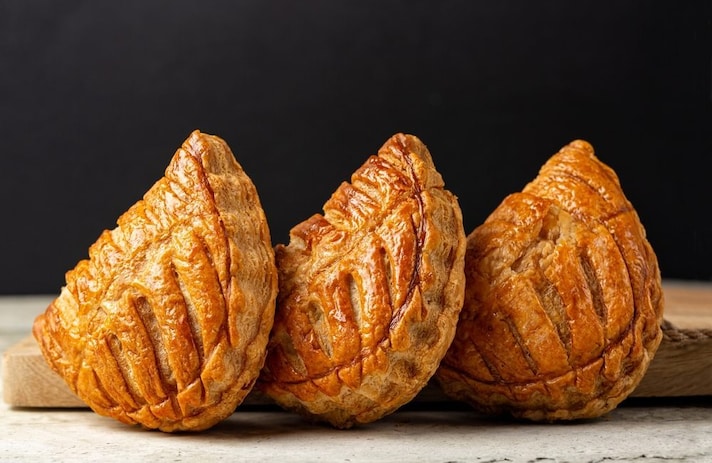
Puff pastry parcels filled with apple compote, fragrant on the outside and soft on the inside: these are chaussons aux pommes. The contrast between the crispy pastry and the sweet filling makes them a timeless classic, perfect for a homey break.
12. Rogal świętomarciński (Poland)
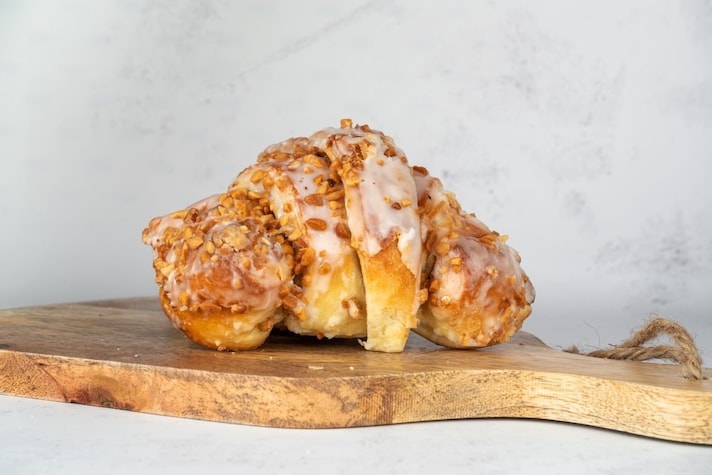
A traditional Polish dessert associated with local holidays, this croissant is richly filled and covered with icing and dried fruit. Prepared especially for St. Martin's Day, it is a symbol of sharing and abundance.
13. Schaumrolle (Austria)
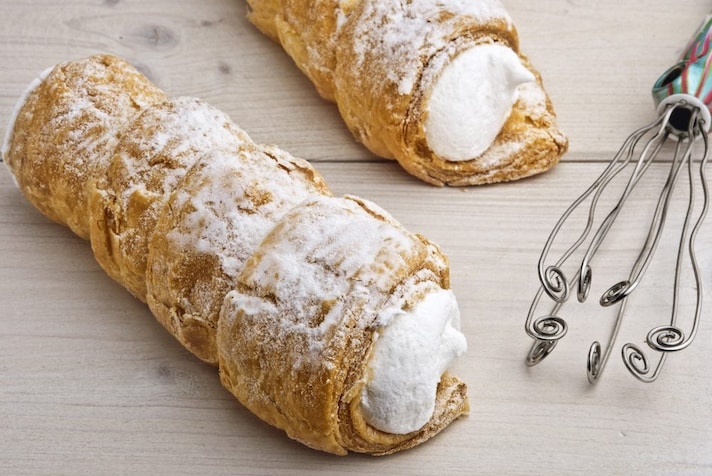
Cylindrical wafers filled with a soft, frothy cream: these are Austrian schaumrolle. Elegant and striking, they are a specialty of Viennese pastry, beloved for the contrast between their crispy exterior and light filling.
14. Cruffin (Australia)
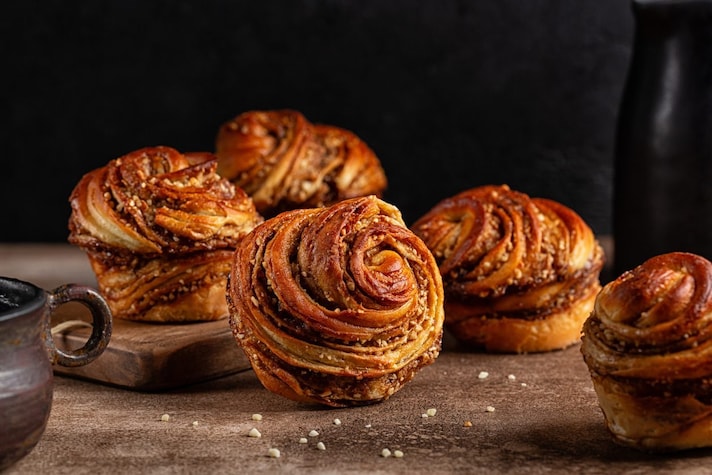
The cruffin is a modern hybrid that combines the flaky pastry of a croissant with the shape of a muffin. Often filled with creams or jams, it's an example of how tradition can evolve in a contemporary way, playing with shapes and textures.
15. Tebirkes (Denmark)
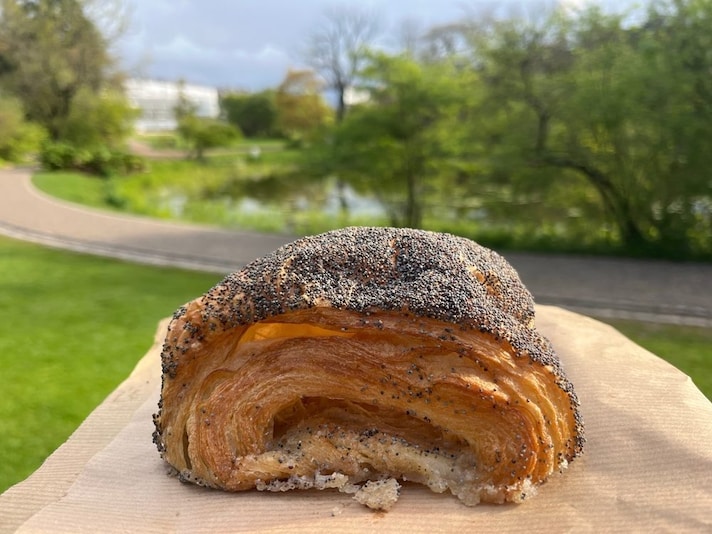
Less well-known but full of personality, Danish tebirkes combines marzipan and poppy seeds in a laminated pastry, creating a balance between sweetness and more intense aromatic notes, typical of Nordic patisserie.
16. Pain aux Raisins (France)
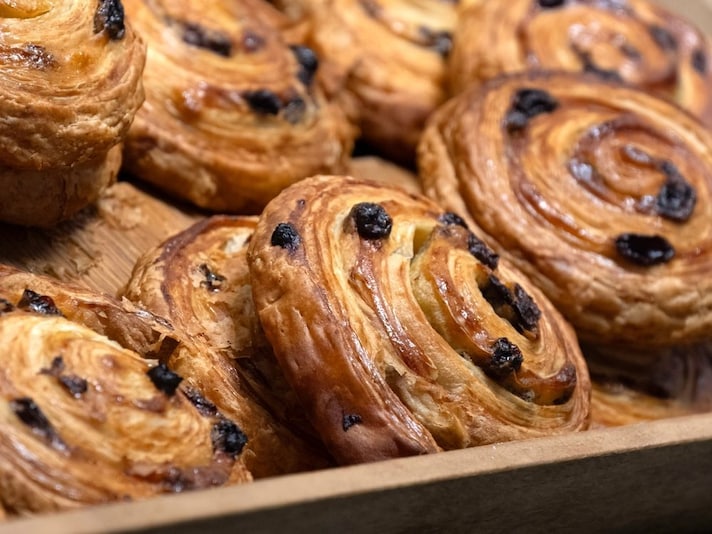
A soft spiral filled with custard and raisins. Sweet and enveloping, pain aux raisins —literally, raisin bread —is a staple in French breakfasts, appreciated for its balanced flavor and creamy texture.
17. Pigs in Blankets (United States)

A savory exception to the Made in USA list: sausages wrapped in dough and baked. More of a snack than a dessert, but extremely popular in American culture, especially at parties and informal buffets.
18. Xuixo (Spain)
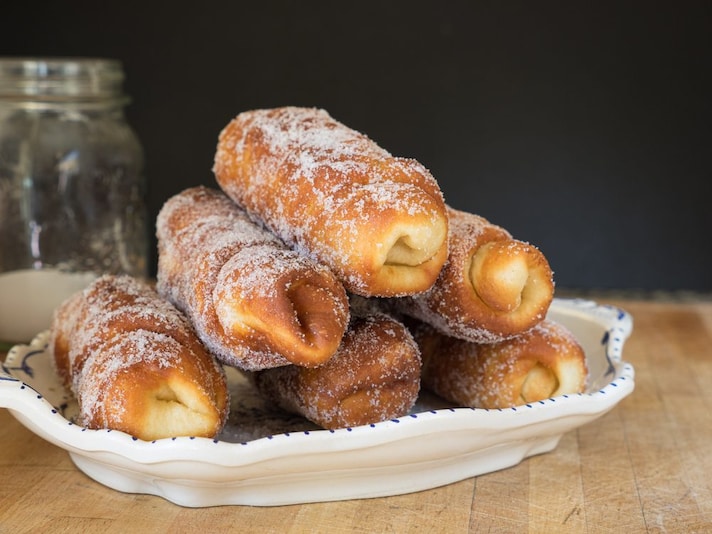
A fried dessert filled with crema catalana, with a sugary, crunchy surface. Rich and fragrant, it's a Girona specialty that combines indulgence and local tradition.
19. Bescoin (France)
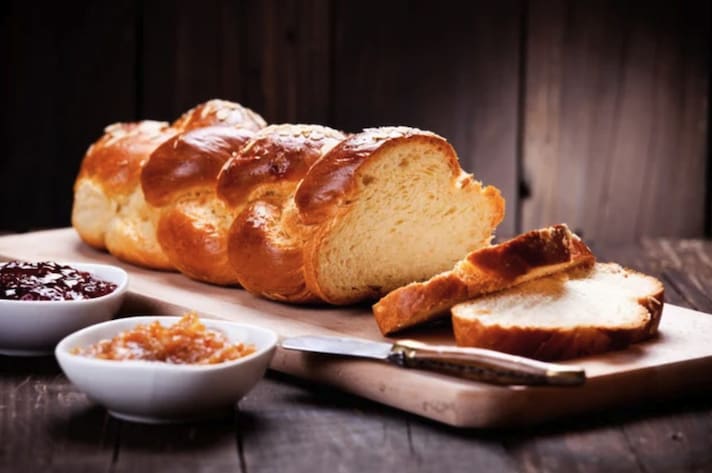
Rounding out the list is this Alpine product, halfway between bread and brioche, often flavored with saffron. Linked to the traditions of Savoy, it retains a rustic, ancient character.
;Resize,width=767;)
