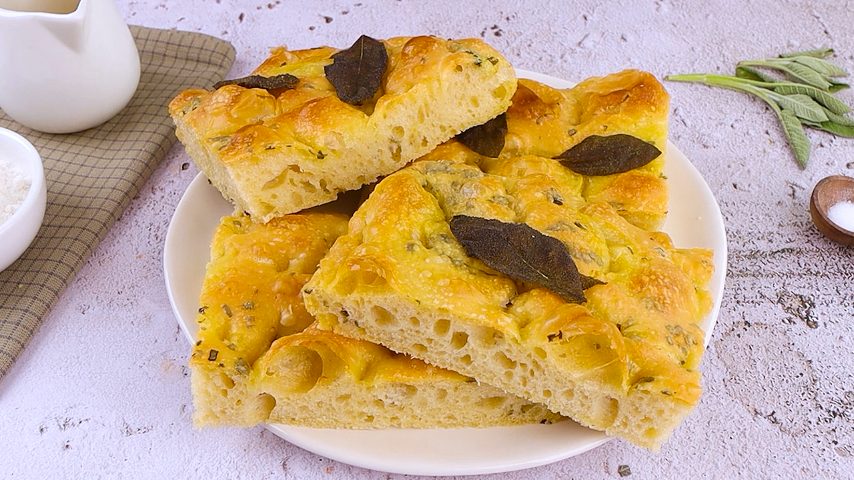
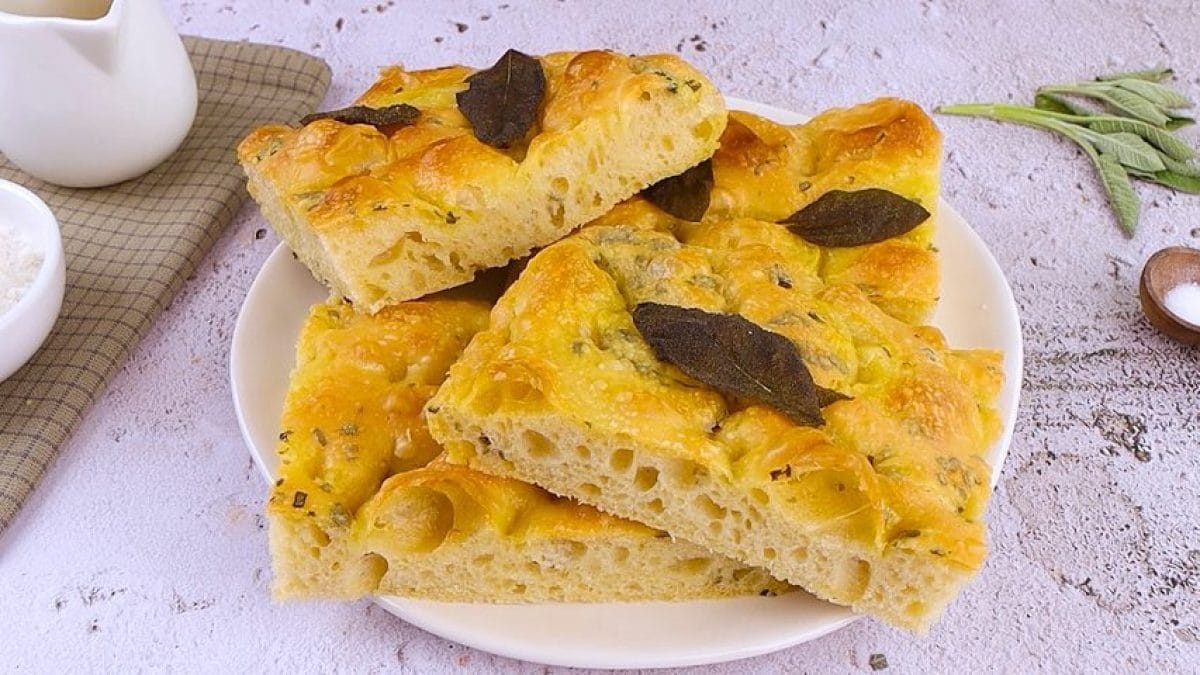
The scent of fresh sage hitting warm olive oil is the kind of kitchen moment that instantly slows everything down, in the best way. This sage focaccia is infused with an herby aroma and is the sort of bread that works just as well torn apart at the table as it does sliced neatly for sandwiches. Serve it as an appetizer, a side, or simply as an excuse to enjoy really good bread.
What Is Sage Focaccia?
Sage focaccia is a variation of the classic Italian flatbread, enriched with extra virgin olive oil and topped with fresh sage leaves. Focaccia originates from Italy and is known for its airy crumb, dimpled surface, and generous use of olive oil. Adding sage gives the bread a slightly earthy note that pairs well with the dough’s natural sweetness. It’s a simple upgrade that makes the focaccia feel aromatic and a little special.
Pro Tips for the Best Sage Focaccia
- Use good-quality extra virgin olive oil, because its flavor really shines through in a simple dough like this.
- Don’t rush the rising times, slow fermentation is what gives focaccia its soft, bubbly texture.
- Press your fingertips firmly but gently when making the dimples to trap pockets of oil.
- Add the sage just before baking, so it releases its aroma in the bread without burning.
Frequently Asked Questions
Can I use dried sage instead of fresh?
Fresh sage is strongly recommended because it releases aromatic oils during baking that dried sage simply can’t match. Dried sage can taste slightly dusty once baked into bread. If fresh isn’t available, use a very small amount of dried sage mixed into the dough rather than on top.
Can I make the dough ahead of time?
Yes, focaccia dough is great for prepping ahead. After the first rise, you can refrigerate the dough overnight. Bring it back to room temperature before continuing with shaping and the second rise.
Should I chop the sage or leave the leaves whole?
Both work, but they give slightly different results. Chopped sage distributes flavor throughout the bread, while whole leaves create bursts of aroma on the surface.
Can I Freeze Sage Focaccia?
Let it cool, then wrap it tightly in plastic wrap and foil before freezing. It keeps well for up to two months without losing texture. Reheat directly from frozen in a hot oven.
How to Store Sage Focaccia
Leftover focaccia can be stored at room temperature for up to two days. For longer storage, keep it in the fridge, but warm it slightly before serving to restore its softness. A quick drizzle of olive oil before reheating works wonders.
Ingredients
How to Make Sage Focaccia

In a large bowl, pour in 100ml of water and mix in fresh yeast. Add the flour to the bowl, followed by the remaining 250ml of water, and mix until a dough forms.
In a large bowl, pour in 100ml of water and mix in fresh yeast. Add the flour to the bowl, followed by the remaining 250ml of water, and mix until a dough forms.

Pour in the extra virgin olive oil and keep mixing, then add the salt and knead by hand. Cover the bowl with cling film and let the dough rise for about 2 hours.
Pour in the extra virgin olive oil and keep mixing, then add the salt and knead by hand. Cover the bowl with cling film and let the dough rise for about 2 hours.

Gently deflate the dough, sprinkle in the chopped sage, and fold the dough over itself a few times. Cover again and let it rest for 30 minutes.
Gently deflate the dough, sprinkle in the chopped sage, and fold the dough over itself a few times. Cover again and let it rest for 30 minutes.

Transfer the dough to a well-oiled baking pan, cover with a cloth, and let it rise for 90 minutes.
Transfer the dough to a well-oiled baking pan, cover with a cloth, and let it rise for 90 minutes.

Drizzle olive oil and press your fingertips into the dough to create focaccia dimples.
Drizzle olive oil and press your fingertips into the dough to create focaccia dimples.

Scatter whole sage leaves on top for aroma and visual appeal and bake at 200°C/392°F for 25 minutes.
Scatter whole sage leaves on top for aroma and visual appeal and bake at 200°C/392°F for 25 minutes.

Remove from the oven and slice.
Remove from the oven and slice.
;Resize,width=767;)
