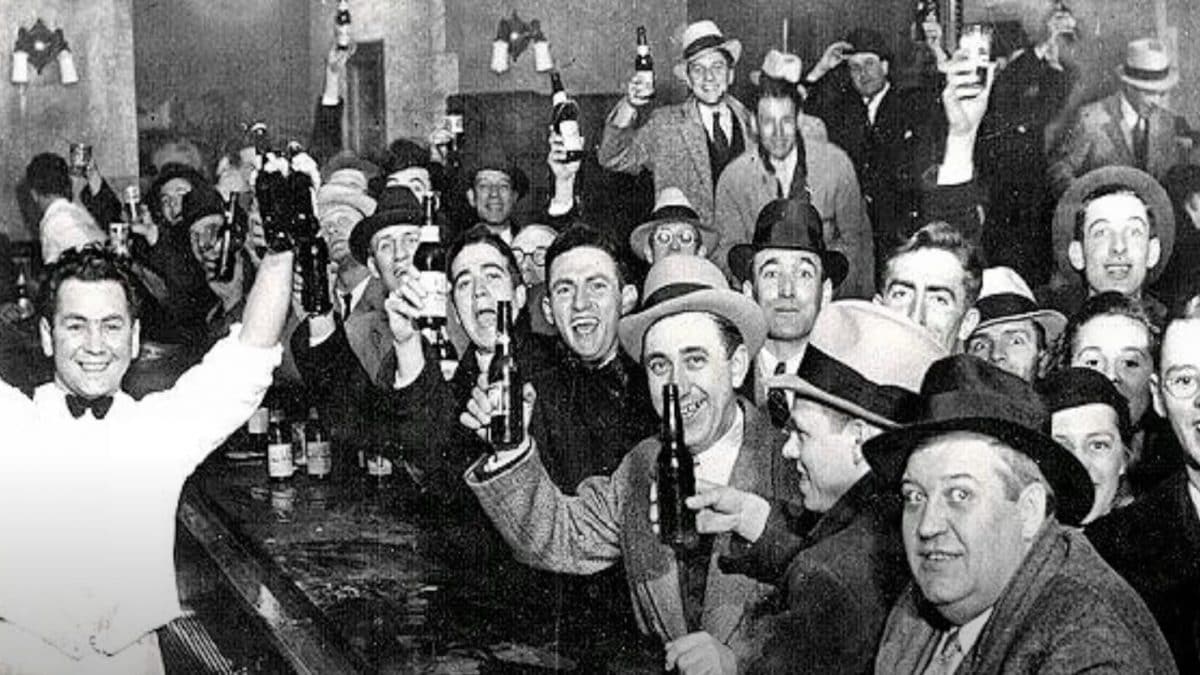
What's better than spending time at a bar with friends you haven't seen in a while, chatting while (responsibly) drinking something alcoholic to keep the evening going? Well, if you had lived in the United States between 1920 and 1933, you wouldn't have been able to do it; in fact, you might have faced penalties. This is because during those years in the US, alcohol was demonized and banned with the 18th Amendment to the Constitution along with the Volstead Act: a period known as Prohibition. Simply put, it was illegal to buy, produce, import, or sell alcoholic beverages. A long period in history during which criminals found ample room to maneuver, as did some "smart guys" who feigned illness to obtain prescriptions for alcohol (intended for therapeutic purposes) just to consume it.
Temperance Law or a Real Prohibition?
Before exploring the most unusual anecdotes from this period, we must first understand what Prohibition was and why a country like the United States chose to "ostracize" alcohol in this way. On January 17, 1920, the Volstead Act, passed by the U.S. Congress, marked the beginning of this period. The law was called the "Noble Experiment" because it was born from a positive stance. It all happened when women's groups and associations gathered in the streets to demonstrate vigorously against alcoholics, whom they considered troublemakers, violent, and dangerous. Assembled in various coalitions, the women's goal was to defend themselves from their husbands, who, while intoxicated, would harass them. The "ladies' protest" was also joined by religious groups and a segment of society that saw alcohol as a major cause of social problems such as crime and poverty. Banning it forever would have led to a more virtuous and productive society, or rather, that was the idea.

The new law, called the "temperance law," was supported by great figures in American history, such as Henry Ford and John D. Rockefeller. Business leaders argued that alcohol caused absenteeism at work, and the idea was to spend money on it rather than on goods derived from the productive system. Drinking did not become entirely illegal: the ban on alcohol applied to its sale, production, and importation, but not to its consumption or possession if legally purchased before the ban. Many people who had stockpiled alcohol continued to drink it privately. However, the inability to legally purchase new supplies led to the emergence of a vast black market run by organized crime.
Al Capone and the Speakeasies' Years
Banning alcohol thus gave rise to new avenues for illegal consumption, and one of the most emblematic figures of the period was Alphonse Gabriel Capone, better known as Al Capone. Originally from New York, he moved to Chicago, where he became the head of a powerful criminal organization known as the Outfit. In that context, Capone was able to capitalize on the opportunities offered by Prohibition by controlling an empire of bootleg alcohol served in speakeasies: clandestine establishments where alcohol was sold illegally and gambling was conducted. Here, cocktails such as the Southside (Al Capone's favorite) and the Boulevardier became legendary. Over time, Capone became the absolute lord of illegal alcohol in Chicago, managing to amass a net worth exceeding $100 million.
Alcohol Prohibited? No Problem, I'll Call the Doctor
Amid protests, fights against crime, and the spread of illegal alcohol, some notable incidents from this period are noteworthy. We've seen that banning alcohol was the goal of the American Congress, which believed it would create a healthier society. After years of prohibition, supplies were running low, and people desperately needed alcohol.
So every trick was tried to circumvent the prohibition laws: suddenly, everyone was sick (faking it, of course). The goal of this ploy was to contact many doctors and pharmacists who, taking advantage of a legal loophole, could prescribe alcohol to patients for therapeutic purposes. There were countless people who faked the most disparate illnesses just to get a little whiskey or brandy.

Other subterfuges were also used to circumvent the ban: one of these was the sale of the freshest and purest "miracle water." This water from local springs began to be advertised for its (fictitious) healing properties and sold at exorbitant prices, but in reality it was bootlegged alcohol. At the time, some grape producers were starting to sell juice concentrates with the warning not to let them rest too long, ironically suggesting the risk that they might "ferment" and thus turn into wine.
However, the prohibition project was slowly beginning to crumble due to the spread of crime and corruption. In 1929, with the crash of the Wall Street Stock Exchange in New York, the gravity of the economic situation doomed Prohibition, which was eliminated on December 5, 1933, by the new President Franklin D. Roosevelt, who abolished the Volstead Act. Thanks to the return of alcohol to the market, revenues skyrocketed, and many of the criminal gangsters saw all their loot go up in smoke.

