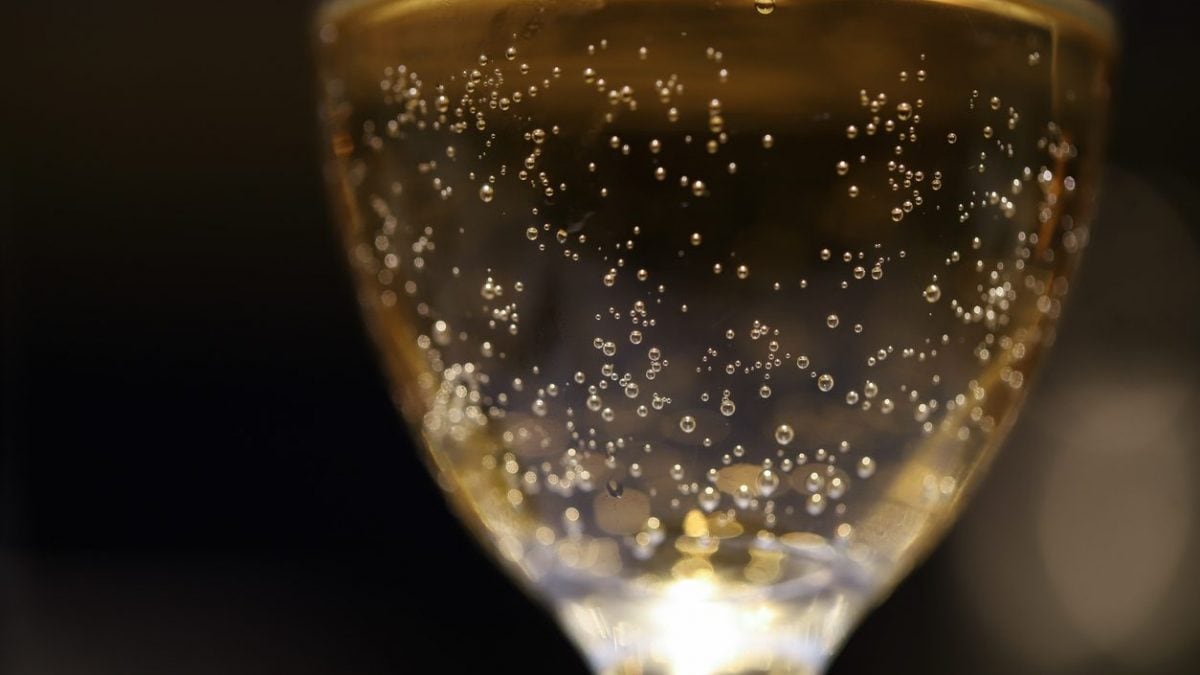
Champagne is the most famous and important wine in the world, but it's still just wine. We need to start thinking about champagne as any other product, even though it carries with it a long-standing mythology, reinforced by historical events and cinematic works. Despite this, however, champagne etiquette is fairly common to any other wine: the etiquette to follow is very similar, but there are specific steps to follow to be seen as a true expert. Let's look at the seven rules for toasting elegantly in the company of the world's most famous bubbles.
How to Taste and Serve Champagne Like a True Expert
Tasting Champagne is an experience that engages all your senses and requires a careful approach to fully appreciate the characteristics of this effervescent wine. A good product (and there are excellent ones, even at affordable prices) should be a yellow color ranging from straw to golden, depending on the type of Champagne. Also note the persistence of the bubbles and the formation of a creamy mousse on the surface like foam. Before savoring the Champagne, gently swirl the glass to release the aromas. Let it make gentle curves, not swirl it like a washing machine spin cycle: it is a delicate wine. Then smell the wine to capture its aromas. Look for fruity, floral, citrus notes, or even hints of yeast and bread crust. Take a small sip of Champagne and distribute it evenly on your tongue. Swirl it in your mouth to perceive the complexity of the flavors. Notice the balance between sweetness and acidity, the persistence of the flavors, and the finesse of the bubbles.
Once this is done, however, let's try to understand all the secrets of serving it: the temperature, the glass to use, the ways to pour this fine wine.
1. Do I Buy a Bottle and Keep It?

Our suggestion is to drink it as soon as possible. Enjoy the moment and, above all, don't let it age. Regulations dictate that when you buy a champagne, it's already been aged. It's spent at least 15 months in the region's cellars. When it goes on sale, it's ready to be aged. Of course, nothing stops you from storing it, and with the right precautions, you can keep it for many years.
- The bottle should be kept (both upright and lying down) at a temperature between 50°F/10°C and 59°F/15°C;
- The humidity level must be high and constant, between 60% and 80%;
- The bottle must not be exposed to direct light or impacts, must not be subjected to vibrations and must be protected from odors;
- The cellar where you store it must be as well ventilated as possible.
2. At What Temperature Should Champagne Be Served?

Not too cold, not too hot. Cool, but not icy. So be it. The ideal temperature for a bottle is between 46°F/8°C and 50°F/10°C to appreciate all its finesse and aromas. We recommend keeping the bottle in a bucket filled with water and ice for half an hour before serving. You can also place it in the lower part of the refrigerator a few hours before opening.
3. How Do I Serve Champagne if The Bottle is Wet?

If I put water and ice in a bucket, it's natural for the bottle to get wet. What do I do next? Just like any other wine. Remove the bottle and dry it with a white napkin, holding it firmly at the bottom, with the label visible and facing the other diners. Obviously, if you're at home with family and/or friends, you can be less formal, as long as there's someone watching you, but we still recommend drying the bottle, as the droplets that wet the tablecloth are unsightly. Don't put the bottle upside down in the bucket when you're finished; it's an extremely rude gesture, reminiscent of 19th-century French brothels.
4. What Glasses Should I Serve Champagne In?

This one's easy: flute or coupe! No, we're sorry to disappoint you, but the easy answers aren't necessarily the right ones, with all due respect to William of Occam. The most banal answer, and ultimately the correct one, would be: serve it in any glass you like. However, if we want to make a truly good impression on our guests, we must use the tulip-shaped glass —the tall, rounded one with a narrow opening. But how? What happened to the classic flute or champagne coupe? You've been living a lie all these years. They're out of fashion: to allow the wine to express its full character, the best glasses are tulip-shaped. Of course, if you prefer to serve champagne in flutes or coupes, for the refinement and imagery embodied in these legendary objects of the Belle Époque and cinema, you can do so without hesitation.
A little tip before even bringing the glasses to the table: don't put them in the dishwasher. Wash them by hand in hot water, avoiding detergents that prevent the elegant bubbles from forming when served. Dry them by hand.
5. How Do You Open a Bottle of Champagne?

And here's the best part, because opening a bottle of any sparkling wine often creates embarrassment in the dining room. The first thing we say is: be careful. The pressure inside the bottle can cause the cork to pop out a little too quickly, especially if the bottle has been shaken. Be careful not to hurt anyone. You have to be gentle, and if you follow these tips, everything will be fine and you'll also make a good impression:
- Dry the bottle with a cloth and begin removing the metal cage. Be careful to hold the cork tightly and don't point the bottle at anyone;
- Still holding the cork firmly, take the neck of the bottle and turn it so as to gently release the cork from the neck, without letting it slip out;
- You don't have to pull the cork off; you just have to hold it still while you rotate the base of the bottle. Each rotation of the bottle should correspond to an upward movement, gradually releasing the cork until it's completely removed.
- Just before the cork is completely removed, the pressure will begin to release: you'll hear a slight hissing sound coming from the neck of the bottle. When you hear the hissing, wait for the sound to stop and slowly release the pressure;
- Once the operation is finished, the cork will "fall" into your hand, you will have the bottle in the other and the champagne is ready for the toast.
6. What a Strange Way to Serve Champagne

It's time to pour the champagne into the glass. This advice applies to all sparkling wines but is particularly true for this French style. Champagne should be poured in two stages: first a small amount, then the rest of the glass. Pouring in two stages, a few seconds apart, is important: it allows you to sniff the aromas and allow the wine to aerate. It also helps maintain the chain of bubbles that form at the bottom of the glass longer and helps prevent the foam from becoming too persistent. How much wine should you pour? As with any type of wine, fill the glass slowly and steadily, filling it up to two-thirds of the way.
7. How to Store and Opened Bottle

Are you at the end of the meal and have an open bottle left? Change company! Bottles should always be finished. If you really can't manage it, close it with a stopper, specifically designed for storing sparkling wines. Place the bottle in the refrigerator, upright or lying down, but be careful, because jokes aside, we warn you: an opened bottle of champagne doesn't keep for long. The effervescence is lost and it begins to vent.
Tricks for Tasting Champagne Like a Pro
Champagne should be savored with all the senses, starting with hearing. The first to be stimulated is precisely this: the pop of the cork, the effervescence of the bubbles. After all, for many, a celebration begins or ends with the explosion of the cork. Whether it's a hiss or a roar, it doesn't matter: it immediately gives way to the perlage, with the wine crackling and popping like a lit fireplace: it's the bubbles exploding and preparing us for pleasure.
Once we've smelled this wine, we need to see it: the bubbles move and form a chain that starts from the bottom and reaches the top: this is the perlage. Learning to read this chain is fundamental: the way a sparkling wine's effervescence expresses itself reveals the personality and age of the wine we're about to drink. It doesn't end there, because the color of the champagne itself says a lot about its "persona": it can be pale or deep, with red or green reflections. The former remind us of red grape varieties, the latter of more unripe grapes. Everything tells us something about what we have in our hands: but be careful, because it doesn't tell us whether it's a good product or not, it only tells us its history. If you see a yellow wine with green reflections, in addition to its youth, you might guess a greater presence of Chardonnay; The orange highlights should make us perk up and prepare ourselves for a larger share of red grape varieties, with longer vinification or, why not, the use of aged reserve wines. The latter is an element to look for on the label. If you find a golden -colored Champagne, it's likely very mature, and let's not even talk about rosés, which are a world apart.

The third sense we encounter is smell: we should perceive the orange peel, the white flowers, and the yeast. There's no general rule: depending on the type, age, and evolution of the wine, we'll smell different things.
Let's combine taste and touch: Champagne is an explosion of flavor. It can be composed of three different grape varieties: Chardonnay, Pinot Noir, and Pinot Meunier, each of which can be combined or left pure. If you find Champagne with a higher percentage of Chardonnay, the taste will likely remind you of jasmine, orange blossom, pineapple, and lemon. It is a fresh, drinkable, and citrusy wine. It has a light structure and a nice balance of acidity and salinity. Pinot grapes can recall peaches, apricots, strawberries, cherries, or sweeter citrus fruits like oranges and mandarins. They are usually full-bodied wines. When tasting, we obviously have touch: what kind of sensation does it leave on the tongue? The bubbles must delicately explode on our palate. The infinitesimal droplets must inebriate our mouth. The tongue must be enlivened by these contraptions of wine and air.
;Resize,width=767;)
