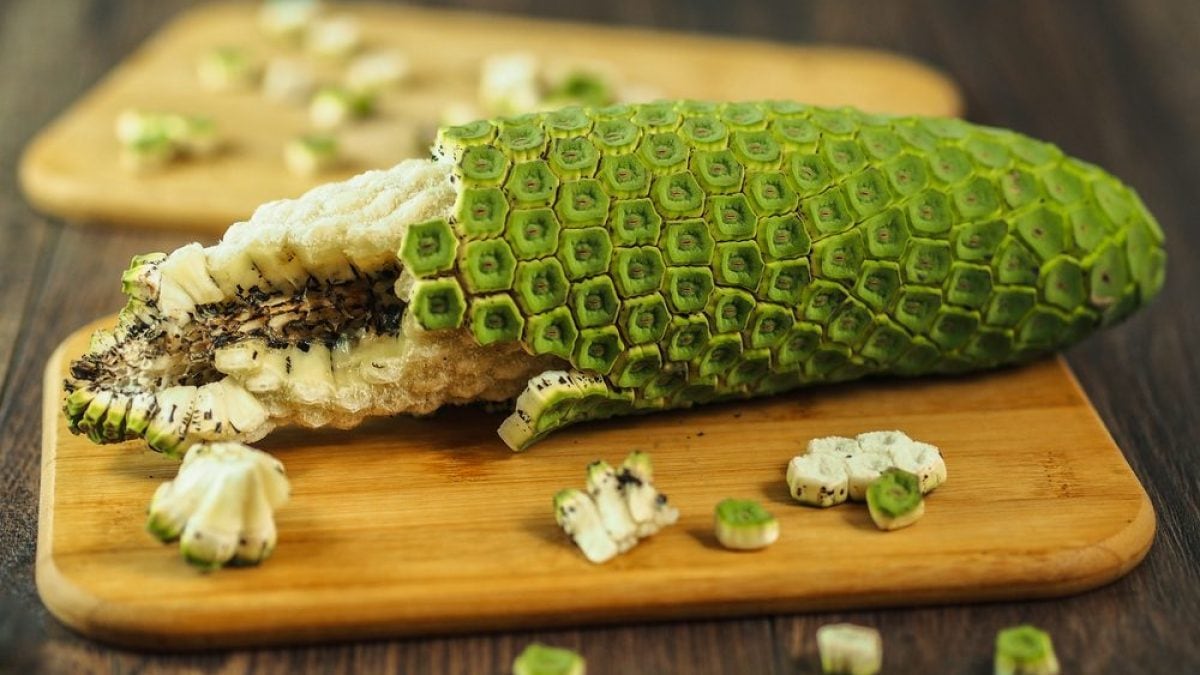
Delicious and dangerous, sweet and aromatic but toxic if eaten at the wrong point of ripeness, with a tropical flavor similar to pineapple but potentially dangerous: it's monster fruit, a name that probably doesn't ring a bell, but is more familiar than you might imagine. This very particular fruit grows on the Monstera deliciosa plant, the one with the huge, broken leaves that is usually grown indoors and reaches truly gigantic dimensions.
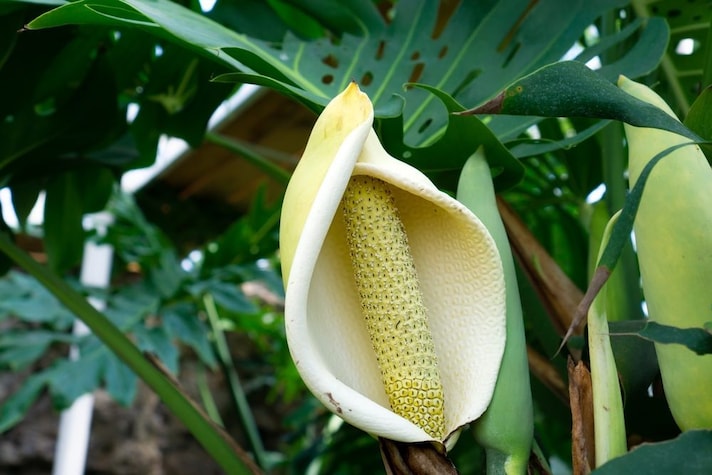
You've never seen them with fruit because this plant rarely produces fruit in the West, where the climatic conditions are unsuitable (the fruit requires high, constant heat) and where indoors it doesn't have enough light and space to reach the maturity necessary for flowering and fruiting. In its native lands, however, the tropical forests of Guatemala and the entire area between Mexico and the Panama Canal, the plant grows very large and lush directly on the ground and produces what are known as monster fruits.
Where does the name come from? Partly from the name of the plant itself, Monstera deliciosa, but above all from the main characteristic of the fruits: they are extremely toxic if eaten when not yet ripe, at which point they become safe to eat and delicious. Let's discover all the characteristics of this dangerous delicacy: here's everything you need to know about monster fruit.
What is Monster Fruit?
Monster fruit is the distinctive and peculiar fruit of the Monstera deliciosa plant, used in the West as an ornamental plant but grown as a true fruit tree in central and southern South America. This fruit must be handled and consumed with extreme caution, as if eaten while unripe it is highly toxic, causing severe and unpleasant irritation to the throat, skin, and mucous membranes.
The fruit's toxicity before ripening is due to the presence of oxalic acid, found in high concentrations in the pulp of the unripe fruit: it's a highly irritating substance, used to bleach wood or remove rust. You can see, therefore, why it's best not to ingest it. However, when the fruit ripens, incredibly, the oxalic acid levels drop dramatically until they become so minimal that the monster fruit is perfectly edible and safe to eat.
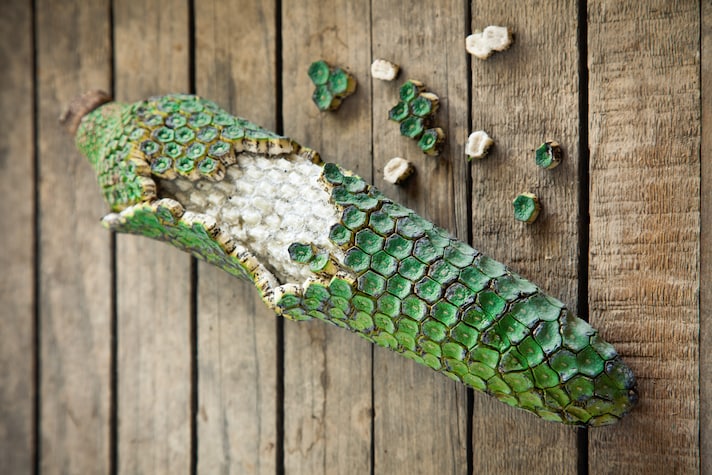
How do you know when it's the right time to enjoy it? Its external appearance is the main clue. Monster fruit grows among the plant's enormous leaves and is very similar to an ear of corn in size (up to 30 centimeters) and shape (elongated), but covered with a peel-like bark composed of dense green hexagonal scales. As long as the scales are attached to the fruit, it should never be eaten. When they fall off naturally, exposing the white, fleshy pulp, it means the monster fruit is ripe and safe to eat.
It's essential to wait for the scales to fall off naturally, because if they don't come off on their own, the fruit isn't ready, and forcing them to come off doesn't guarantee proper ripeness and therefore perfect edibility. A trick to encourage ripening is to place the fruit in a glass jar and then cover it with a cloth or bag. In this case, you can try to remove the scales with your hands or a spoon, but if you have to use force to do so, the pulp isn't ready yet.
What Does Monster Fruit Taste Like?
You'd never expect such a risky fruit to be so delicious, but that's one of the characteristics that make monster fruit so special: it's delicious, with a pulp that's a blend of pineapple, coconut, and banana flavors, with a distinct sweetness and strong tropical notes. As mentioned, it only takes on this flavor when it loses all its outer scales, which all fall off naturally as it ripens. Once "stripped" of this outer skin, the pulp becomes a true delight for the palate.
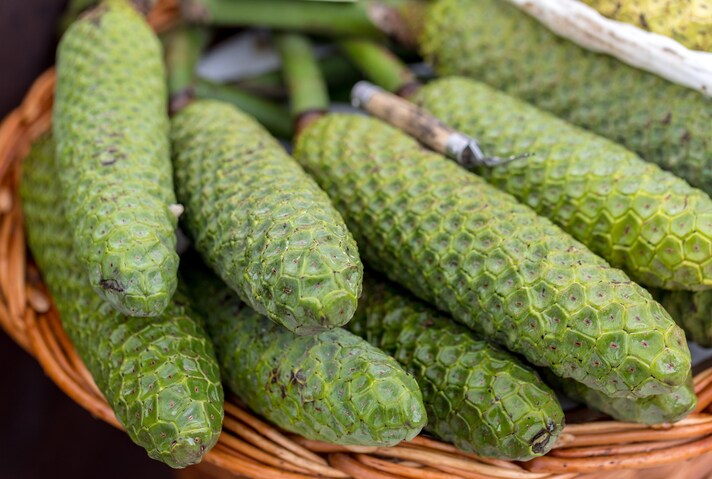
In Central America, where Monstera deliciosa produces its fruit, monster fruit pulp is eaten alone or, more often, in fruit salads, but it is also very common to use it to make sweet jams or creamy desserts. In the West, however, monster fruit is impossible to find both because it doesn't grow on our Monstera deliciosa trees and because it is very difficult to import, even for shops specializing in tropical fruit.

