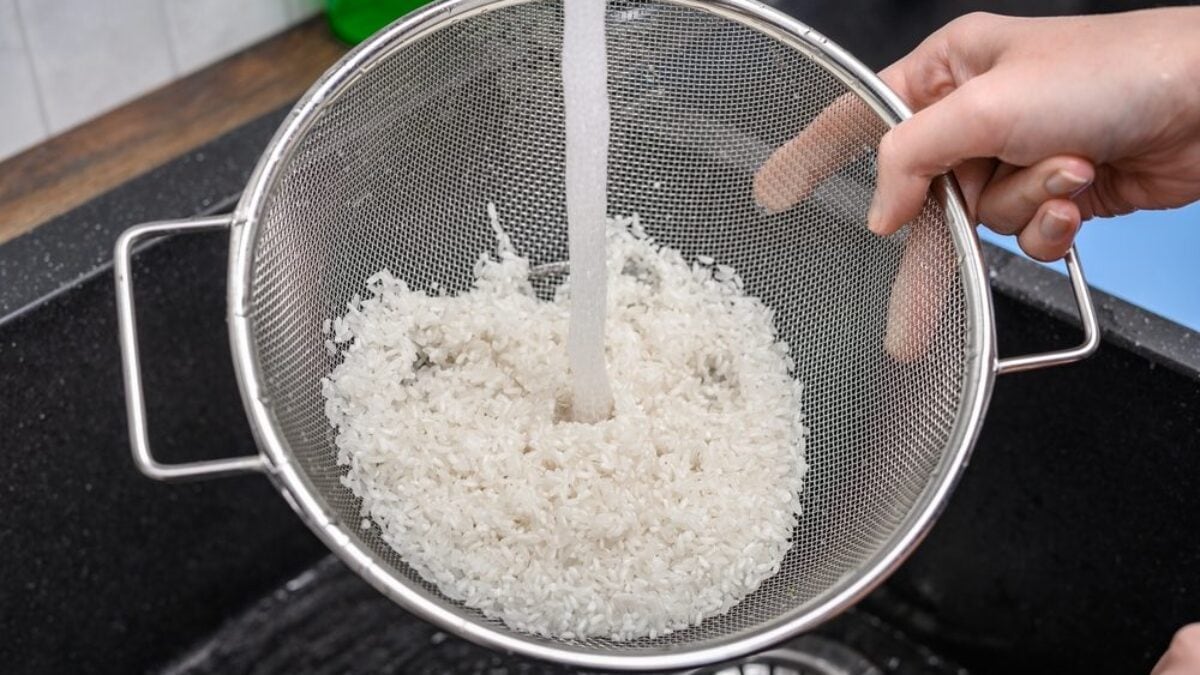
Soft but not mushy grains, well-cooked in the center, separated just enough, and with a texture that seems almost impossible to replicate at home: the rice from Asian restaurants is perfect. But how do you achieve such a precise result? The credit goes to a trick as useful as it is simple: rinsing the rice in cold water before cooking. Washing rice properly can profoundly change the cooking outcome, affecting the amount of starch present on the surface of the grains and, consequently, their texture. For this very reason, while it is a very useful method, it is only suitable for certain rice varieties and is only suitable for certain specific recipes, while for other preparations it is best to avoid it to avoid ruining the dish. When is it useful to rinse rice and when is it not necessary? Let's find out together.
Why is Rice Washed Before Cooking in Many Asian Recipes?
Recipes that call for washing rice before cooking include many Asian dishes. This is because these dishes require a very specific consistency in rice, which is achieved by washing the grains before cooking. Rinsing helps remove some of the free starch from the surface of the grains, which is produced during the processing and handling stages. By rinsing the rice several times until most of the starch is removed, and after all the water has been absorbed during cooking, the grains remain well separated and do not become sticky or tacky. This is precisely the consistency required for preparations such as sushi, steamed rice used as a side dish, stir-fry rice, and all rice-based dishes from India and Southeast Asia: all these recipes require rice that is loose, fluffy, but with well-separated grains. There is also a processing-related reason: rinsing can remove dust and small residual particles present on the beans, although modern industrial processes have significantly reduced this aspect.
How Removing Surface Starch Changes Rice's Texture
When rice is rinsed, some of the starch on the surface of the grains is dispersed into the water. It's important to distinguish this surface starch from the starch that constitutes the internal structure of the grain: washing doesn't "remove the starch from the rice" in a general sense, but rather reduces the amount of free or easily soluble starchy material that, during cooking, would end up in the water and on the surface of the other grains. This detail has significant consequences on the final texture. During cooking, the starch granules absorb water, swell, and undergo gelatinization, a process through which they progressively lose their original structure and contribute to making the rice soft.
If more surface starch is dispersed into the cooking water, some of this material can settle between the grains, creating a sort of starchy coating that increases adhesion and makes the rice more moist, cohesive, and tending toward "stickiness." Removing some of this starch through rinsing, however, reduces this effect: once cooked, the grains tend to remain more distinct, with a surface less covered in free starch and a drier, more defined mouthfeel. It's a subtle difference, but easily noticeable when looking at two rices prepared under the same conditions: the washed rice has more separate and recognizable grains, while the unrinsed rice may be more compact and sticky.
Not all types of rice, however, react the same way and produce the same result. The texture depends primarily on the rice variety and the ratio of amylose to amylopectin, two starch components that behave differently during cooking. In very simplified terms, rice relatively rich in amylopectin tends to develop a softer, more cohesive, and stickier texture, while a higher presence of amylose is generally associated with drier, more separated grains. The amount of water, temperature, cooking time, and subsequent resting time also play a decisive role in the result.
Furthermore, when you wash rice before cooking, it's not just the texture that changes, but also the mouthfeel. Rice with a higher surface starch content feels softer, moister, and almost creamier on the surface due to the gelatinized starch. Rinsed rice, for the same variety and cooking method, tends to offer a clearer perception: the grain retains its individuality more, separates more easily under the fork or between chopsticks, and may be "drier" on the surface. This doesn't necessarily mean it's tougher; a grain can be perfectly tender on the inside while remaining perfectly separate from the others.
How to Wash Rice and How Often to Rinse It
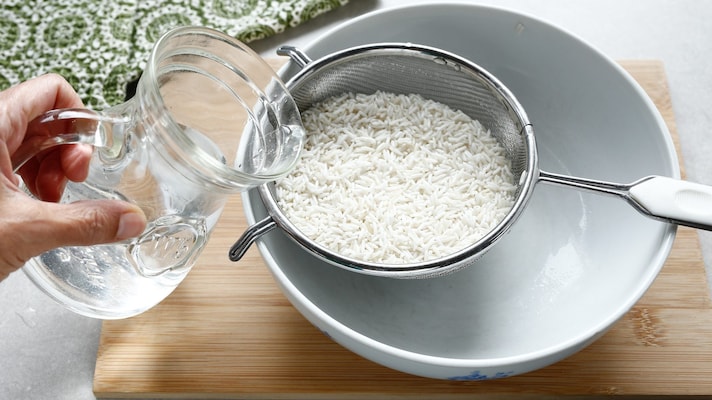
Washing rice properly is a simple process, but it requires a certain amount of delicacy: the goal isn't to vigorously scrub the grains or completely remove the starch, but rather to remove some of the surface starch and residual particles, leaving the rice's structure intact. To proceed correctly, place the desired amount in a large bowl and add cold water, then gently move the grains with your fingers for a few seconds. The water will quickly become whitish and cloudy: this is the result of the dispersion of the surface starch. At this point, drain the water without crushing or excessively manipulating the rice and repeat the process with clean water.
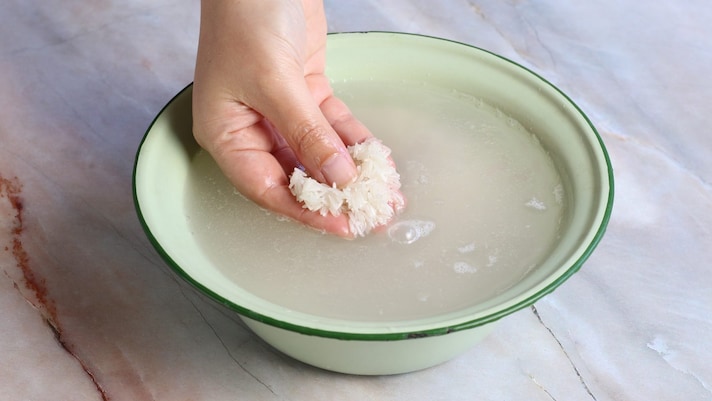
How many times should you rinse it? There's no universally precise number: repeat the process until the water runs clear. For many varieties of long- or medium-grain white rice, three or four gentle rinses is a good starting point; in some recipes, four or five rinses are fine, especially when you want a particularly loose result.
How you handle the grains is also important. It used to be common to "rub" the rice between your hands to remove the starch, but a more gentle approach is generally preferable. Vigorous movements can break or damage some grains, especially if the rice is fragile or has already been processed in a way that makes it more susceptible to breakage. Simply swirl the rice in the water gently with your fingers, as if you were stirring it, letting the water wash away the loose starch. Rinsing under a strong stream is also to be avoided, as it can repeatedly hit the grains against the bowl and ruin their texture.
You Should Wash Your Rice, But Not Always
Not all rice requires the same treatment before cooking, as each variety has its own characteristics and, above all, because rice can perform very different functions within a dish. The grain's behavior depends on its structure, the ratio of amylose and amylopectin, its shape and size, the degree of processing, and the way it absorbs water and heat. Added to these intrinsic characteristics is the gastronomic objective: in some dishes, dry, distinct, and easily separable grains are desired; in others, however, a soft, cohesive, or creamy consistency is desired. Consequently, washing is not an absolute rule applicable to every type of rice, but rather one of the many variables with which the cook can control the final texture of the dish.
The type of rice most commonly washed is long-grain rice, which is generally used when a particularly loose texture is desired. Thorough washing, followed by controlled cooking, in this case allows for a structure in which each grain remains separate from the others, a key characteristic for all recipes where the rice must not form a compact mass, but must complement other ingredients while maintaining its own identity. Short- and medium-grain rice, on the other hand, is particularly rich in amylopectin, a substance that promotes cohesion. These are the rice varieties used for all recipes that require a particular cohesion, such as risotto, and therefore washing it would ruin the final result.
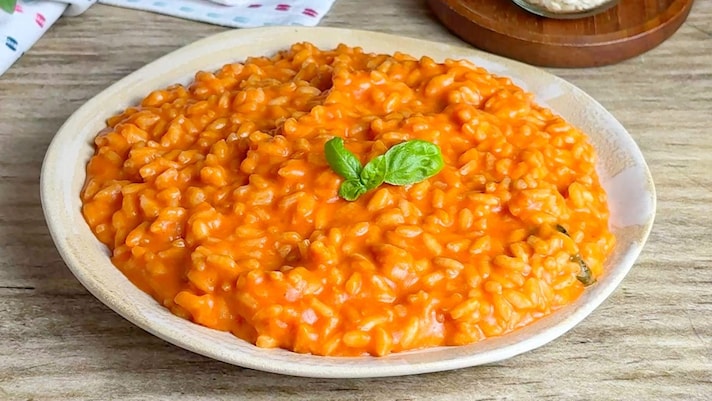
The type of recipe you're preparing, in fact, strongly influences whether or not to wash it. Take risotto, for example: here, starch is one of the key factors in creating the dish's texture. During cooking, the gradual release of starch helps create the creamy texture that envelops the grains and binds the rice and seasoning together. Washing rice before making risotto is a double mistake: in addition to removing the essential starch for creaminess, the residual moisture on the grains would prevent proper toasting in the pan.
Then there are preparations in which rice is used almost as a structural ingredient. In fillings, rice balls, or in some preparations where the grains must stick together, a certain amount of surface starch is essential. In these cases, it would be counterproductive because it would make it more difficult to achieve the necessary cohesion.
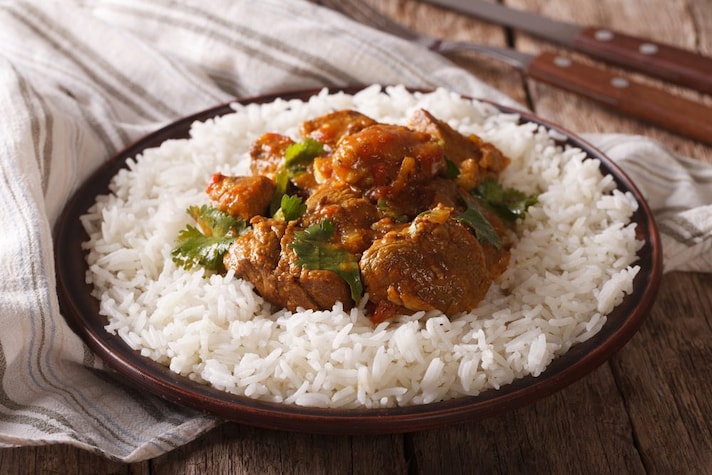
Conversely, some preparations such as side dishes, stir-fry rice, or fried rice require a well-separated grain structure: in these cases, washing must be done until the water runs clear, precisely because as much starch as possible needs to be removed. Sushi rice, on the other hand, is an example of how the relationship between washing and texture can be particularly delicate: sushi rice (short-grain Japonica variety) is rinsed repeatedly to eliminate the free starch dust on the surface that would otherwise make it slimy. The cohesion needed to shape nigiri is not lost during washing, but is guaranteed by the natural richness of amylopectin contained within the grain. Washing, therefore, must strike a balance: thorough enough to avoid an excess of free starch and a heavy or pasty texture, but not so thorough as to compromise the variety's natural ability to become cohesive.
Other Tips for Obtaining Well-Cooked Grains With the Desired Consistency
Achieving evenly cooked rice, with well-hydrated but not mushy grains and a consistency consistent with the preparation, depends on several factors beyond simple washing. The first is, of course, the ratio of rice to water, which cannot be identical for all varieties. Each grain has a different capacity to absorb water and a different response to heat: using the same amount of water for basmati, Carnaroli, and all other types of rice is ignoring fundamental differences. Too much water can lead to swollen and soft grains, while too little leaves the center tough or underhydrated. For this reason, it's always best to start with the specific instructions for each variety and then adapt them to your cooking technique, the container used, and the desired result.
A second element is soaking, which is not the same process as washing. In this case, it involves leaving the rice in water before cooking, allowing the liquid to gradually penetrate the grain, reducing the difference between the outer part, which is reached first by the heat and water, and the inner core, thus promoting more even cooking. Even in this case, however, soaking is not a universal rule: excessively long soaking times or applied to varieties that don't require it can alter the consistency and make it more difficult to monitor cooking.
Temperature control, however, is crucial. Once a boil is reached, many rice cooking techniques involve lowering the heat and letting the grains cook slowly in the available water. A very high temperature, in fact, does not necessarily mean better cooking: it can cause excessive movement of the grains, causing them to break and consuming the water too quickly. A gentler cooking method, on the other hand, allows the water to gradually penetrate the grain and the starch to gelatinize more evenly. The fundamental principle is therefore to maintain a balance between sufficient heat to continue cooking and a low enough temperature to avoid an uncontrolled process. In this sense, it is also important to know how to manage the lid: constantly lifting the lid to check the grains may seem harmless, but it causes the dispersion of steam and therefore changes the cooking conditions.
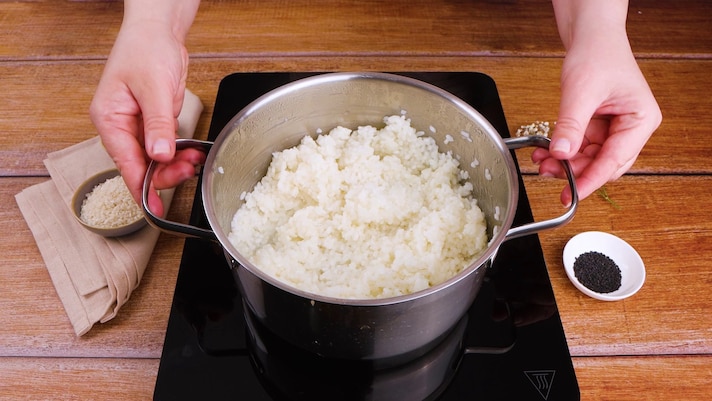
An often overlooked trick is stirring the rice during cooking. Frequent stirring increases the release of starch and can promote a creamier, more cohesive texture. This is precisely what you're looking for in some recipes, such as risotto, but it can be undesirable when the goal is to obtain loose-grained rice. For rice used as a side dish, therefore, it's generally preferable to limit handling during cooking; for a creamy dish, on the other hand, stirring is an integral part of the technique, but always without overdoing it. Another trick that can be useful is letting the rice rest at the end of cooking: if you turn off the heat, but let the rice rest for a few minutes, still covered, the grains will complete the absorption process thanks to residual steam, moisture, and heat.
Resting also helps make the rice more stable and less likely to break when it's later fluffed. Speaking of fluffing, this step is very delicate and requires some care: when the rice is intended to be served or used in separate grains, you should never stir it vigorously, as the pressure can break the grains and release additional starch. It's better to use a fork or a suitable spatula and gently lift the rice from the bottom, separating the grains with light movements. This releases excess steam without turning the rice into a compact mass.

