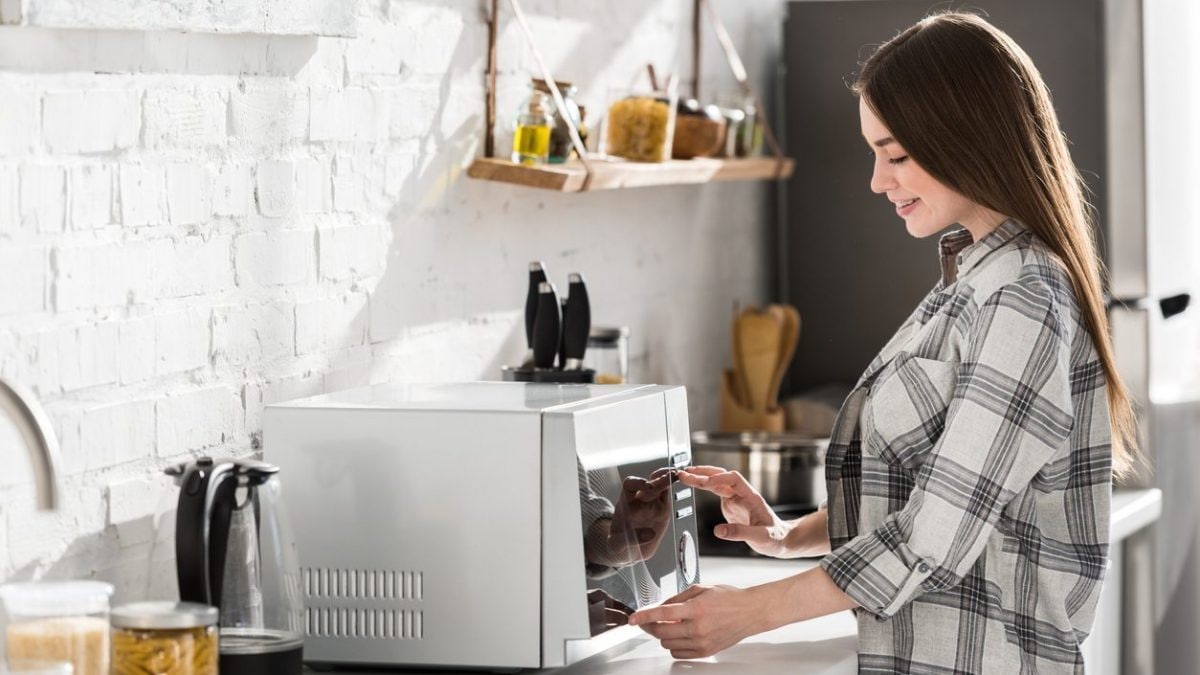
The microwave oven is one of the most recent inventions in the field of household appliances, invented in the 1940s and beginning to spread in the 1970s, but it is certainly among those that have become increasingly indispensable: it is a truly useful all-rounder, used primarily for reheating already cooked foods, but it can also be used for defrosting and cooking food. Like all household appliances, to function to its full potential, the microwave requires careful positioning: its location should not be random, as its placement can significantly affect both its performance and the overall safety of your kitchen.
Too often, microwaves are placed in random locations and spots in the room without considering the practical implications, not to mention the fact that, much like with the refrigerator, we tend to place all sorts of objects on the top surface, without realizing that not all of them are suitable for being placed there. Here's everything you need to know about the best location for your microwave, so you can get the most out of it and avoid the possibility of dangerous accidents.
What Are The Best Places For Your Microwave?
Placing a microwave in the right space isn't just a matter of aesthetics—placing it where it "looks best"—but above all, it's about energy efficiency and safety: strategic placement allows the appliance to perform at its best, but also helps prevent potential risks, such as fires or burns. In this context, it's essential to know the best places to place a microwave and which ones to absolutely avoid, to create a kitchen that is simultaneously functional, safe, and welcoming.

Remember that, first and foremost, a microwave oven needs space to function properly: so avoid placing it in a cabinet or built-in to a kitchen space, unless it's larger than the appliance itself and allows you to leave enough space around, behind, and above it for it to function properly. For this reason, it's ideal to place it on the worktop —the surface where you cut, peel, and mix—a position that also keeps it within easy reach. But be careful: make sure there's enough space to work without bumping into it, or to open doors and cabinets. If your worktop isn't large enough or is already too cluttered, you can place the microwave on a shelf or cabinet.
In any case, wherever in the kitchen you decide to place it, the microwave requires very specific spaces above and around it:
- The right side should be left as open and free as possible to ensure good ventilation to the microwave's air vents.
- To the left of the microwave, leave at least 5 cm of space from the nearest surface.
- Make sure you leave at least 10cm of space between the wall and the back of the microwave.
- Make sure you leave at least 25cm of space between the top of the microwave and the surface immediately above it, and never place anything on top of the microwave while it is in operation.

Where You Should Never Put the Microwave
Just as there are ideal places, there are also places where you should avoid placing the microwave, not only for efficiency reasons but, as we were saying, also for reasons related to your safety:
- Never place the microwave near flammable materials or appliances that generate open flames, such as gas burners, because the excessive heat from the burners could damage the internal circuits.
- Never place the microwave directly above the refrigerator because the heat from the operating appliance could affect the internal temperature, forcing the refrigerator's motor to work extra hard to maintain constant internal temperatures.
- Don't place the microwave in too small of a space because, as we've explained, this appliance requires space around and above it for proper ventilation; without adequate ventilation, the device risks overheating and unexpected shutdown.
- If you have children at home, make sure the microwave is placed in a place inaccessible to them to avoid accidents.
Items You Can and Can't Put on Top of The Microwave
Just like with a refrigerator, it's very easy to end up using the top shelf of your microwave as a sort of storage area, where you end up placing a whole host of items you don't know where to put them. This isn't always a good idea, as not all objects are suitable for microwave use, both for safety reasons and because it can create problems with the appliance's ventilation system.
The two main rules to follow are these: never place objects on top of the microwave that block its ventilation, and never place objects or products on top that could overheat and be damaged, or that are made of combustible materials (the appliance also generates heat externally). These categories include small appliances and heavy utensils, which would block the ventilation on top of the microwave; products such as books, cloths, medicines, paper, and anything else that could be easily flammable; particularly delicate objects such as those made of thin glass, which could crack from the heat; and any foods that could be affected by excessive heat, especially bread and baked goods, eggs, and fresh foods such as fruit and vegetables.

What can you place above the microwave without running any particular risks and without overloading the appliance? The best solution, in this case, is to exploit the space above the microwave using specific organizer shelves, designed to optimize the space around and above the appliance without compromising functionality and safety. Since these are a sort of raised shelf (usually with extendable legs), and therefore not in direct contact with the microwave, you can use them to store practically anything, precisely because the shelf is not in direct contact with the wall of the appliance, thus avoiding the risk of damaging items.
;Resize,width=767;)
