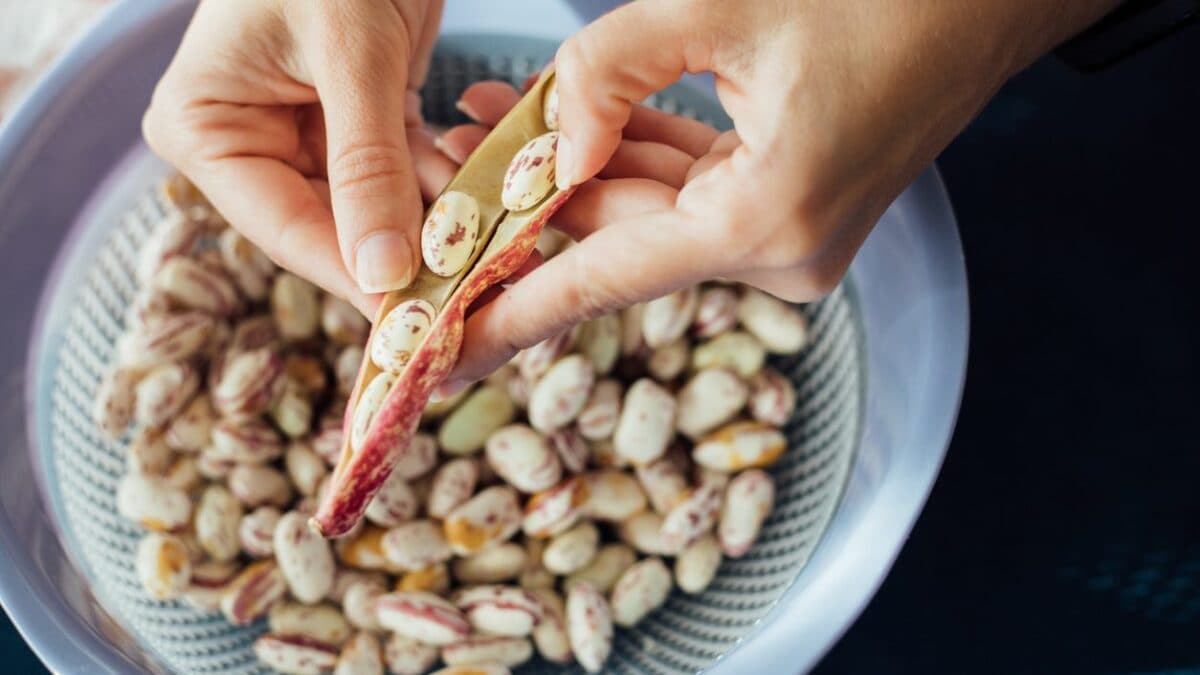
Beans are among the most widely consumed legumes in the world, a flavorful and health-rich food, extremely versatile and found in nature in thousands of different varieties. Before the discovery of America, Europe was only familiar with black-eyed peas (Vigna unguiculata), originally from Africa, while the more common pea (P haseolus vulgaris) arrived later, after the 16th century. Since then, however, they have never left global tables; on the contrary, many countries boast a long tradition linked to the cultivation and use of beans (the first were the Etruscans), with typically local varieties that have adapted perfectly to different regional microclimates.
Summer is the best time to discover the intense flavor of fresh beans: these legumes are harvested from June to November, depending on planting time and variety. For fresh consumption, the pods are harvested when they are turgid and well-developed, but still green or with the classic streaks (like borlotti beans), before drying completely on the plant. Eating fresh beans means savoring all the organoleptic qualities that make them so popular, but also absorbing their nutrients to the fullest, including their protein content, numerous vitamins (A, B, C, and E), and minerals. This is why it's important to stock up on them during the months when they're available fresh. But how do you preserve them without spoiling them? Here are the best methods for having fresh beans available even out of season.
How to Store Fresh Beans in The Fridge
Fresh beans are a particularly delicate food and, once harvested or purchased, they gradually begin to lose moisture, crunchiness, and flavor. If you don't want to consume them immediately, or even store them for months, the best solution is to store them in the refrigerator, so as to slow down their deterioration and keep them fresh for as long as possible. The ideal temperature is between 40 and 43°F (4 and 6°C), preferably in the crisper drawer, where the humidity level is best for their preservation. Still in the pod, and therefore unshelled, they last about a week, as the pod itself acts as a natural barrier, protecting the beans from deterioration. If you have already shelled the beans, transfer them to an airtight container and store them in the refrigerator for up to 5 days. It's best not to wash them before storing them in the refrigerator: residual moisture can promote the growth of mold and accelerate the deterioration process.

If you want to extend the shelf life of fresh beans in the refrigerator by a few days, you can opt for vacuum packaging. Removing most of the air from the packaging slows down the oxidation process and the proliferation of certain microorganisms, helping to preserve their freshness and consistency longer. It's important, however, to always store beans in the refrigerator at around 39°F/4°C and consume them within a few days, as vacuum packaging doesn't replace refrigeration or make the product suitable for storage at room temperature.
How to Freeze Fresh Beans
If you don't plan on using fresh beans in a timely manner, or simply want to stock up on them year-round, you absolutely must store them in the freezer. Freezing preserves much of their flavor, texture, and nutritional properties, making them available even out of season. First, you need to learn how to "shell" beans: basically, you press the ends of the pod with your fingers to easily open it along its natural seam to release the beans. After discarding any beans that are too dry, small, or moldy, wash the beans and dry them thoroughly with a clean kitchen towel. For even better results, you can also blanch them for about 2-3 minutes in boiling water, which inactivates the enzymes responsible for the loss of color, flavor, and texture during storage. Once blanched, the beans should be immediately transferred to a bowl of ice water to stop the cooking process, then drained and dried thoroughly.

Once completely dry, it's best to arrange them in a single layer on a tray and freeze them for a few hours. This prevents the beans from sticking together and allows you to later use only the amount you need. Once they're completely frozen, you can transfer them to freezer-safe bags or airtight containers, eliminating as much air as possible. When properly prepared and packaged, fresh beans maintain optimal quality for about 8-12 months in the freezer, at a temperature of 0°F/-18°C or lower. After this time, they're generally safe to eat, but they may gradually lose flavor, texture, and sensory value. It's not necessary to thaw them before using them: you can add them directly from frozen, thus also reducing the risk of losing their texture.
;Resize,width=767;)
