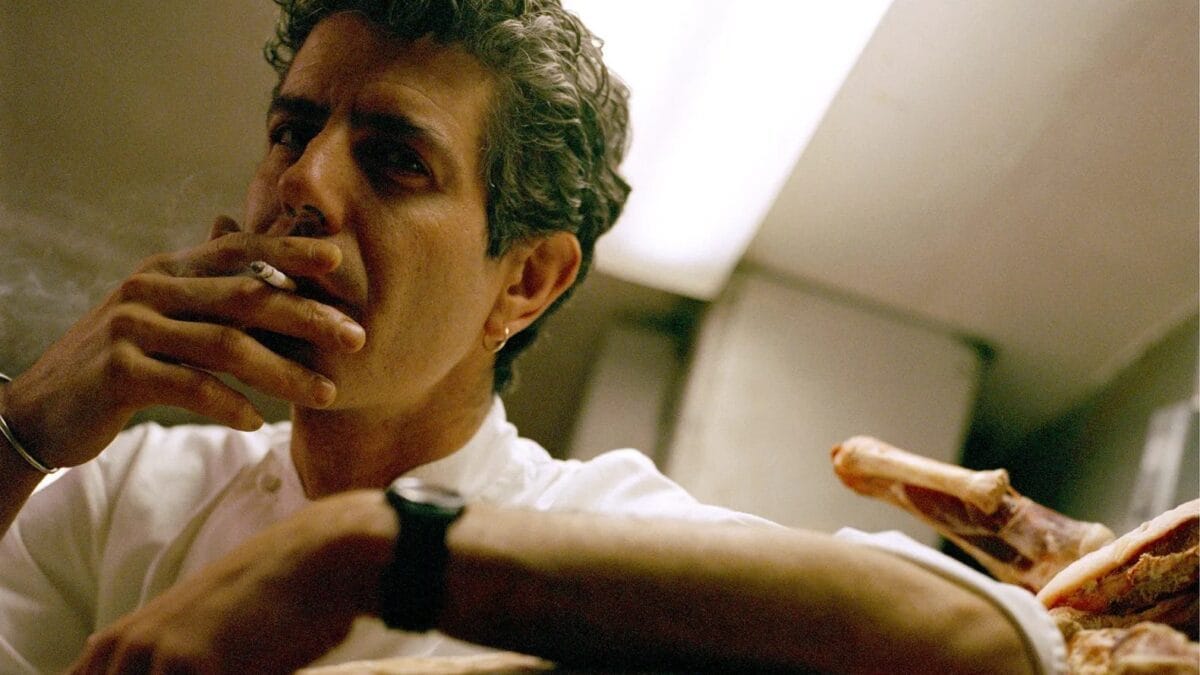
In 1999, Anthony Bourdain worked at a Manhattan brasserie, and between reporting, he published an article in the New Yorker about the behind-the-scenes work of the restaurant industry, so powerful and raw that he recommended reading it on an empty stomach. The following year, he elaborated on it with Kitchen Confidential, the book that spoiled half the world's appetites by dismantling decades of romantic narratives about the world of chefs and trendy venues.
Reading those pages as a practical guide, in which the cursed chef explains how a professional kitchen really works, essential guidelines emerge regarding what to order in a restaurant and what to leave for the person sitting next to you. Twenty-five years later, those rules still circulate like gospel, and many remain as relevant and valid.
Why Bourdain Said to Never Order Fish on Mondays
Learn to deal with the logistical schedule of professional kitchens: the most famous rule arises, with disarming pragmatism, precisely from here. Keep in mind that in the late 1990s, New York restaurants ordered fish on Thursdays, received it on Friday morning, and disposed of it over the weekend. Because suppliers skipped Saturday deliveries, the tuna served on Monday evening would sit in storage for at least three days, confined in refrigerators that were unreliable at the time. The practical advice, therefore, is to postpone the fish dinner to Tuesday, when the catch is still bright and the chef returns from his day off with renewed enthusiasm.

Don't forget his 2016 denial, though: Bourdain himself corrected his claim in a lengthy video interview, admitting that the restaurant industry had significantly improved. Restaurants were open seven days a week, deliveries were keeping pace with actual consumption, and customers had learned to recognize quality products.
Why You Should Never Order Well Done Meat
Absolutely avoid asking for a cooked steak. Remember that in the kitchens where Bourdain learned his trade, a custom dictated by pure cost arithmetic survived: that of recycling, in an era when less fresh cuts certainly didn't end up in the garbage, but were strategically set aside for customers devoted to well-done meat.
The reason that should make you give up is technical rather than gastronomic: overcooking dries out the fibers and dulls the quality of the beef, masking any flaws in the raw material. Essentially, if you order a well-done steak, you're paying full price to eat the house scraps.

Even though today's brigades work with a completely different ethic, you order a rare steak, or at most medium, because it's the only way to eliminate the risk of being ripped off.
Eggs Benedict and Sunday Brunch
Be extremely careful when making Eggs Benedict, knowing that the risk isn't in the eggs themselves, but in the Hollandaise sauce. That emulsion of egg yolks and clarified butter doesn't tolerate heat well, and waiting even worse. Since it's a sauce that's whipped up at dawn, all at once, it spends the entire morning on the warm side of the stove, exactly at the temperature where bacteria thrive and thrive. No chef in the world, Tony tells us, makes it just for a single customer.

Extend this level of vigilance to the entire Sunday brunch infrastructure, an event that regularly takes on the appearance of a waste disposal operation, tacked onto the final bill. Be wary of over-seasoned dishes: what's left unsold on Saturday night comes back to the table the next morning covered in sauces, delegated to the second line of the brigade, especially since the best chefs are asleep on Sunday mornings.
Mussels, Seafood and Daily Specials
Cultivate a healthy distrust of the daily specials recited by rote by the waiter, especially when he promises you seafood in a restaurant where the only salted water available is the one used to dip pasta. Absolutely avoid mussels: they're the most disturbing ingredient on the market, because a cursory cleaning or a limping cold chain can turn dinner into a memorable night in the worst sense of the word. Order them only at places where you know the chef well.

Apply the same ironclad caution to raw seafood and shellfish served hundreds of kilometers from the coast. As for oysters, only try them at specialized stalls that thrive on that industry, where the stock is turned over daily and no one would dream of letting even a single shell rot.
Chicken, Wagyu and Off-Menu Requests
Ignore chicken, which is on the menu only to plug a few gaps and for pure commercial markup: it's a negligible meat that's sold at a price unjustified by its average taste and quality. Roast chicken in your home oven, where no one has to keep it warm for two hours while waiting to be served.

Do some basic food cost calculations before giving in to the lure of wagyu: a raw material that easily exceeds a thousand dollars per kilo certainly doesn't end up in the meat grinder. If they sell you a cheap Japanese beef burger, you can be sure that something else has ended up in the patty. And finally, do away with off-menu requests: asking for a dish without one ingredient and with another added will prolong service times, expose you to a reluctantly executed order, and, ultimately, will also annoy the waiter.
How to Recognize a Good Restaurant According to Bourdain
Train your eye to spot three unmistakable signs to avoid disappointment. Be wary of photographs of dishes displayed in the window (a clear sign of restaurants catering to tourists) and run away if you find the menu translated into English in a neighborhood where no one speaks English. Conversely, slip into a dining room packed with locals without hesitation: it ‘s worth more than any review or ranking.
Don't let a dirty bathroom scare you. Experience teaches us that, after years of fabulous dinners in run-down dives, the state of the restroom says absolutely nothing about the quality of the food coming out of the kitchen. Absolutely refuse airplane food; that's beyond repair. Better to skip meals and land hungry and ready for your next gastronomic exploration.

In short, learn that the ultimate meaning of these tips isn't limited to a banal list of prohibitions. Become a customer capable of looking at restaurants stripped of toxic narratives, with the same clarity as those who work there: because a consumer informed about what really happens in a kitchen is the only one the industry can't fool, and perhaps also the only one who, in the end, eats truly well.
;Resize,width=767;)
