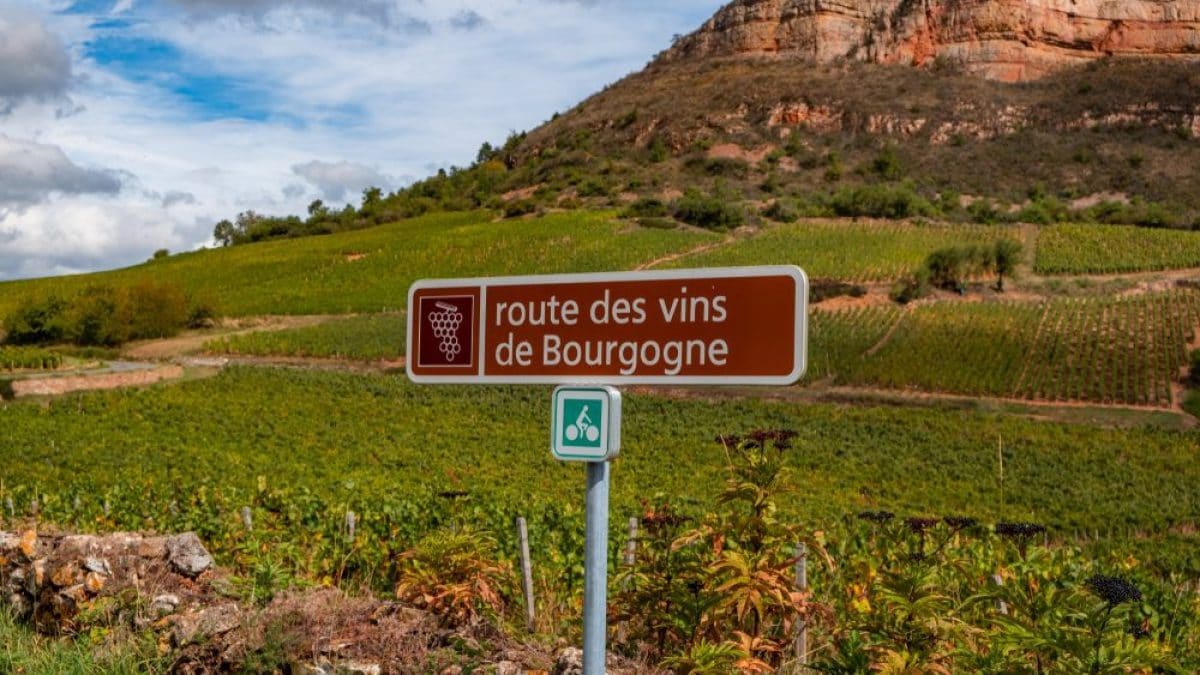
Have you ever noticed the centrality of France in discussions surrounding wine? It's no coincidence. If today you talk about terroir, appellations, crus, or classifications, you're using categories that France helped define and make central to the wine lexicon. Its role hasn't been merely symbolic: it's been normative, economic, and, above all, cultural.
Already in the Middle Ages, thanks to monastic orders and major trading centers like Bordeaux, overlooking the Atlantic, French wines were exported to England and the Netherlands. They were among the first wines to circulate continuously beyond regional borders, with a stable and organized foreign demand. This helped build a solid reputation long before the modern era.
The twentieth century saw a decisive shift: in 1935, the AOC (Appellations d'origine contrôlée) system was established. This was not just a protection of the geographical name, but a rigorous codification of the link between grape variety, terroir, yields —that is, the quantity of grapes produced per hectare—and winemaking practices. This model would later be adopted and adapted throughout Europe and then in the so-called "New World," namely Australia, New Zealand, America, and South Africa.
At the same time, the modern concept of terroir was consolidated . The term, in the sense we use it today, developed mainly between the nineteenth and twentieth centuries: but the observation of the differences between parcels —small plots of vineyard— arose centuries earlier, in monastic circles. Added to this stratification were the hierarchical classifications of crus —particularly prestigious vineyards—such as that of Bordeaux in 1855, which introduced an official scale of prestige. Very simplistically: some vineyards were officially promoted to a higher status, a bit like what happens today with Michelin-starred restaurants.

This is how Bordeaux, Burgundy, and Champagne became global benchmarks. And even today, when we talk about Cabernet Sauvignon, Pinot Noir, or Classic Method, the cultural reference is there.
Today we fly to France to discover the historic regions that built this record and how they influenced wine around the world.
The Major Historical Areas of France
When we talk about French wines that have made history, we're referring to a group of regions that have profoundly influenced styles, the market, and the very idea of quality. Each has imposed a model: the Bordeaux blend, the hierarchy of Burgundy parcels, the sparkling wine made using the traditional method (Méthode Traditionnelle) of Champagne, the Mediterranean blends of the Rhône, the versatility of the Loire, the precision of Alsace, the rebirth of Languedoc. But let's go into more detail.
Bordeaux
In southwest France, Bordeaux is the benchmark for great reds born from the blend of Merlot, Cabernet Sauvignon, and Cabernet Franc. The so-called "Bordeaux blend" has been replicated from Chile to California, all the way to Tuscany, in the Bolgheri region. The idea of blending different grape varieties to achieve balance and aging potential has found one of its most influential and systematic codifications here, to the point of becoming an international paradigm.

The region's location between the Garonne and the Atlantic has favoured trade since the Middle Ages, particularly with England; after the phylloxera crisis of the late 19th century – during which a parasite destroyed a large part of Europe's vineyards – the region reorganised its viticultural heritage, consolidating the dominant role of Cabernet Sauvignon on the rive gauche (the gravelly left bank of the Garonne River) and Merlot on the rive droite (the right bank of the Garonne River, with clayey soils).

In 1855, during the Universal Exhibition in Paris, the famous Bordeaux cru classification was born: a hierarchy based on reputation and market prices that still influences prices and the perception of value today. In practice, when you see a wine from Bolgheri, or a Californian Napa Valley blend of Cabernet Sauvignon and Merlot, you know it follows the Bordeaux model, even if it's produced up to 10,000 km away.
Champagne
Champagne is the region that transformed a style into a universal symbol. Between the 17th and 18th centuries, thanks to the cool climate and spontaneous refermentation in the bottle, the production of stabilized sparkling wines gradually took hold through what we now call the Classic Method.

In the eighteenth and nineteenth centuries, Champagne became the wine of European courts and high society: the maisons (the large production houses) built a strong and coherent identity, linked to luxury and celebration.
The decisive phase came between the late nineteenth and early twentieth century: production crises, fraud, and revolts among the vigneron —the local winemakers—led to the precise delimitation of the area and the progressive definition of more stringent rules. It was in this context that the modern regulatory framework of the appellation was consolidated.
The result is a model that combines controlled origin, production discipline, and brand strength: even today, anyone who produces Metodo Classico measures themselves up to this standard. And this is why technically, only that produced in the French region of the same name can be called "Champagne." Everything else can be defined as "Method Classico."

Burgundy
In Burgundy, everything revolves around the parcel, the small plot of land that gives the wine its uniqueness. Since the 11th century, Benedictine and Cistercian monks studied the soils, built walls around the vineyards (the famous clos), and noticed tiny differences between neighboring lots: thus was born the concept of climat, the unique combination of position, exposure, and soil of a specific parcel, as well as the basic unit of the Burgundian terroir, now a UNESCO World Heritage Site.
Imagine two vineyards 50 meters apart: one on a south-facing slope, with one type of soil; the other on a flat surface, with a different type of soil. The monks noticed that they produced completely different wines, even from the same grape. This is where the "Burgundian obsession" with zoning was born.
This medieval observational practice, applied above all to Pinot Noir and Chardonnay, is at the origin of the modern terroir, conceptualized between the nineteenth and twentieth centuries. The Napoleonic Code (1804), dividing the lands between heirs, then fragmented the vineyards. A Grand Cru, in fact, can have dozens of owners, creating the intricate map of the crus: Village, Premier Cru, Grand Cru, which constitute the Burgundian quality pyramid, where Grand Cru is the apex.
If today we talk about single-varietal wines – the opposite of the Bordeaux blend – that express the identity of the soil, we owe it to Burgundy and its revolutionary model.

Rhone Valley
The Rhone Valley extends from Lyon to the Mediterranean and presents a strong duality.
In the Northern Rhône, with appellations like Hermitage and Côte-Rôtie, Syrah finds one of its most authoritative expressions: cooler climate, often hillside vineyards, and deep, spicy profiles. This style has profoundly influenced "New World" wines, such as those produced in Australia and South Africa. The Australians, in particular, have taken Syrah from the Rhône (which they call Shiraz) and made it more powerful and fruity, adapting it to their decidedly warmer climate.

In the southern Rhône, with Châteauneuf-du-Pape, the Mediterranean blend dominates, predominantly based on Grenache, often accompanied by Mourvèdre and other typical varieties of the area. Here the climate is warmer, the Mistral (a cold, dry wind typical of the area) influences the vegetative cycle, and the wines display structure and richness. It is a region that demonstrates how an identity can be broad yet coherent: within a 200 km radius, you move from elegant and spicy wines (in the north) to warm and enveloping wines (in the south).
Loire Valley
The Loire is one of the largest and most stylistically varied regions of France.
Starting inland, we find the Centre-Loire, with very famous appellations such as Sancerre and Pouilly – Fumé: these regions have set a model of dry, vibrant and mineral Sauvignon Blanc that is now reinterpreted in New Zealand and Chile.
Continuing towards the coast, Chenin Blanc, in areas like Touraine and Anjou-Saumur, demonstrates a rare versatility, ranging from dry versions to great, long-aging sweet wines. It is a chameleon-like grape variety: it can produce light, aperitif wines as well as bottles ready to age for 50 years.

Reds also play an important role: appellations such as Chinon and Bourgueil showcase Cabernet Franc in a fresher, more lively style – less powerful than its "different twin," Cabernet Sauvignon – anticipating a contemporary taste oriented towards finesse and drinkability.
On the shores of the Atlantic, in the Pays Nantais area, Melon Blanc is best expressed in Muscadet wine, the ideal companion to the delicious oysters grown in the region.
Alsace
Alsace has built its identity on white wines with strong varietal expressiveness, where the character of the grape variety is clearly felt.
Explicitly aromatic grape varieties like Gewurztraminer and Muscat coexist with Riesling and Pinot Gris, which in Alsace achieve extraordinary clarity and expressive precision. In technical jargon, Riesling is sometimes defined as aromatic, sometimes semi – aromatic; here, what matters most is its ability to reflect the soil and maintain tension even as it ages.
The promotion of Grand Cru wines strengthens the connection with the terroir. Dry, gastronomic, and long-lived, Alsatian Riesling has played a decisive role in redefining the international image of this grape variety.

Languedoc-Roussillon
For a long time, Languedoc-Roussillon was France's great production basin, oriented towards quantity. It was the "cellar of Europe": low-cost wines, high production, and little attention to quality.
However, starting in the 1980s and 1990s, a structural transformation began: independent winemakers emerged, yields were reduced, and sub-zones such as Corbières, Minervois, and Pic Saint-Loup were promoted. Alongside traditional grape varieties such as Carignan and Grenache, international varieties also found their way into the region.
Languedoc thus became the symbol of a France capable of rethinking itself, demonstrating that even a territory historically linked to mass production can build a strong and recognized qualitative identity.
Looking at these regions, you understand why French wine continues to be a point of reference: not because of an abstract supremacy, but because systems, rules and cultural models have been structured here that still today influence the way wine is produced, classified and described in the world.

