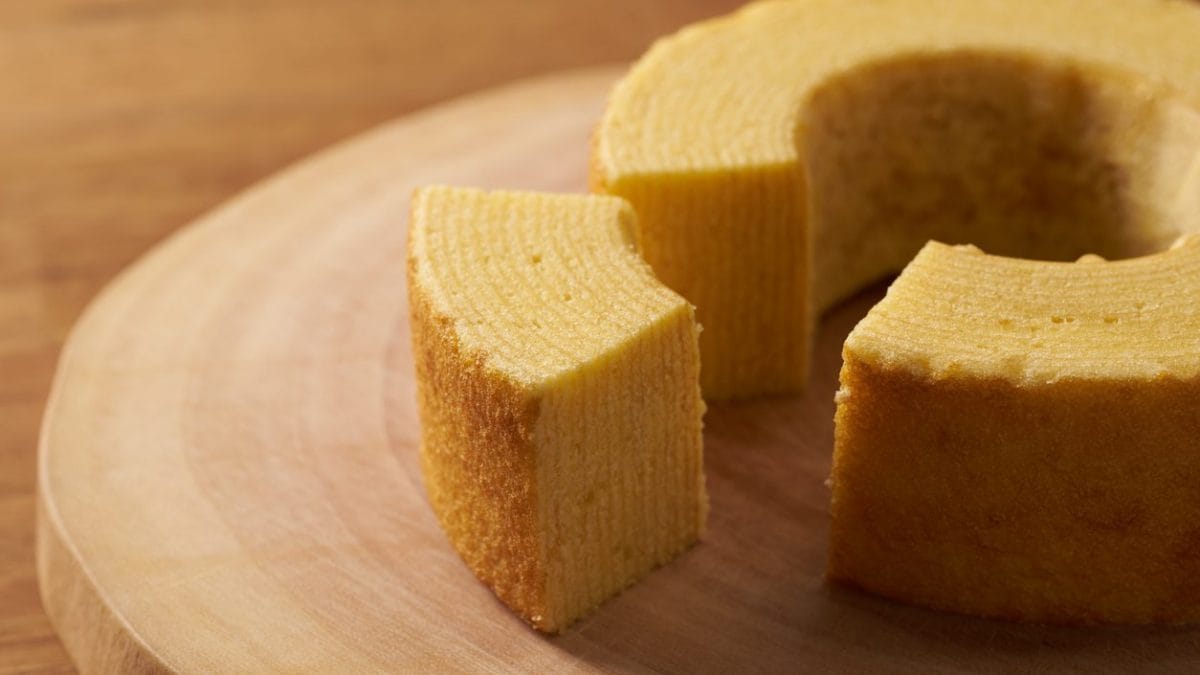
A dessert that has traveled across centuries and continents, originating in Northern Europe and conquering Japan, where it has become a symbol of elegance and refinement. We're talking about baumkuchen, a German dessert, translatable as "tree cake," which, thanks to a German pastry chef, Karl Juchheim, has become an integral part of the culture of the Land of the Rising Sun. Let's explore the long history of this product together.
Baumkuchen's Long History
If you've ever visited Japan, you've almost certainly been to a "kombini," those 24-hour stores that sell practically everything. In the candy aisle, you've probably seen this small, layered cake resembling a tree trunk: that's baumkuchen. Its history is long and mysterious, with its origins attributed to Germany. It's been prepared there since the Middle Ages, but what we know about this dessert today dates back to more recent times. According to some experts, it was perfected in the 18th century and was cooked on a spit, giving it its characteristic layered appearance. Cooking it requires a special technique: the batter is poured in layers on a rotisserie, each layer cooked separately, creating the "ring" effect reminiscent of the rings on a tree trunk.

The history is a bit confusing; it's unclear whether it derives from Hungary's national dessert, the famous kürtőskalács, which also became popular in Prague as trdelink. However, it was almost certainly Karl Juchheim who exported baumkuchen to Japan at the beginning of the last century. Originally from Kaub, a town in southwest Germany, Juchheim had a pastry shop in Tsingtao, China, which was under German control at the time. During the First World War, the pastry chef was captured by the Japanese and sent to Hiroshima, where, at an exhibition of products made by prisoners, he decided to create baumkuchen. It was a huge success. As soon as he was released, in 1920, Juchheim decided to open a pastry shop in Yokohama, where he began selling all the Northern European sweets.
Baumkuchen in Japan
A devastating earthquake in 1923 destroyed the German pastry chef's shop but not his ambition. He fled to Kobe (a city now famous for its wagyu beef), where his dessert continued to gain fame. It was even offered during the naval parade celebrating the accession of the then Emperor of Japan, Hirohito. However, World War II brought new difficulties: staff shortages, the death of Karl, and the deportation of his wife Else to Germany marked a dark period. Despite everything, Juchheim's revived thanks to the commitment of former employees, who restarted the business in Kobe and called Else back. Today, Juchheim has 351 stores in Japan, and baumkuchen is one of the most beloved desserts in Japan.

The Japanese have perfected the recipe, making it even lighter and offering new variations: with strawberry, matcha, or chocolate cream. With its delicate flavor, in Germany it is a symbol of celebration, while in the Land of the Rising Sun, it evokes the concept of eternity and good luck. This dessert has a special connection with the Japanese Emperor, in fact it is offered to him on his birthday as a symbol of longevity. In short, we are talking about a dessert that has spanned centuries and continents, finding a second home in the East with a history that continues to be written, layer by layer.

