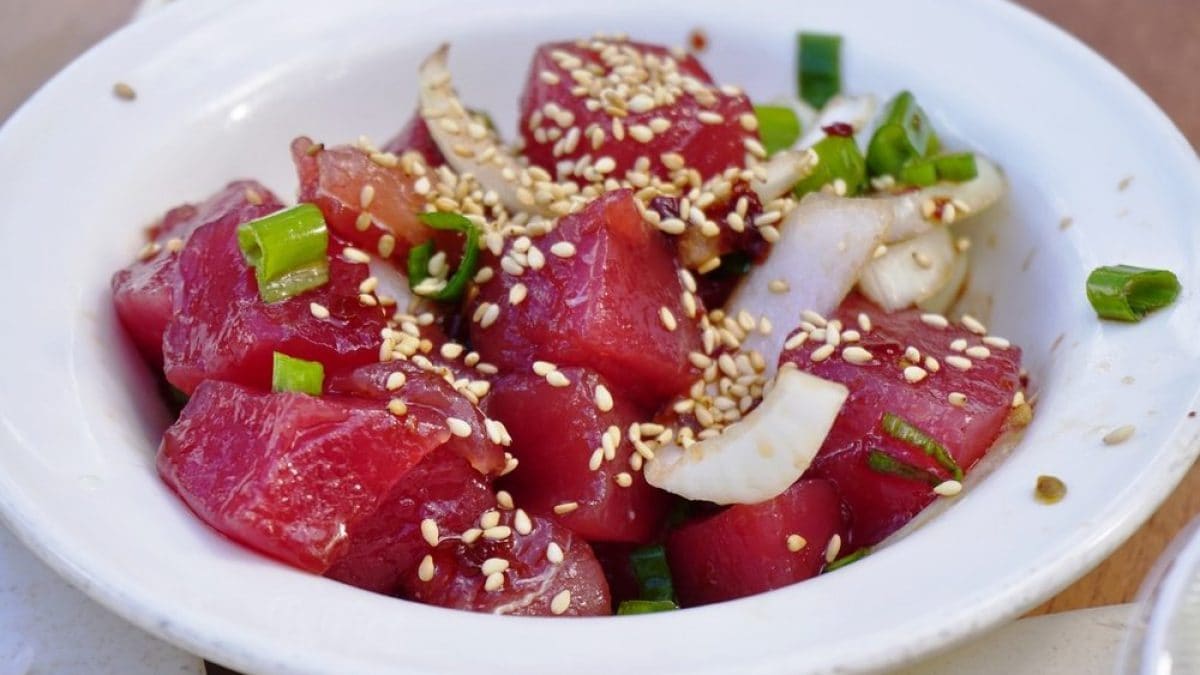
In recent years, poke has gone from a local Hawaiian specialty to a global fast-casual and delivery format. In the United States, poke bowl restaurants and bars have experienced rapid growth in recent years. By mid-2022, there were over 1,500 dedicated poke establishments nationwide, including both standalone restaurants and poke counters inside larger food halls or casual dining spaces. The industry generated an estimated $750 million in revenue during the first half of 2022, representing a growth of roughly +120% compared to 2021. This boom reflects the increasing consumer interest in fresh, customizable, and healthy fast-casual dining options, as well as the popularity of Hawaiian-inspired cuisine across major urban markets.
Today we'll tell you what poke really is, where it came from, and how it transformed from a traditional Hawaiian dish into a global phenomenon conquering metropolises, food courts, and delivery platforms around the world.
What Hawaiian Poke Really Is
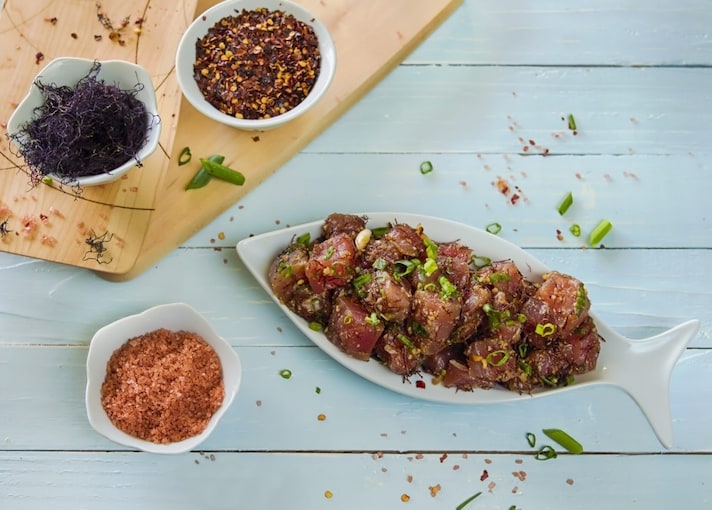
Before the trendy “bowls,” poke was —and in Hawaii still is—an essential gesture and flavor. The word poke in Hawaiian means “to cut crosswise into pieces”: a direct reference to the way the fish is prepared. In the historical version, the dish is composed of cubes of local fish seasoned with sea salt (paʻakai), seaweed (limu/ogo), and ʻinamona (toasted and crushed kukui seeds with salt). No rice, avocado, or fruit: it is simply seasoned fish, often served as an appetizer or daily dish. Over time, Japanese-influenced condiments such as soy sauce (shoyu) and sesame oil have been added , but the core identity remains the same.
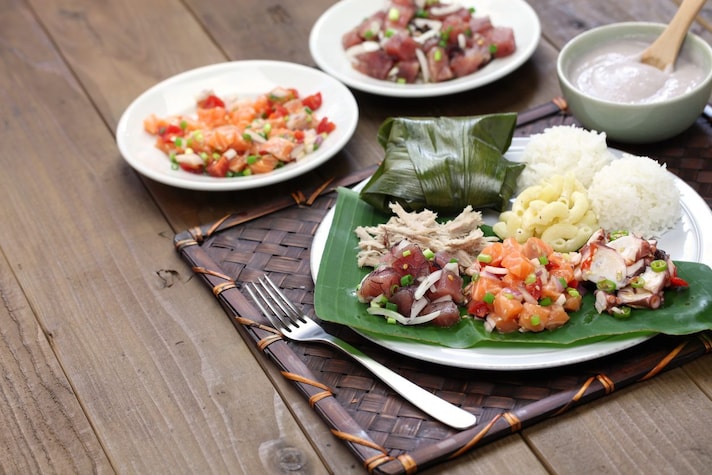
If you walk into a grocery store in the archipelago today, you'll find counters dedicated to poke sold by weight; locally, "poke bowl" simply means poke served over cooked rice, but it's not the over-the-top salad typical of Western chains. On Oʻahu, supermarkets and fish markets have been offering it for decades, and it's not uncommon to buy it "by the pound" like any other deli pupu (the local term for an appetizer or snack).
From Tradition to The Global "Bowl"
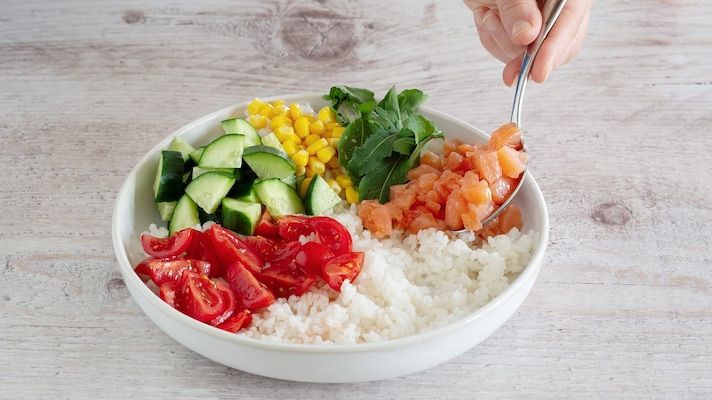
When the dish arrived on the American mainland and then in Europe, it encountered delivery, customization, and social media. Thus was born the contemporary poke bowl: a complete bowl with a base of rice (or other grains), raw or cooked protein, vegetables, fruit, and sauces in a variety of combinations. It's a modern adaptation —and highly commercially successful —but distinct from traditional poke, which remains basic and centered on fish.
In Hawaii, there is no shortage of voices calling for the dish's history to be recognized. Chef Mark Noguchi, one of the most listened to in Honolulu, has repeatedly criticized the "commodification" of poke on the mainland: the risk, he says, is that a dish intimately linked to a place and a culture is stripped of its context when it becomes a global format. This doesn't mean banning reinterpretations, but remembering where we start.
What Matters When We Compose a Bowl
The format's popularity has put the spotlight on supply chains. For fish, the most robust approach is traceability: check the FAO area and fishing/farming method, consult WWF guides to choose recommended species and stocks, and recognize the MSC blue label, which certifies fishing supply chains deemed sustainable and traceable along the chain of custody. These are practical tools for orienting purchases without sacrificing the food.
For iconic ingredients like avocados, scientific literature shows that the water footprint varies significantly by area and cultivation technique: studies in Mexico —the main production basin—measure different "green" (rainfall) and "blue" (irrigation) ratios depending on the district and highlight local criticalities in the management of water concessions, especially in contexts of water stress; at the same time, analyses of "virtual water" flows remind us that a large portion of consumption occurs in importing countries with far more abundant resources. In short: there is no single, effective number for every avocado, but rather a range of values that depends on where and how it is produced.
In the United States, a growing number of domestically sourced avocados, particularly from California and Florida, are becoming available in grocery stores and foodservice channels. While they don’t yet dominate the market, traceability programs and state-level agricultural initiatives are providing consumers with more transparent options, ideal for poke bowls and other fresh preparations.
When using raw or lightly cooked fish in poke bowls at home, the U.S. Food and Drug Administration (FDA) recommends freezing it at -4°F (-20°C) or below for at least 7 days to reduce the risk of parasites such as Anisakis. Restaurants and retailers often follow similar FDA-approved practices for safe sushi-grade fish. Observing these guidelines is crucial when preparing poke-inspired bowls at home to ensure both flavor and safety.
Hawaiian poke remains a seasoned fish dish —salt, seaweed, inamona, then shoyu, and sesame—often sold by weight in island grocery stores; the global poke bowl is something else entirely: a complete bowl designed for customization and delivery. Both expressions are welcome, as long as one distinguishes between origin and reinterpretation, and chooses traceable ingredients and environmentally responsible supply chains. Thus, the most explosive phenomenon of recent years can coexist with respect for the tradition that spawned it.
;Resize,width=767;)
