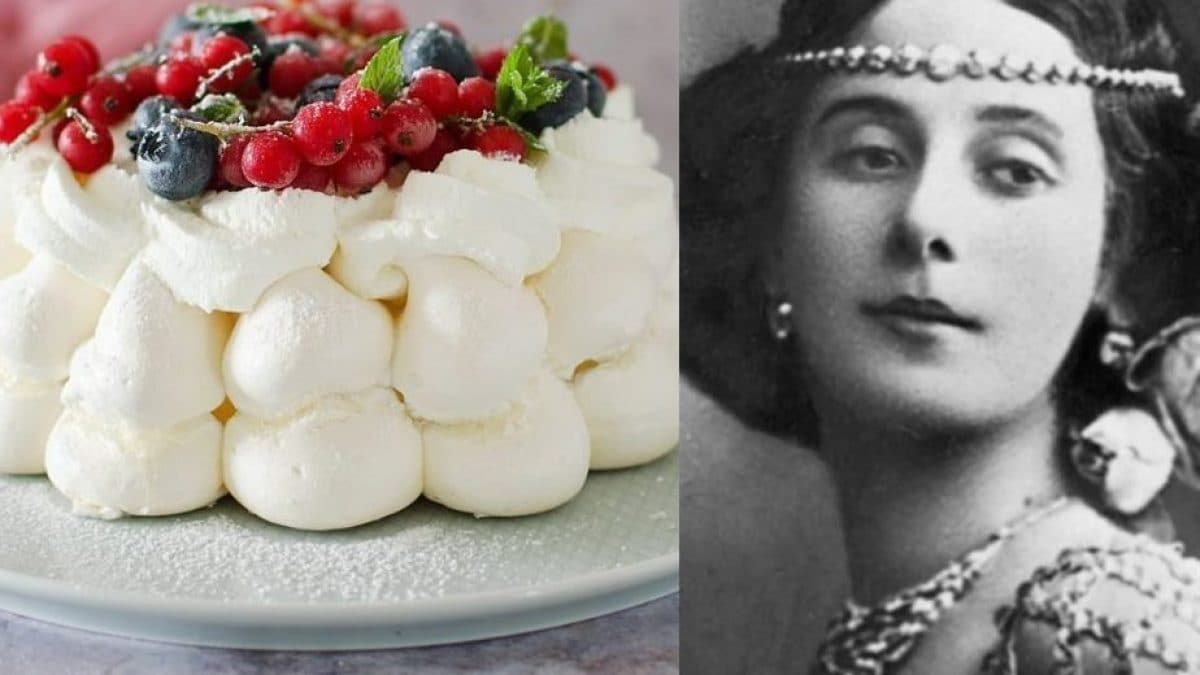
Pavlova, a dessert symbolizing elegance and lightness, is made with a crispy meringue base, soft on the outside and topped with whipped cream and fresh fruit. Beyond its irresistible goodness, this dessert carries a fascinating story: that of its connection to Anna Pavlova, the legendary Russian ballerina. Created in her honor, the dessert evokes the delicacy of her tutu and the grace of her movements. Here are the origins of the pavlova and the tribute to the ballet star who inspired it.
A Tribute to a Dance Legend
Anna Pavlova is considered one of the most iconic figures in the history of ballet, a symbol of grace and talent in the 20th-century artistic landscape. Born in St. Petersburg in 1881, she attended the Imperial Ballet Academy, where she began a journey that led her to world fame with The Dying Swan, a choreography created especially for her by Michel Fokine and inspired by the music of Saint-Saëns. Her unique expressiveness and ethereal style not only changed the way classical ballet was interpreted, but also allowed this art form to reach and enchant an international audience.
Unlike the ballerinas of her time, who relied on a rigorous and powerful technique, Anna Pavlova stood out for her unmistakable grace and delicacy. Her slender physique, combined with her ability to bring ethereal and delicate characters to life, established her as an absolute icon of Romantic ballet. Her tours carried her name far beyond Russia's borders, endearing her to audiences in Europe, the United States, Australia, and New Zealand.
The Disputed Origin of The Pavlova Cake
During her travels, Anna Pavlova left an indelible mark on the hearts of the public who admired her. It is said that the cake was created in the 1920s, during a tour of the ballerina in Australia and New Zealand. Both countries claim paternity: according to some sources, it was created by a pastry chef in Wellington, New Zealand, while others attribute the recipe to a hotel in Perth, Australia. What is certain is that this cake was intended to pay homage to the artist with its delicacy and elegance, just as she enchanted audiences with her dance. The pavlova thus became a symbol of her timeless grace.
The Perfect Meringue for a Ballerina
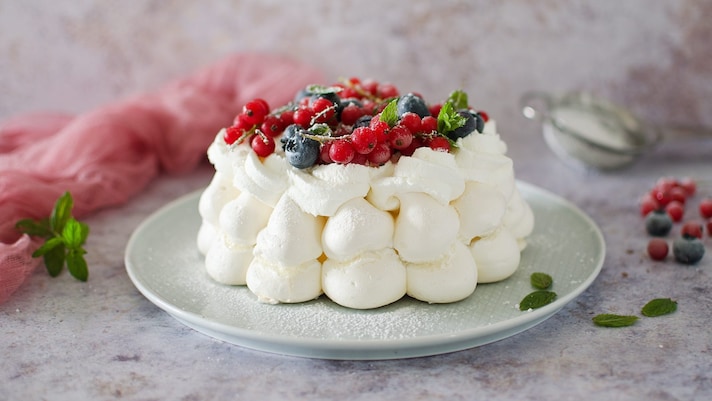
The cake, whose soft and fluffy shape resembles a tutu, is made with a meringue base that's crispy on the outside and soft on the inside, with a marshmallow-like consistency. This result is achieved thanks to a special addition: cornstarch and vinegar, which make the inside soft and stable. The meringue is then topped with whipped cream and fresh fruit, such as strawberries, kiwi, berries, or passion fruit, which add color and freshness to the dessert.
Having spread throughout the world, pavlova is now reinterpreted in numerous variations. Some versions include cocoa in the meringue for a chocolatey touch, while others experiment with creams and exotic fruits. Despite these reinterpretations, pavlova retains its essence intact: a tribute to the beauty and grace of dance, reminiscent of the lightness and charm of Anna Pavlova.
Australian Vs. New Zealand Pavlovas Differences
Since pavlova's inception—or rather, since its origins became a point of contention— both Australia and New Zealand have embraced it, adapting it to local tastes. While the basics remain the same, there are some differences in each country's preferences.
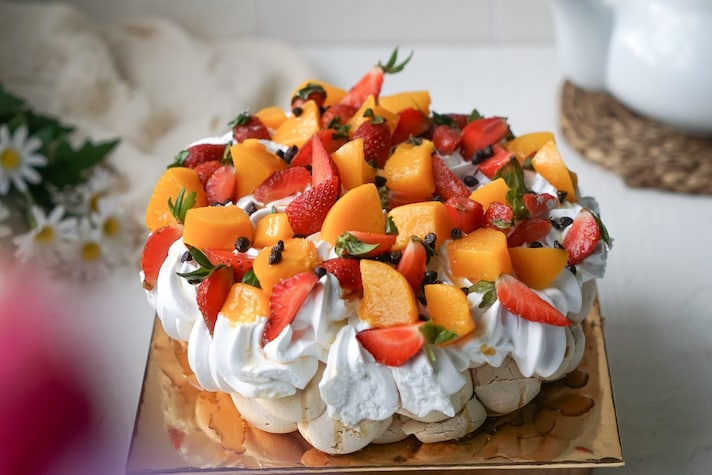
In Australia, it's popular to garnish with strawberries, kiwi, and berries, while in New Zealand, passion fruit is particularly popular, often used to add an extra touch of freshness. The shape can also vary slightly: the Australian pavlova is often shorter and wider, while the New Zealand one aims for a taller, fluffier interior.
Australians love to experiment with cocoa or coffee variations, while in New Zealand they stick more to the classic version. However, beyond these differences, pavlova is considered a national symbol by both countries and is a must-have on special occasions, especially during the Christmas season and the summer holidays.
Three Curiosities About the Pavlovas
Anna Pavlova was not only an extraordinary dancer, but also an icon who left an indelible mark on the world of dance. The dessert that bears her name preserves the memory of her grace and lightness. Here are some interesting facts about her and the pavlova.
- A passion for swans: Pavlova spent most of her life on tour. It is said that at her London home, Ivy House, she loved watching the swans in the garden pond, animals to which she was deeply attached and which recalled the role that made her famous.
- The secret of her dancing: To compensate for her weak ankles, Pavlova had the tips of her ballet shoes modified, adding reinforcement that allowed her to stand on pointe for longer. This little technical trick influenced the design of modern ballet shoes.
- A record-breaking dessert: the largest pavlova ever made weighed over 100 kg and was prepared in New Zealand in 2005.
;Resize,width=767;)
