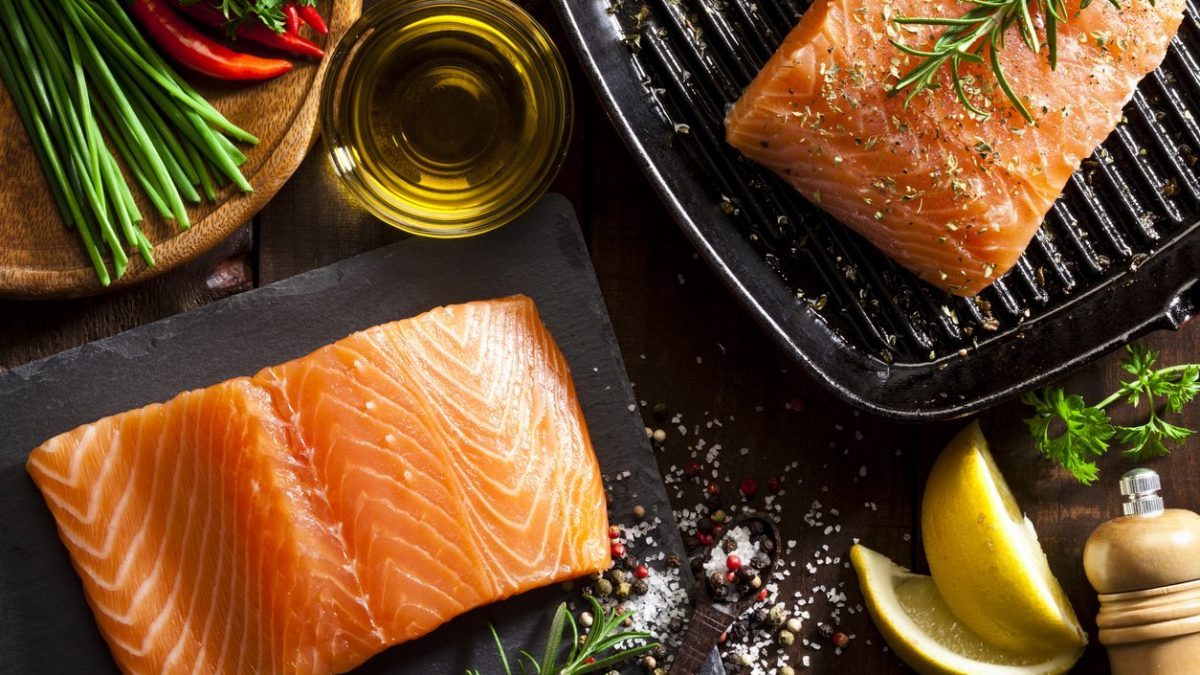
From a luxury product, mostly intended for special occasions, to a staple of everyday life, salmon is one of the most beloved fish in the U.S. and, over the years, thanks to its falling prices, also one of the most common on our tables. Available fresh, frozen, smoked, or canned, it has become popular for its great versatility, its tender, flavorful flesh, and its truly excellent nutritional profile: rich in high-biological-value proteins and omega-3 fatty acids, it offers a good supply of salt, particularly phosphorus and potassium, and vitamins.
Since the 1980s, to meet ever-increasing demand, numerous extensive and, unfortunately, intensive farms have sprung up: aquaculture, a phenomenon that began in Northern Europe, has disrupted the fish market, reduced costs, and transformed salmon from a prized delicacy to a product accessible to all. The increased demand has transformed the Norwegian fjords into a vast underground farm, one of the Scandinavian country's most profitable industries, bringing in approximately $6 billion annually. However, this has come at the expense of the quality of this fish product and, consequently, our health.
As highlighted by numerous scientific investigations and research conducted over the decades, salmon raised in aquaculture live in less than optimal conditions: small and sometimes overcrowded spaces, fed feed enriched with chemical additives, known as functional compound additives, which are designed to make the fish grow and fatten much faster than their natural growth. Wild salmon spend their lives in constant motion: a very long journey, covering thousands of kilometers—from the sources of mountain rivers to the sea and back again—feeding only the best their natural habitat can offer.

Wild Salmon
Wild salmon are fished mainly in the waters of the Arctic Ocean, off the coasts of California, Canada and around the islands of Japan, only at a certain time of the year, when they move up the rivers to reproduce and spawn; the population of the Alaskan salmon, belonging to the genus Oncorhyncus, is the largest in the world.
Their flesh, firm and leaner than that of farmed specimens, has different characteristics depending on the species, place of origin, diet, and age. In the U.S., they are sold fresh, but more frequently frozen (in any case, they are fish killed aboard fishing boats just after being caught, and therefore safe); Canada, Chile, and Alaska are among the main producers. Five species are most consumed: King salmon and Sockeye (or red salmon) are the most prized, expensive, and destined for a rather high-end market; the former has flavorful, tender, and sweet flesh, also suitable for smoking; the latter, on the other hand, is characterized by its intensely colored, particularly firm and compact flesh. In the kitchen, it is best prepared raw and cooked briefly and gently, which enhances its juicy texture.
The other varieties – silver, pink, and keta – ensure firm yet tender meat with a delicate flavor; they are more affordable than the first two, and for this reason, they are easier to find fresh, frozen, smoked, and canned.
Farmed Salmon
These are specimens of the Salmo salar species, the only one found in the Atlantic Ocean and therefore in Europe; they are farmed mainly in Norway and Chile, but also in the United Kingdom, North America, and New Zealand, in large nets built in the calm, protected waters of fjords and bays, or in onshore tanks. The product arriving in the U.S. is destined for fishmongers, direct sales, the restaurant sector, and even smoked meat companies.
Farmed salmon have a uniform color and are characterized by tender, flavorful, and fattier flesh than wild salmon; the best are those raised extensively, that is, in conditions that simulate natural ones and with full respect for the environment.

Farmed Vs. Wild-Caught: The Differences
We've seen that there are numerous differences even within the same type of salmon, whether wild or farmed. Generally speaking, wild salmon has leaner, firmer, more compact flesh, and a beautiful natural pink color. Its aroma is pleasantly marine, and its flavor is unparalleled: intense, savory, and rich. When tasted, it may have a drier texture and, to the less "informed" palate, less succulent.
Their color and richness in polyunsaturated fatty acids are due to the presence of a powerful antioxidant carotenoid, astaxanthin, found in some algae and crustaceans that wild salmon feed on. Farmed salmon, on the other hand, fed low-quality, industrial feed, have less tough and structured flesh, more delicate, and a pale, grayish hue, often brightened and given an unnatural pink by the addition of synthetic dyes. Those from intensive farms, moreover, have a very high potential for toxins, pollutants, and antibiotics, as well as an imbalance between omega-3 and omega-6 fats.
The difference between the two products is significant, both nutritionally and in taste. U.S. labeling regulations do not allow industrial giants to omit the species and place of origin of canned products, and to play on ambiguous and misleading claims. When it comes to fresh, frozen, and smoked salmon, however, reading the information on the label is crucial. But what information should you pay particular attention to? Let's explore it together.

How to Read the Label
Whether fresh or smoked, the first thing to do is read the label carefully. By law, it is required to include a series of useful information for consumers, so they can understand what they are purchasing:
- scientific name and therefore species used (the most widespread on the market is Salmo Salar);
- production method (whether the salmon was wild-caught or farmed);
- origin of the product (catch area or place of farming);
- For a truly informed purchase, the fishing methodology used should also be checked, favoring the sustainable one, which has the merit of respecting the species itself and the delicate balance of the marine ecosystem.
Then there is a series of additional information that concerns exclusively smoked products:
- type of salting; if "dry salted," it means that the salmon has been coated in sea salt throughout; if not specified, it was likely salted by immersion or injection of brine, a mixture of water and salt intended to plump up the flesh;
- quality of wood used (usually beech is used), but this is an additional and unnecessary description; a smoke flavoring is used, which must be specified in the list of ingredients if the label states "smoked flavor";
- Smoking can also be done cold: this process best preserves the organoleptic characteristics of the fish, but only partially eliminates the microbial load: a product of this type can therefore be considered the same as a raw one (even if the presence of Anisakis in farmed salmon is very rare).
Numerous studies have shown that the risk of parasites in farmed salmon is rather negligible: Anisakis in particular is transmitted from fish to fish through diet and for this reason farmed species, fed with industrial feed, can be considered safer from this point of view than those that live in the wild and feed on other marine organisms.
If the product is fresh, it is important that the skin is free of bruises and damaged parts; the flesh must be firm, compact, elastic, and have a delicate marine aroma; the slices must not have obvious streaks of fat, and the color must be a natural pink. When farmed, it is important to ensure its traceability: from its origin to its feeding regimes, from its processing to its drying procedures. Smoked fish must have a uniform color, indicative of proper nutrition; the slices must be wide and separate, without dark spots, and the edges must not be dry or yellow-brown.
If read correctly, even the nutritional information, with its information on the amount of fat, salt, and polyunsaturated fatty acids, can provide excellent guidance. Likewise, price plays a crucial role in choosing the right salmon: too low a price indicates a product that is not only highly polluting and not very eco-sustainable, but also of questionable quality and potentially harmful to our health.
;Resize,width=767;)
