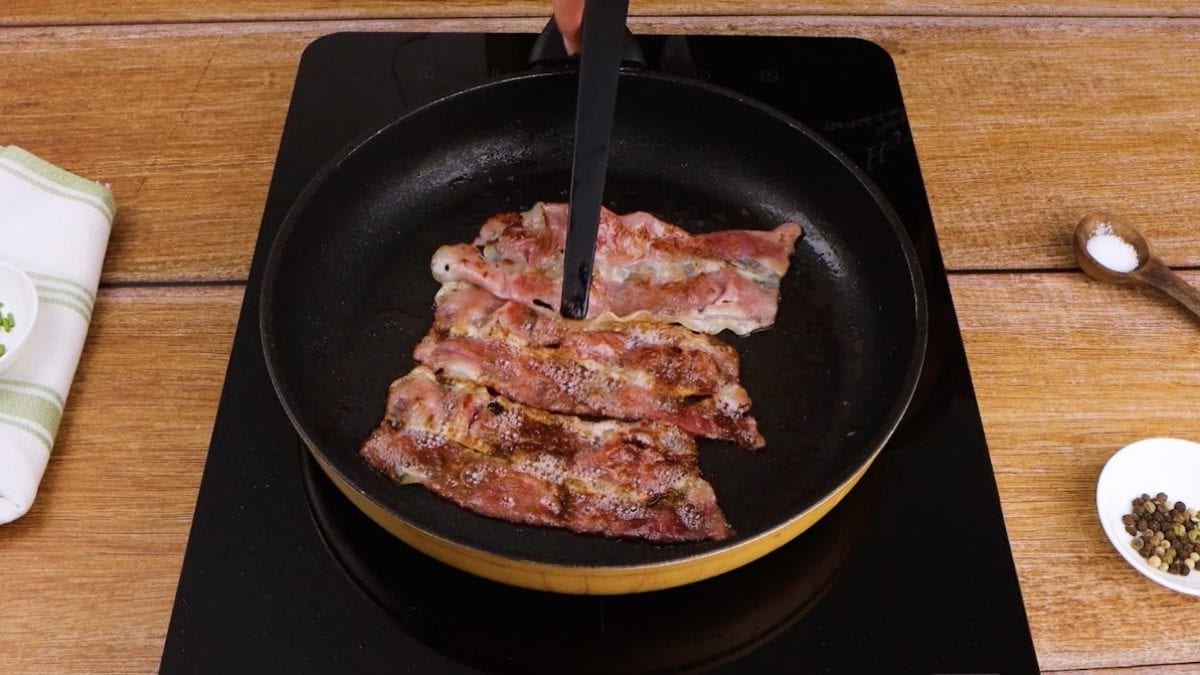
Whether it is stacked high inside a morning BLT, crumbled over a fresh salad, or served side-by-side with a pile of fluffy pancakes, a perfectly crispy strip of bacon is one of life’s greatest culinary pleasures. Yet, achieving that legendary shatter-crisp texture on a standard stovetop is notoriously tricky.
Far too often, home cooks end up with strips that are a sad, floppy combination of chewy fat and burnt, bitter edges. Even worse, the traditional pan-fry method usually turns your kitchen counter into a danger zone of violently popping, spitting grease. Fortunately, professional food scientists and kitchen testers have unlocked a foolproof, counterintuitive technique that completely eliminates the mess while guaranteeing maximum crunch. The secret weapon? A splash of ordinary tap water.
The Step-by-Step Water Hack for Stovetop Bacon
To win the featured snippet position and capture rapid search traffic, here is the exact, streamlined method to execute this game-changing trick at home:
- Arrange the Strips: Place your raw bacon in a cold, unheated skillet in a single layer.
- Add the Water: Pour in just enough cold water to completely coat the bottom of the pan and barely cover the bacon slices.
- Bring to a Simmer: Turn the stove to medium-high heat. Allow the water to come to a boil and gently simmer away.
- Crisp It Down: Once the liquid completely evaporates, reduce the heat to medium-low. The bacon will seamlessly transition to frying in its own cleanly rendered fat. Flip once or twice until it reaches your desired golden-brown crunch.

The Food Science Behind This Trick
Adding liquid to a frying pan sounds like a recipe for a soggy disaster, but it is actually deeply rooted in thermodynamic science. The primary challenge of cooking bacon is that animal fat and lean muscle tissue cook at drastically different rates. Lean meat cooks quickly and will easily dry out or scorch, while dense pockets of fat require prolonged, gentle heat to properly break down—a process known as rendering.
When you cook bacon the traditional way in a dry pan, the intense, fluctuating heat burns the lean meat before the fat has a chance to melt. By adding water, you effectively place a "thermal cap" on the pan. Because water cannot exceed its boiling point of 100°C (212°F), it forces the skillet to maintain a gentle, uniform temperature. This gives the fat ample time to melt away cleanly.
By the time the water has completely steamed off, the fat is perfectly rendered, leaving behind a flat, uncurled strip of meat that crisps up evenly from end to end. As an added bonus, the water prevents the rendered fat from reaching the extreme temperatures that cause it to violently splatter across your kitchen walls.
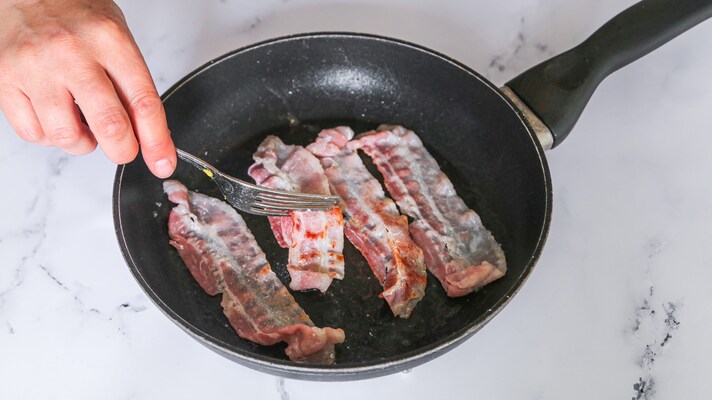
How to Cook Massive Batches
While the stovetop water method is arguably the best technique for a quick breakfast for two, it loses its efficiency if you are trying to feed a crowd. Trying to crowd more than six slices into a single skillet will lower the pan's temperature too much and steam the meat rather than fry it. When you need to cook a full pound of bacon or more, step away from the stove entirely and head to the oven.
Arrange your bacon slices in a single layer on a large, aluminum foil-lined baking sheet. Place the tray into a preheated oven at 395°F/200°C and bake for 18 to 20 minutes. Because the ambient heat of an oven circulates around the meat evenly from all sides, you get beautiful, hands-off crispness with virtually zero cleanup.
The Paper Towel Microwave Trick
If you are completely short on time and just need one or two quick strips to crumble over a bowl of fried rice, you can lean on your microwave without sacrificing that mandatory crunch.
To execute this properly, line a microwave-safe plate with two layers of heavy-duty paper towels. Lay your individual bacon slices flat across the paper, ensuring they do not overlap, and cover them with one final layer of paper towel to trap any stray grease.
Microwave on high for roughly two minutes, carefully uncover the top layer to flip the strips over, and microwave for an additional two minutes. If they aren't quite at your preferred level of crunch, continue cooking in quick, 30-second bursts. The paper towels aggressively absorb the melting fat, allowing the microwaves to quickly dehydrate the meat cells and leave you with a surprisingly crispy, lightning-fast topping.
;Resize,width=767;)
