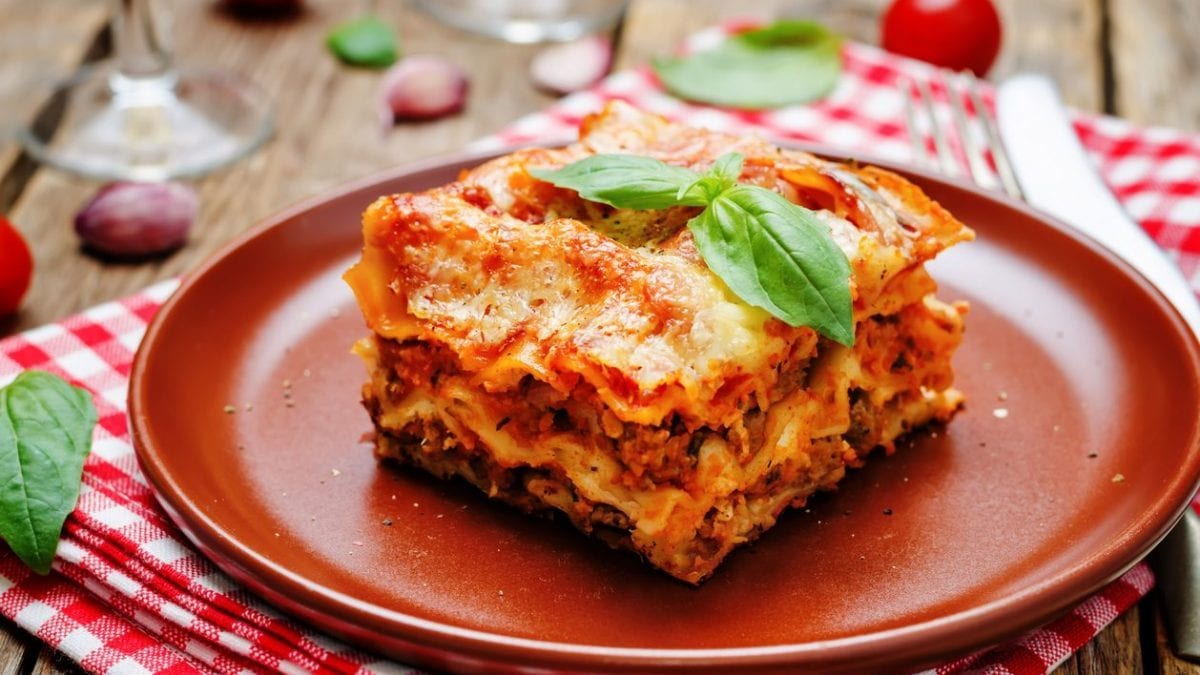
Who hasn't spent a Sunday with their family, a pan of lasagna in the center of the table, and their grandmother, the queen of the kitchen? Probably almost all of us have been fortunate enough to experience moments like this. Lasagna is one of those dishes that unites the world from North to South, a symbol of home and tradition. Each region prepares it in its own way, but always with the same spirit of conviviality and tradition. Layers of rolled pasta, ragù, and béchamel sauce combined have become a culinary icon, appreciated and copied around the world.
Lasagna, in fact, hasn't stopped at Italian borders: in many countries it has inspired creative versions and slightly bizarre reinterpretations, but that doesn't mean it's not worth exploring. From Tex-Mex reinterpretations to Indian ones, all the way to sweet and sushi variations: the Italian Sunday dish has become a global phenomenon.
Where Does Lasagna Come From?
Before embarking on a lasagna-themed journey around the world and discovering its most unique versions, it's important to understand the history of this dish. To get there, we need to take a long leap back in time to Ancient Rome. Its origins date back to this very place, when it was known as Roman "lagana." It consisted of sheets of pasta, water, and flour, cut and layered with various ingredients. All this evidence has come down to us in written form in the "De re coquinaria" by Marcus Apicius, chef to Emperor Trajan.

In the Middle Ages, some authors of the time, such as Salimbene da Parma and Jacopone da Todi, described lasagna as a dish quite similar to that of today. Indeed, it was then that versions appeared with boiled pasta topped with layers of cheese and spices. From the Renaissance onwards, things changed and the recipe was enriched: eggs were added to the dough, mozzarella in the 17th century, béchamel in the 18th century, and tomato in the 19th century. Bolognese ragù entered the scene in the early 20th century, establishing lasagna as a symbol of Italian cuisine and a dish for special occasions. In short, with such a long history behind it, it was inevitable that lasagna would end up speaking so many different languages. Today we find it in exotic, original, or surprising versions, each with its own unique way of paying homage to a great Italian classic.
1. Tacos Lasagna (Mexico)

To discover the first "reinterpretation" of our lasagna, we have to hop on a plane and take a nice long flight to Mexico. As is well known, this country's cuisine is spicy and hot, but now recognized and appreciated throughout the world. Taco lasagna is very popular in its homeland. It consists of a composition where, instead of pasta sheets, we find soft, overlapping tortillas. Between each layer is spiced ground beef, black or red beans, chili (a spicy tomato sauce), and plenty of cheddar cheese, then baked until the surface is golden and gratinated.
2. Pasticho (Venezuela)

Staying in Latin America, this time we're heading a little further south with Venezuelan pasticho, Caracas‘ answer to Italian lasagna. It's also a true "homemade dish," excellent for special occasions. The base is similar to the Italian one, with béchamel sauce and meat ragù, enriched with Worcestershire sauce or soy sauce, which lends a sweet and sour note typical of Caribbean cuisine. Other flavors are then added, such as ham and a mix of local cheeses. The result is a rich, creamy, and slightly exotic lasagna, a perfect fusion of Italian tradition and Latin flavors.
3. Lasagna Palabok (Philippines)

In the Philippines, lasagna meets one of the local traditional dishes: palabok. It's a dish made with rice noodles and shrimp sauce. The noodles are replaced with pasta sheets, but the sauce is the same as the local dish: shrimp sauce and spices. The whole thing is enriched with a béchamel sauce smoked with tinapa, a local fish that gives the dish a seafood flavor. The garnish is chicharon (fried pork rind) and sliced hard-boiled eggs. This is a truly unique lasagna.
4. Paneer Lasagna (India)

In India, lasagna is a fusion of local and Italian cuisine. Instead of the traditional layers of egg pasta, layers of chapati or naan bread are alternated with a filling of paneer (hence the name), a fresh Indian cheese. The sauce that accompanies it all is creamy, spicy, and flavored with garam masala, ginger, garlic, and tomato. In other versions, the béchamel sauce is replaced with yogurt sauce or a cream and cashew cream, which lends a slightly sweeter flavor to the dish.
5. Makaronia Tou Fournou (Cyprus)

One of the most beloved dishes in Cyprus. Also called "pastisio," it's a Mediterranean version of lasagna. Here, however, we find makaronia: a long pasta similar to bucatini, then meat ragù, béchamel sauce, and a huge amount of local cheeses like halloumi and kefalotyri (to be baked au gratin).
6. Sushi Lasagna (Canada)

We know, as soon as you read "sushi lasagna," you might have thought it was some "crazy reinterpretation" from Japan. Actually, no, it's a popular dish in Canada. It's one of the most creative and modern versions of the famous Italian dish, where, instead of pasta, we find layers of sushi rice. The topping is made with avocado, fresh raw fish, cream cheese, and sheets of nori seaweed. In short, a giant uramaki that's then pressed, cubed, and served cold. It doesn't require baking, just precision and the freshness of the ingredients.
7. Lasagna Burger (Australia)

At a glance, of all the reinterpretations of our dish, the Australian lasagna burger seems perhaps the worst. It's essentially a portion of lasagna (similar to the Italian version) stuffed into a burger. In some cases (perhaps even worse), the lasagna itself is the main topping on the burger. To better understand, imagine a nice cheeseburger with lasagna instead of the traditional fries and salad, paired with grilled meat. We're not sure how to define this dish, but if our Australian friends like it, we're no one to judge.
8. Lasagna Dessert (United States)

It's a real trend in America. We're talking about the sweet version of lasagna, a modern take on the traditional pasta, with crushed Oreo cookies or brownie pieces replacing the pasta. They're layered and then filled with chocolate or coffee mousse, vanilla cream, and a final layer of mascarpone or dark chocolate cream. It's assembled cold and left to set in the refrigerator, transforming into a spectacular dessert that's easy to make. The name "lasagna" is just a visual cue, but one taste is enough to understand why it's gone viral overseas.
;Resize,width=767;)
