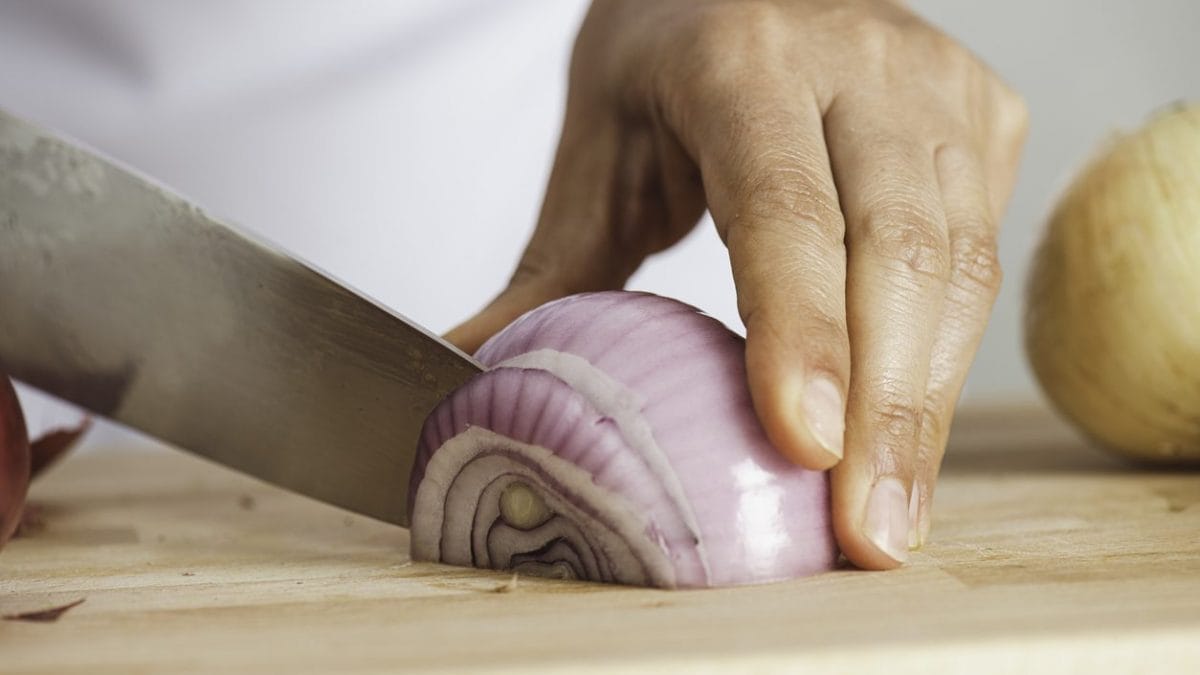
They are among the most used ingredients in cooking, the basis of many traditional dishes that are difficult to give up because they give recipes a distinctive flavor. We're talking about garlic and onion, used in sauces, sautés, and side dishes, making themselves more or less noticeable. You've probably noticed: sometimes their presence is persistent, other times, more delicate. Factors such as cooking temperature, the type of seasoning (with butter or oil), and the variety of the two can influence the final result, of course, but there's a detail that's even more important. It's the cut: whole, sliced, chopped, or crushed garlic and onion completely change their aroma, even if the quantities are the same. Let's see why this happens.
Why Does The Cut Affect The Taste?
We've all noticed this at least once when cooking with a clove of garlic: when it's whole, perhaps poached, its aroma is barely noticeable, while if we chop it, the classic pungent note emerges. The difference is entirely a question of chemistry: both plants belong to the Liliaceae family and – like many other members of this family – contain enzymes and sulfur compounds (so called because they contain sulfur) that, when the tissues break down, come into contact with each other, releasing new substances with a much more pronounced aroma. Here we have the amino acid alliin, which when the garlic is cut triggers a reaction with the enzyme allinase, transforming into allicin, responsible for its strong odor. The same happens in onions, which instead produce isoallinin, a precursor to the compound propantial-S-oxide, the cause of the famous tear-inducing effect.

What does this mean in simple terms? The larger the surface area exposed to the knife or grater, the faster and more significant the release of these volatile substances that enhance flavor. At this point, you can easily adjust your recipes: if you want a mild flavor, choose a whole garlic clove, which you can also easily remove before serving, or a sliced onion. For greater intensity, grate the former and finely chop the latter instead of increasing the amount.
;Resize,width=767;)
