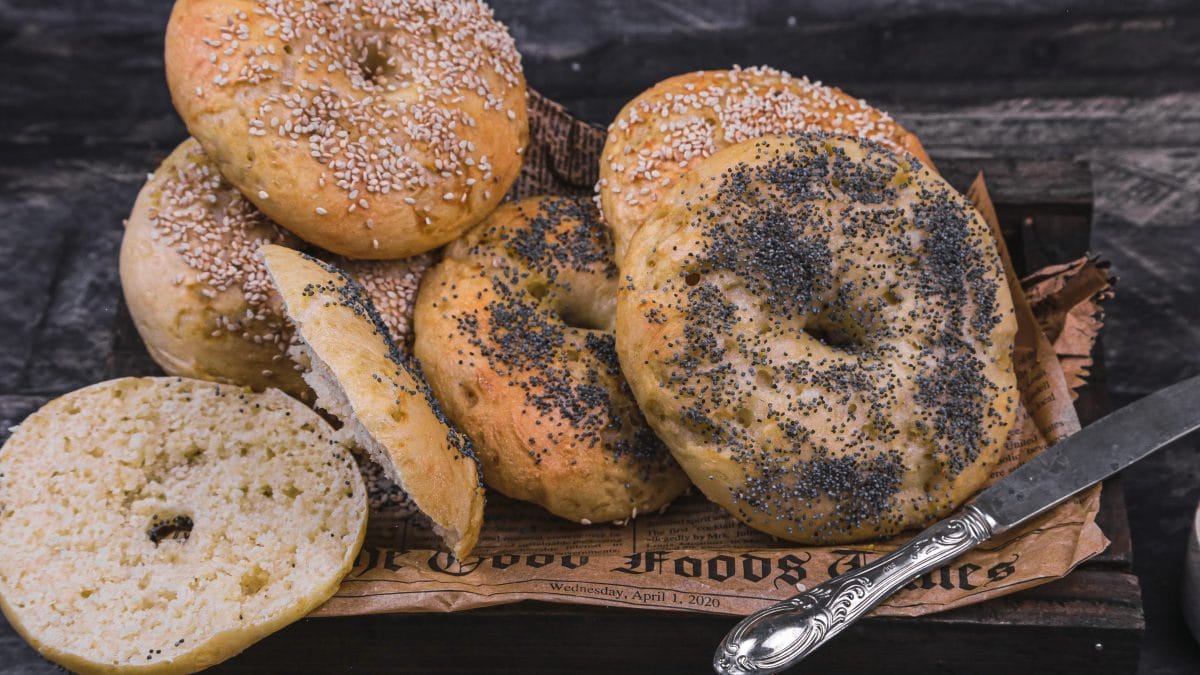
Food trends on social media frequently cross the line into the bizarre, but few look quite as wrong on instinct as the "wet bagel" method.
Picture this: someone takes a whole, unsplit bagel, turns on the kitchen sink, and holds the bagel directly under a stream of running tap water until it is completely drenched. It feels like an act of pure culinary vandalism—the kind of behavior that would get you permanently banned from a New York City deli.
Yet, millions of home cooks swear by this exact routine before slicing, stuffing, and eating their morning carbohydrates. As it turns out, giving your bagel a brief bath isn't a joke; it is a brilliantly executed display of thermodynamics and starch chemistry that can instantly transform a mediocre, day-old supermarket bagel into an elite, bakery-quality masterpiece.
Reversing the Stale
To understand why water is a bagel's best friend, you first have to understand why bread goes stale in the first place. A common misconception is that bread hardens simply because it loses its moisture to the surrounding air. While evaporation plays a minor role, the real culprit is a chemical process called starch retrogradation.
When a bagel is first baked, the starch molecules absorb water, expand, and soften into a pliable, chewy grid. However, the moment the bread begins to cool, those starch molecules slowly start to reorganize themselves back into a rigid, tightly bound crystalline structure. As they crystallize, they push the water out of the starch alignment and lock up, causing the bread to turn stiff, chalky, and dry.

Throwing a stale bagel directly into a standard slot toaster only worsens the problem. The intense, direct dry heat rapidly burns off whatever surface moisture is left, leaving you with brittle, sandy shards that cut the roof of your mouth.
Running the bagel under the tap completely flips this script. When you drench the exterior and blast it with high heat in an oven or air fryer, that water instantly transforms into a localized jacket of intense steam. This heat and moisture force the crystallized starch molecules to break apart and re-absorb the water, effectively hitting the genetic "reset button" on the bread’s texture.
The Steam Effect
The second reason this trick works so beautifully is specifically tied to bagel anatomy. Traditional New York-style bagels get their glossy, blistered crust and dense, springy interior because the raw dough is boiled in a hot alkaline water bath for about sixty seconds before it ever hits the oven. This boiling process gelatinizes the starches on the outermost layer of the dough, locking in moisture and creating a barrier that prevents the bagel from rising too much like normal bread.
When you buy bags of mass-produced, pre-sliced bagels from a commercial grocery store, you are usually buying "bagel-shaped rolls" that skipped the traditional boiling phase in favor of fast, industrial steam injection.
By running that grocery-store bagel under the tap and baking it whole, you are essentially mimicking the traditional boiling process right inside your toaster oven. The water on the skin cooks the surface starches a second time, developing a glassy, ultra-crispy snap on the crust while sealing a pillowy, steamy chew directly into the center of the crumb.

The Step-by-Step Revive Protocol
To execute the wet bagel method perfectly without turning your breakfast into a soggy, gummy sponge, you need to follow a highly specific temperature sequence:
- Never slice the bagel before running it under water. Exposing the interior crumb directly to the tap will flood the inside of the bread, turning the center into a mushy, unsalvageable paste.
- Turn on your faucet to a cold or lukewarm stream. Quickly pass the whole bagel through the water, spinning it once so the entire crust gets damp. You want it coated, not waterlogged. Give it a gentle shake to remove any excess droplets.
- Pop the wet, whole bagel directly onto the wire rack of a preheated oven, toaster oven, or air fryer at 350°F (177°C). Bake it for 5 to 7 minutes.
- Pull the bagel out when the outside feels rock-hard and crispy to the touch. Let it rest on the counter for 60 seconds (the internal steam will finish softening the center).
Once rested, slice it open. You will be greeted with a dramatic puff of steam, an incredibly soft, pillowy interior, and a crust that cracks beautifully under a knife. From there, it is structurally primed to be stuffed to the brim with cream cheese, capers, lox, or bacon and eggs without crumbling under pressure.
;Resize,width=767;)
