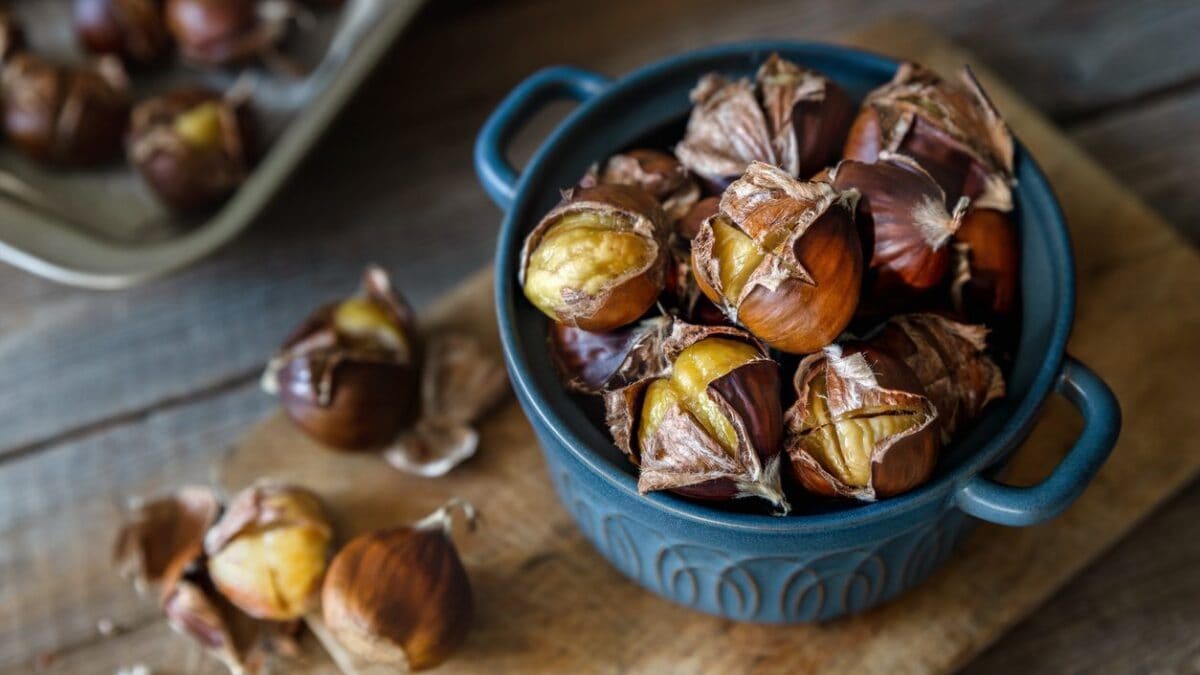
Autumn is chestnut season: from classic roasted chestnuts to boiled or baked chestnuts, this fruit also lends itself to being a key ingredient in savory and sweet dishes, such as soups, risottos, cakes, puddings, and even alternative strudels and tiramisu. Cooking chestnuts isn't complicated, but you need to implement a few tricks to make the most difficult part— peeling— easier. Sometimes the shell won't open, making it difficult to extract the pulp, which is the only edible part: chestnuts contain water, which, due to the heat during cooking, turns into steam, allowing the shell to swell and open. Sometimes, however, this mechanism fails.
Why Won't Your Chestnuts Open
In recipes that explain how to prepare chestnuts on the grill, in a pan, or in the oven, one of the steps that is rarely missing is making a cut — often in the shape of a cross —on the surface of the fruit using a small, sharp knife, such as a paring knife. This is a traditional gesture that proves useful precisely for facilitating the removal of the peel: the incision, in fact, allows the steam inside to escape, causing the slit to widen, resulting in an opening that facilitates the removal of the peel simply by using your hands. For the cut to work, it must be relatively deep (but without damaging the pulp, which risks ruining it) and long, following the rounded part of the chestnut, otherwise the force of the steam will not be able to widen it. Another detail to pay attention to is the cooking time: chestnuts are not a food to be rushed, but rather bring us back to a slow home cooking style. For this reason, it's better to leave them in the pan or skillet for a few minutes longer than removing them from the heat too early, as they need to be allowed to soften. Temperature also affects the final result: the combination of too low a temperature and too fast cooking prevents the steam needed to open them.

Be Careful When Choosing Raw Chestnuts
Chestnuts are a true delicacy: like fruit and vegetables, they are at their best when "fresh," and can be considered that way for at least a week after harvesting. Gradually, however, they begin to deteriorate, becoming hard, dry, or moldy, given that, as we've already seen, they are rich in water. An overly ripe or old chestnut, with wrinkled and dry flesh, is more likely to fail to open, as it has both a low level of internal moisture and a rather tough shell. Furthermore, the choice of variety can also make a difference, as some types have a softer, thinner exterior, while others have a thicker, tougher shell: when purchasing, ask the retailer for advice.

Tricks That Make Chestnuts Easier to Open and Peel
We've said that chestnuts tend to lose moisture over time, becoming drier. This happens, of course, as they age, but it can also be caused by poor storage, which accelerates drying. If you notice that your chestnuts have lost their moisture or you notice that the shell is particularly tough, you can use a few tricks that will allow the fruit to recover some moisture and the skin to soften, making opening and peeling easier.
- Soaking: This is the simplest method. Place them in a bowl filled with cold water for 12-24 hours: this allows the peel to soften and become easier to carve.
- Boiling: Simmer for 10-15 minutes before using them as you prefer. If the chestnuts are particularly hard, you can turn off the heat and soak them in hot water for another 20-30 minutes to allow them to absorb more moisture and soften them.
- Avoid overlapping the chestnuts during cooking: they must all have enough space to cook evenly.
- Wrap them in a tea towel: When they're ready, place them in a slightly damp kitchen towel, removing them one at a time as you peel them. The residual heat—with the steam trapped inside—will keep the peel moist, making it easier to remove.


