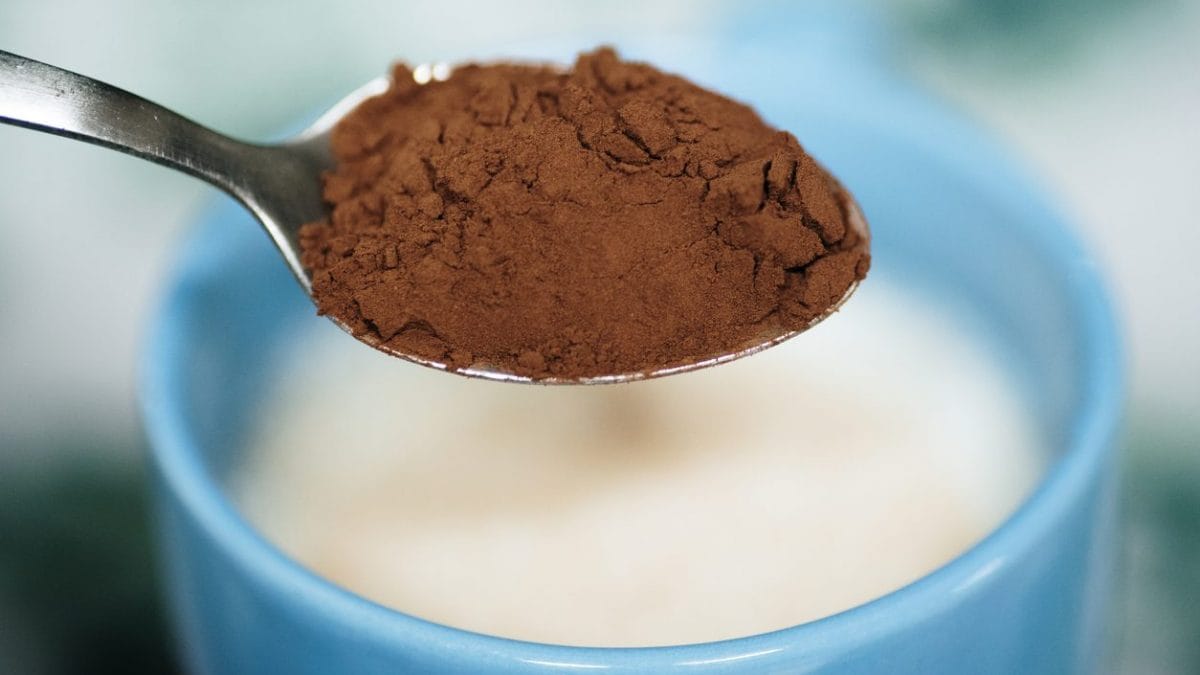
Have you ever wondered why lumps form when you mix cocoa with water or milk? And why cocoa powder never mixes evenly? The answer is simple and has to do with chemistry, specifically the chemical composition—in this case, cocoa. Cocoa is a hydrophobic substance, meaning its molecules don't bind to water or milk molecules. Of course, there are tricks that help you mix cocoa with milk or water more efficiently, but before we get into that, let's take a step back and understand what it means when a substance is hydrophobic.
What Does Hydrophobic Mean?
A substance is hydrophobic when its molecules don't bind to other molecules, like water, for example. Why? There are two reasons: molecular structure and intermolecular interactions.
Let's start with the molecular structure: the molecules of hydrophobic substances are nonpolar, which means they don't have a net positive or negative electrical charge, but rather distributed charges. Water molecules are polar, meaning they have, roughly speaking, a positive and a negative side. Precisely because of this difference in polarity, nonpolar molecules do not bond with polar molecules. In the case of two polar molecules, however, they will bond with each other in the opposite way (opposites attract, remember?). The second reason why a molecule is hydrophobic is linked to intermolecular interactions: polar molecules have strong interactions, while hydrophobic ones have weaker ones, in fact the latter tend to clump together.
A classic example of hydrophobic substances in the kitchen are the fats we use for cooking – oil, butter, lard and so on – but they are not the only ones: meat and fish are also hydrophobic (at least their fats), dried fruit such as peanuts (again due to the oils), cream and cheeses.

Hydrophobia Vs. Water Repellency
To put it simply, hydrophobia is a chemical phenomenon, while water repellency is a physical phenomenon. What does this mean? Hydrophobia is the property of a substance, while water repellency is a property of a surface: water-repellent surfaces are usually coated with a hydrophobic substance (i.e., a substance that repels water). Waterproof fabrics are the most common example, but there are several we use, such as Teflon or silicone, as well as natural elements like beeswax.
How to Best Mix Cocoa With Water or Milk
Cocoa mixes typically contain an emulsifier, soy lecithin as mentioned, and a bit of sugar, which makes them easier to mix. But if you use pure cocoa, everything changes: there are methods that help you mix it better, avoiding lumps. In particular:
- Sift the cocoa: this helps break up lumps sooner and results in a smoother base product.
- Heating milk or water: Heat makes the molecules more mobile, which helps create a more homogeneous mixture.
- Use an emulsifier like egg yolk, soy lecithin, or gelatin: these help combine two substances that normally don't mix. In this case, lecithin is the best option (which is why it's mixed with cocoa and sold as a mix).
- Using a whisk or mixer: This helps break up lumps of cocoa and distribute the substance more evenly.
- Mix the cocoa in a small amount of water or milk: the limited space will help the molecules mix better.
;Resize,width=767;)
