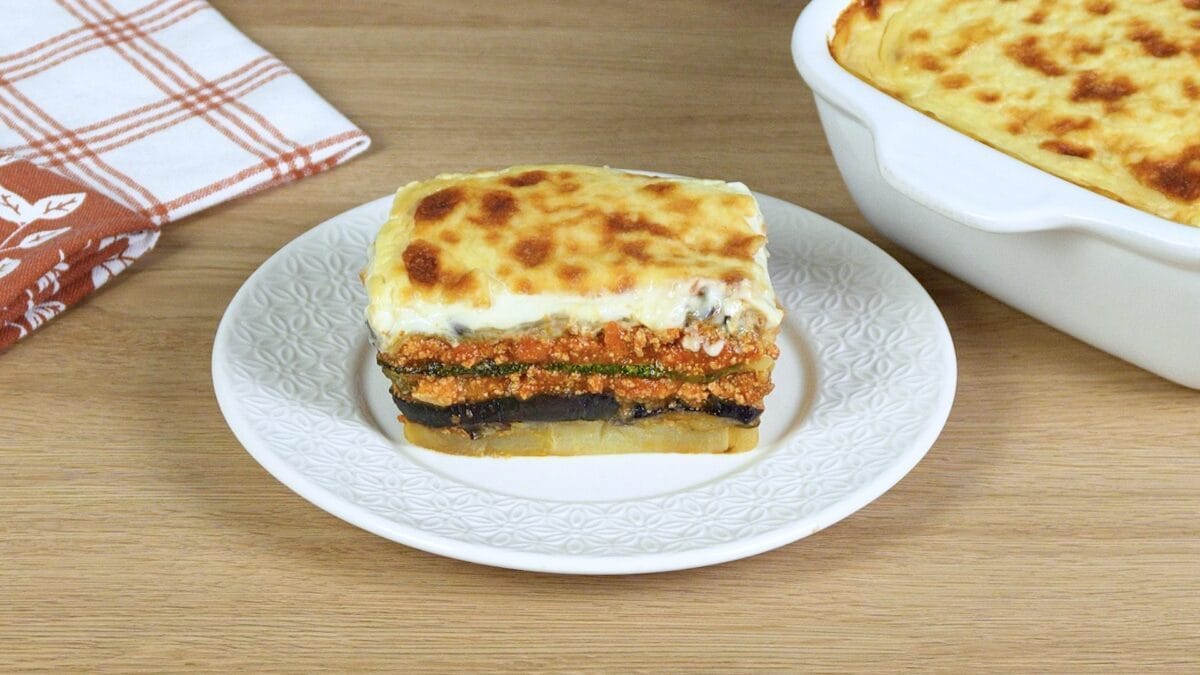
Vegetarian Moussaka is a rich and satisfying meat-free version of the famous Mediterranean baked dish. Layers of potatoes, fried eggplant, zucchini, aromatic tofu ragù, and creamy vegan béchamel are baked together until beautifully golden on top.
The tofu takes the place of traditional minced meat, absorbing the flavors of vegetables, soy sauce, white wine, bay leaves, and cinnamon, while the dairy-free béchamel creates the velvety finish that makes moussaka so comforting.
It is an excellent choice for a family lunch, weekend dinner, or vegetarian menu when you want something substantial enough to serve as the centerpiece of the meal.
Why Everyone Will Love This Recipe
This vegetarian moussaka has everything you want from a comforting baked dish: tender vegetables, a savory ragù, creamy sauce, and plenty of contrasting textures. The fried eggplant becomes soft and almost silky, the zucchini adds sweetness and freshness, and the potatoes create a sturdy base that helps each serving hold together.
The tofu ragù is especially flavorful because it is cooked with a traditional soffritto, white wine, soy sauce, bay leaves, and a subtle pinch of cinnamon. Finished with a generous layer of vegan béchamel, the result is hearty without relying on meat. It can also be prepared in stages, making it particularly practical when cooking for guests.
What Is Vegetarian Moussaka?
Moussaka is a layered dish with many regional forms found across the Balkans and Eastern Mediterranean. The version most widely associated with Greek cuisine typically combines eggplant, a seasoned meat sauce, and a creamy béchamel topping before being baked until golden.,Recipes vary considerably depending on the country and household. Some versions include potatoes or zucchini, while others use different spices and cooking techniques.
This vegetarian moussaka follows the structure of the well-known baked version but replaces meat with crumbled tofu. It also uses a plant-based béchamel made from soy milk and vegetable butter or olive oil. Cinnamon may seem unusual in a savory dish, but warm spices have long been used in Mediterranean meat and vegetable preparations. Here, just a small amount gives the tofu ragù extra depth without making it taste sweet.
Cooking Tips
- Drain and dry the tofu thoroughly before crumbling it because removing excess moisture allows it to absorb more of the flavors from the soffritto, wine, seasonings, and sauce.
- Chop the carrot, onion, and celery finely because a small, even soffritto cooks more uniformly and blends naturally into the tofu ragù.
- Allow the white wine to evaporate before continuing with the sauce because reducing it removes the harsh alcoholic note while leaving behind its aroma.
- Cook the tofu ragù slowly and covered for the recommended time because this gives the crumbled tofu enough opportunity to absorb the seasonings and develop a richer flavor.
- Sprinkle the eggplant slices evenly with coarse salt and give them the full resting time because drawing out excess water helps improve their texture before frying.
- Dry the rinsed eggplant very carefully because residual water can cause dangerous splattering when the slices are placed into hot oil.
- Keep the frying oil close to 340°F/170°C because oil that is too cool encourages the vegetables to absorb excess fat, while overly hot oil can brown the coating before the vegetables become tender.
- Parboil the potato slices only briefly because they still need enough structure to form the base of the moussaka during baking.
- Whisk the soy milk gradually into the roux because adding it in stages makes it easier to achieve a smooth béchamel without lumps.
- Let the finished moussaka rest for at least 15 minutes after baking because the layers become more stable as they settle, making the dish much easier to slice neatly.
Frequently Asked Questions
Can I Replace Tofu With Another Vegetarian Ingredient?
Yes. Firm tofu works particularly well because it can be crumbled into a texture similar to minced meat, but cooked lentils or a finely chopped mushroom mixture can also be used. Each substitute changes the texture and flavor, so the seasonings and cooking time may need slight adjustment.
Do I Have to Fry the Eggplant and Zucchini?
Frying gives the vegetables a rich flavor and soft texture that works especially well in moussaka. If you prefer a lighter preparation, you can brush the slices with oil and roast them instead, although the finished dish will have a slightly different texture and flavor.
Why Are the Eggplants Salted Before Frying?
Salting helps draw moisture from the eggplant slices before cooking. After the resting period, they are rinsed and dried thoroughly, which helps them fry more evenly and prevents unnecessary excess moisture from entering the finished moussaka.
Can I Make the Béchamel With Another Plant-Based Milk?
Yes, but choose an unsweetened and unflavored plant milk so it does not interfere with the savory flavor of the dish. Soy milk works particularly well because its texture creates a creamy béchamel, but other neutral plant milks can also be suitable.
Can I Assemble the Moussaka Ahead of Time?
Yes. You can prepare the individual components and assemble the moussaka in the baking dish ahead of time, then keep it refrigerated until you are ready to bake. If baking it directly from the refrigerator, it may need a little additional time in the oven to heat through completely.
Why Does Moussaka Need to Rest Before Serving?
Freshly baked moussaka is very hot and its layers are still soft, so cutting it immediately can cause the filling to slide apart. Resting it for at least 15 minutes allows the sauces and vegetables to settle, resulting in cleaner portions and a more pleasant eating temperature.
How to Store
Store leftover vegetarian moussaka in an airtight container in the refrigerator for 2–3 days, as indicated in the original recipe. Reheat individual portions in the oven or microwave until thoroughly hot. Reheating in the oven is preferable if you want the béchamel topping to retain a firmer texture.
How to Freeze
Vegetarian moussaka can be frozen, although the fried vegetables and béchamel may become slightly softer after thawing. Allow the cooked moussaka to cool completely, divide it into portions, and place them in freezer-safe containers. Freeze for up to 1 month for the best texture. Thaw overnight in the refrigerator and reheat in the oven until hot throughout. Freezing individual portions makes reheating easier and avoids repeatedly thawing the entire dish.
Ingredients
How to Make Vegetarian Moussaka

To make the vegetarian moussaka, first drain the tofu and pat it dry with a clean cloth to absorb the excess liquid. Then, sauté chopped celery, carrots, and onion in a large saucepan with a drizzle of oil, then add the crumbled tofu.
To make the vegetarian moussaka, first drain the tofu and pat it dry with a clean cloth to absorb the excess liquid. Then, sauté chopped celery, carrots, and onion in a large saucepan with a drizzle of oil, then add the crumbled tofu.

Stir and let it cook, then add a tablespoon of soy sauce and the bay leaves. Deglaze with the white wine and let the alcoholic part evaporate.
Stir and let it cook, then add a tablespoon of soy sauce and the bay leaves. Deglaze with the white wine and let the alcoholic part evaporate.

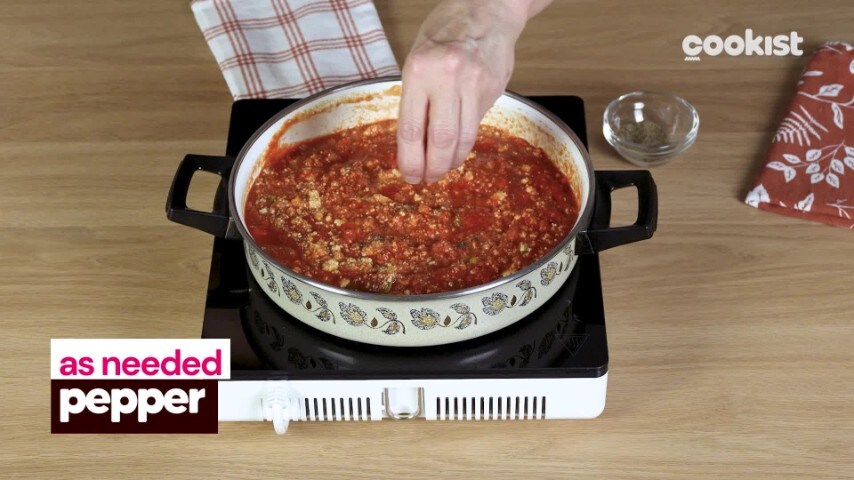
Finally add the tomato puree and salt, pepper, and cinnamon. Stir and cook covered for 35 minutes, removing the bay leaves at the end.
Finally add the tomato puree and salt, pepper, and cinnamon. Stir and cook covered for 35 minutes, removing the bay leaves at the end.

Prepare the béchamel sauce: melt the vegetable butter in a saucepan, then pour in the flour all at once. Cook, stirring, until a smooth, golden roux forms.
Prepare the béchamel sauce: melt the vegetable butter in a saucepan, then pour in the flour all at once. Cook, stirring, until a smooth, golden roux forms.

Pour in the milk and continue cooking, stirring constantly until the béchamel thickens. Finally, turn off the heat and season with nutmeg and salt, mix again and set aside.
Pour in the milk and continue cooking, stirring constantly until the béchamel thickens. Finally, turn off the heat and season with nutmeg and salt, mix again and set aside.

Cut the eggplants into thin slices and place them in a colander. Cover them with coarse salt, place a weight on top and let them rest for 30 minutes.
Cut the eggplants into thin slices and place them in a colander. Cover them with coarse salt, place a weight on top and let them rest for 30 minutes.

After this time, rinse the eggplants and dry them thoroughly with a clean cloth. Then dredge them in flour, removing the excess.
After this time, rinse the eggplants and dry them thoroughly with a clean cloth. Then dredge them in flour, removing the excess.

Heat plenty of peanut oil in a large pan, then add the eggplants, a few at a time, frying them until golden brown. Drain them and place them on a plate lined with kitchen paper.
Heat plenty of peanut oil in a large pan, then add the eggplants, a few at a time, frying them until golden brown. Drain them and place them on a plate lined with kitchen paper.

Cut the round zucchini into slices, then pass them in the flour.
Cut the round zucchini into slices, then pass them in the flour.

Fry them in the oil used for the aubergines, arrange them on a plate, season them with a pinch of salt and set them aside.
Fry them in the oil used for the aubergines, arrange them on a plate, season them with a pinch of salt and set them aside.

Peel the potatoes, cut them into slices, and blanch them for 5 minutes, then drain and let them dry. Grease a baking dish with a drizzle of oil, then arrange a layer of potatoes.
Peel the potatoes, cut them into slices, and blanch them for 5 minutes, then drain and let them dry. Grease a baking dish with a drizzle of oil, then arrange a layer of potatoes.

Place half of the eggplant slices.
Place half of the eggplant slices.

Spread a couple of generous ladles of ragù.
Spread a couple of generous ladles of ragù.

Make a layer of fried zucchini.
Make a layer of fried zucchini.

Add more ragù and arrange the rest of the eggplants.
Add more ragù and arrange the rest of the eggplants.

Finally, pour the béchamel sauce on the surface, smoothing it out evenly. Bake the moussaka in a preheated oven at 200°C (400°F) for about 35 minutes, or until the surface is nicely browned. Remove from the oven and let it cool for a few minutes before serving.
Finally, pour the béchamel sauce on the surface, smoothing it out evenly. Bake the moussaka in a preheated oven at 200°C (400°F) for about 35 minutes, or until the surface is nicely browned. Remove from the oven and let it cool for a few minutes before serving.

The vegetarian moussaka is ready to be enjoyed!
The vegetarian moussaka is ready to be enjoyed!


