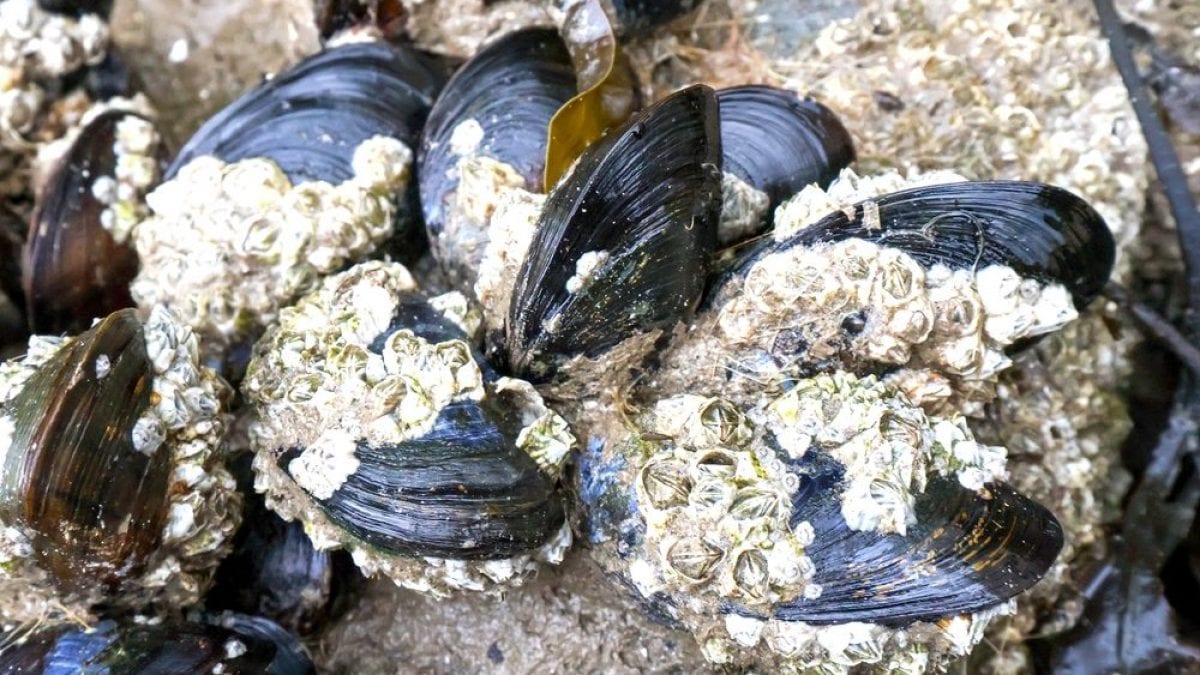
Marine creatures always arouse a certain curiosity, among more or less peculiar and unknown species that populate seas and oceans, be they blue crabs or pufferfish. Barnacles are no exception: you don't need underwater exploration to find them, because we're talking about those tiny "shells" that at first glance look like small conical rock formations found attached to piers, docks, rocks, boat hulls, and even on mussels, turtles, and whales, but which, in fact, are living beings in their own right. These crustaceans, with ancient origins, are also widespread in the Atlantic, Pacific, Gulf of Mexico and Hawaiian waters, and are often responsible for annoying foot injuries when walking barefoot, because they are pointed and sharp, just like dog teeth. Let's get to know them better.
What Are Barnacles?
We understand why barnacles were given this name: but what are they? Biologically speaking, we are dealing with Cirripedes, or crustaceans that include around one hundred different species within them and which in this case are defined as sessile, as they live their entire existence attached to a support or as parasites if we refer, for example, to the shell of another animal such as mussels. What is noticeable about them with the naked eye, and which can be mistaken for an encrustation, is precisely the calcareous coating, which appears light in colour, between white and grey, hard and sharp, solidly attached to the host: they resist exposure to the sun, as well as the force of the waves, but they cannot, obviously, live without water, given that it is the primary source of nourishment (they eat plankton), thanks to a filtering apparatus, partly similar to that of bivalve molluscs. Compared to mussels, the fact that the barnacles are tightly attached to the shell is not a bad sign, because it means that they are rock specimens and, therefore, usually wild.

Are They Edible?
Barnacles, although crustaceans like crabs or shrimp, are not part of our diet. When buying mussels, if barnacles are present, simply scrub them with a brush during the traditional shell cleaning process before cooking. Within the Cirripede family, however, there are crustaceans that are considered a true delicacy and are attractive for their almost monstrous appearance: percebes, which are found in almost impossible-to-reach positions (hence their high cost) on the rocky coasts of Spain and Portugal, particularly in Galicia. In this case, we are not referring to barnacles, which attach themselves with their entire body, but to barnacles, equipped with stalks with which they grip surfaces: they are equally bizarre in appearance, but beware of underestimating them.

