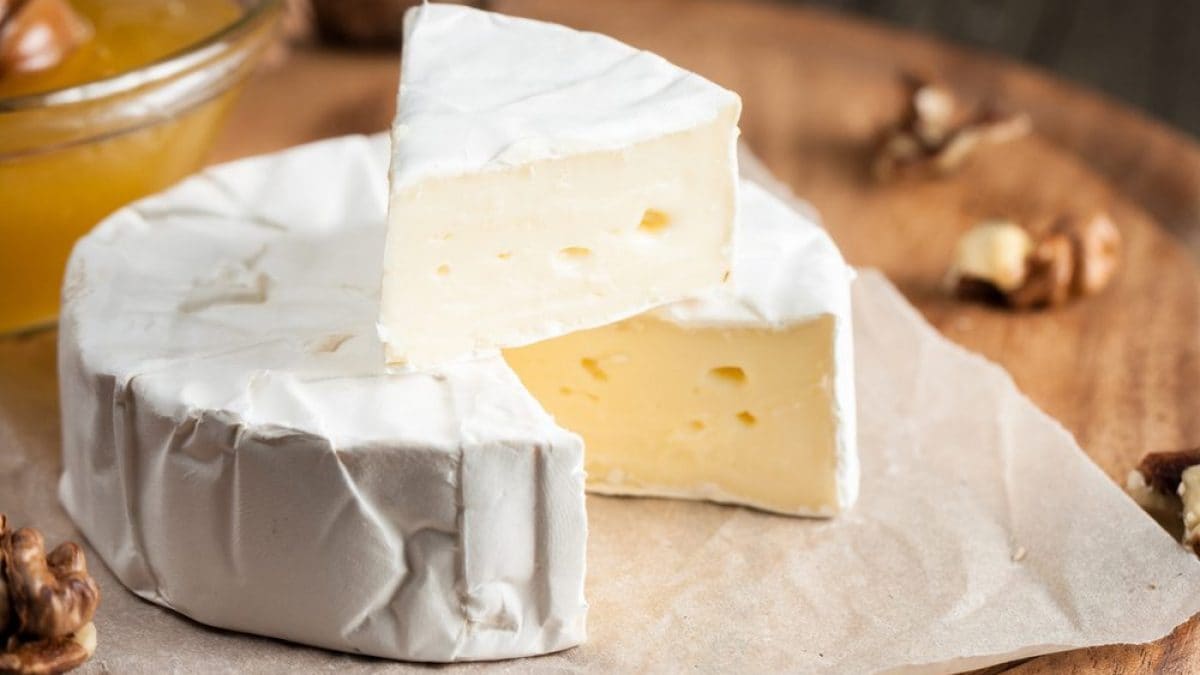
The cheesemaking tradition is rich in regional specialties that transcend national borders and elevate the reputation of gastronomy throughout the world. However, there is a particular region that is universally appreciated for its cheese: we are obviously talking about France, which, among its many culinary excellences, is also the land of choice for bloomy-rind cheeses, particularly well-known and consumed in the U.S. as well. The two most famous varieties are brie and camembert: different products that, however, have many things in common, including their round shape, pungent aroma, delicate flavor, and a firm surface and soft interior. This is because the maturation of both is thanks to so-called good or noble molds, which, rather than deteriorating a food, characterize it in a positive way, making it unique.
Why Are Bloomy-Rind Cheeses Called Like That?
The term "bloomy" rind— croûte fleurie —may seem a bit too romantic when associated with these cheeses, recognized as among the smelliest around, yet it perfectly captures how the mold appears: a white layer sprouting on the surface, clearly visible to the naked eye as well as to the touch. The velvety textured veil that covers the exterior is a mixture of fungal microorganisms composed of white molds that come from cultures specifically selected to create this coating. These fungi are not harmful to health—in fact, their rind is edible —and they ensure the proper maturation process. How?
- They protect the product from the development of bad molds, which are responsible for the formation of mycotoxins that are harmful to humans, but also to the cheese itself, since instead of promoting the maturation process they would spoil it.
- They regulate the humidity level both internally and externally, given their high percentage of water: these cheeses, in fact, fall into the larger category of soft cheeses, which have a water content between 45% and 70%.
- They give the creamy consistency and the final aroma: the latter can range from a strong ammonia smell to that of grass, mushrooms and hazelnuts.

What Are White Molds?
The most commonly used cultures in this process belong to the Penicillium genus of fungi, which is divided into different subgenera: there is the one used in medicine, from which the famous antibiotic (penicillin) is obtained, and then there are those used in cheese production; these are divided into Penicillium roqueforti and glaucum for blue cheeses such as Gorgonzola, and Penicillium candidum for cheeses with a bloomy rind.
What are the differences? The former give blue cheeses their classic green and blue streaks, also coloring the inside; the latter bloom on the surface, maintaining their white hues. They don't change the cheese's color even internally, but act on its proteins, degrading them, thus giving it its typical melting creaminess. The action of molds, which in the past occurred spontaneously, is now regulated by law by humans, who inoculate them into cow's, sheep's, or mixed milk using a soluble solution at the beginning of the production process or once the cheeses are obtained, before maturing, by spraying them on the surface.

Brie and Camembert, The Main Bloomy-Rind Cheeses
In France, there are several bloomy-rind cheeses, even if their fame doesn't reach this far. For example, Neufchâtel, with its characteristic and ancient heart shape: it is said that it was given by girls to soldiers as a token of love during the Hundred Years' War between 1337 and 1453. It must be said, however, that Brie and Camembert have achieved unparalleled fame: they should be enjoyed at room temperature, therefore removed from the refrigerator at least 30 minutes before serving to enhance platters, or they are excellent baked for their stringy heart or melted into main dishes, as a comfort food. Let's get to know them better.

Brie
It would be more correct to speak of brie in the plural and not brie in the singular, since this term refers to similar products that all belong to this large and much-loved "family" of cheeses from a region called Brie, located in northeastern France, in the Île-de-France region. They boast ancient origins, as does their greatest admirer, Emperor Charlemagne, who is said to have been smitten by it when he tasted it in 774 while a guest at an abbey. The same thing happened in 1915 during the Congress of Vienna, where representatives of the various states involved in the Napoleonic Wars not only re-established European order, but during a dinner also elected brie as the "king of cheeses." Traditionally, brie is made with raw cow's milk (although pasteurized milk is now also used on an industrial level) and there are three most prized varieties.
- Brie de Meaux: a certified PDO (Protected Designation of Origin) excellence with a sweet flavor reminiscent of fresh grass, mushrooms, and toasted notes, along with an aroma of cream, butter, and hazelnut. Its flattened cylindrical shape measures 36-37 cm in diameter. According to the specifications, it can only be made with raw cow's milk and must have a fat content of 45%. It must be aged for a minimum of four weeks; the longer it is, the creamier the cheese becomes: typically, it's between six and eight weeks. Once it's ready to be formed, the curd is removed with a special "brie skin," a type of perforated spatula that allows for gentle decanting.
- Brie de Melun: another AOP produced exclusively by hand from raw cow's milk. It also has a production specification that defines all its characteristics: a round shape with a diameter of 27-28 cm and a maturation period ranging from a minimum of 5 to a maximum of 10 weeks. The white rind can vary in color from reddish to brown, while the flavor is sharper, with a hint of bitterness compared to Brie de Meaux. The curd is removed using the "à la louche" method, meaning with a large ladle rather than a spatula.
- Brie de Coulommiers: it differs from the first two mainly in its shape, which is much smaller, easier to transport, and sold whole rather than sliced. It is a cheese about the size of a tomino, approximately 15 cm in diameter: its rind is white and its interior is particularly velvety and creamy, with a sweet and delicate flavor. Given its smaller size, it is aged for a shorter period, 3-4 weeks.
Camembert
The pride of Normandy‘s dairy products, praised by Napoleon III, Camembert hails from the town of the same name, which has been producing this cheese since 1791, the early years of the French Revolution. Its origins are documented in the Maison du Camembert, the picturesque museum dedicated to this specialty, and center on the peasant Marie Harel, who learned the technique from a priest who fled the Brie region to make a local cheese of the same name, but which until then had been consumed fresh, thus lacking the classic bloomy rind.

Camembert de Normandie is also an AOP, with a well-defined production method: only raw cow's milk from Normandy cows that graze for more than six months of the year, the curd is ladled into the molds five times, one hour apart, it is aged for 4 or 5 weeks, and has a 25% fat content. The exterior is white and turns brown as the cheese ages; the interior is particularly soft, almost melted. It's no coincidence that Camembert is packaged in round wooden boxes of 250 or 500 grams: this helps it maintain its shape, as the more it ages, the creamier the cheese becomes and would otherwise risk collapsing.
;Resize,width=767;)
