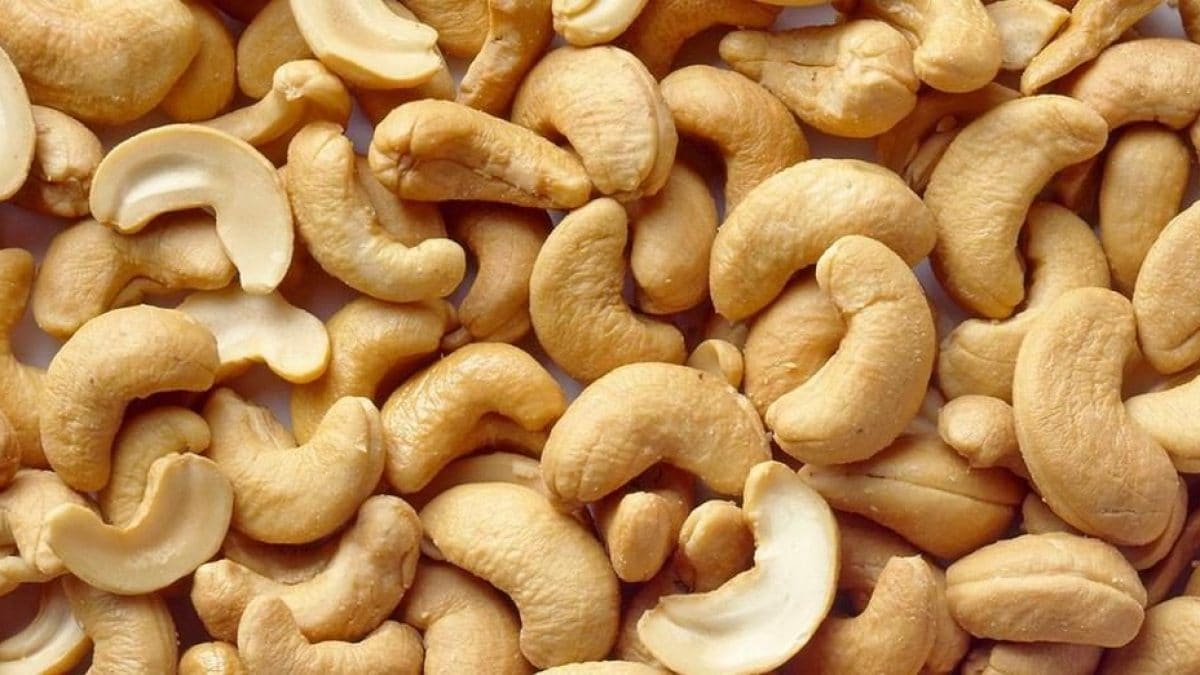
Cashews are the edible oily seeds of the Anacardium, a tree native to Brazil and imported to the U.S. during the 16th century. Among the most popular and widespread types of nuts, cashews—which in the U.S. are mainly found roasted and more rarely fresh—are rich in "good" omega-3 fats, proteins, fiber, and minerals. Similar to small, crunchy, yellowish-white beans, cashews, also known as cashew nuts, owe their name to their characteristic heart shape (from the Greek kardia). Widely used in overseas countries, cashews are much more versatile than you might think. Let's see what their benefits are and the best ways to use them in the kitchen.
Cashews' Properties
Among the most caloric nuts (100 grams contain almost 600 kcal) but with the lowest fat content, cashews are characterized by their good fiber and mineral content, particularly potassium, phosphorus, magnesium, calcium, iron, and sodium. Low in water (between 5 and 2 grams), these small oily seeds contain excellent quantities of healthy omega-3 fats, an excellent source of carbohydrates, and vitamins, particularly vitamin K and water-soluble B vitamins. They are completely free of cholesterol, gluten, histamine, and lactose. A detail not to be underestimated: the properties and nutritional values vary slightly depending on whether we are talking about raw cashews or roasted cashews.
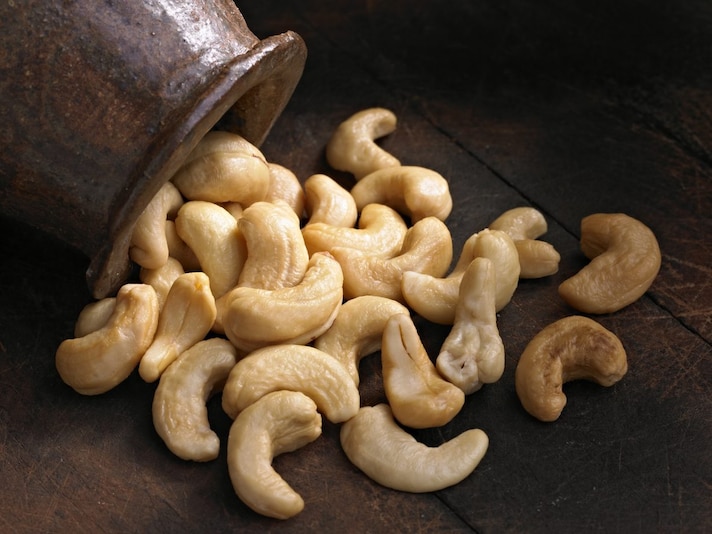
Cashew Benefits
Despite their high caloric content, cashews—no more than two or three times a week and in small quantities—are recommended for those following a healthy, balanced diet. Specifically, these small oily seeds:
- Being rich in fiber, they are useful for supporting intestinal functionality and are excellent for combating forms of constipation;
- thanks to the good quantities of selenium, cashews boast excellent anti-inflammatory properties: they are particularly recommended for the treatment of muscle or joint pain;
- thanks to the notable contribution of omega-6 polyunsaturated fats, cashews are useful for counteracting bad cholesterol levels and are allies of the entire cardiovascular system;
- cashews contain zeaxanthin, a pigment that can protect the eyes;
- mineral salts help the nervous system, concentration and protect bones and muscles;
- vitamin E and polyphenols give these small bean-shaped seeds a good antioxidant power;
- Cashews appear to have an antidepressant effect thanks to tryptophan, an amino acid that is a precursor to serotonin and melatonin, the "good mood" hormone and regulator of the sleep-wake rhythm, respectively;
- Being naturally lactose and gluten-free, cashews are suitable for those following gluten-free diets or who are lactose intolerant.
Not everyone knows that cashew shells are poisonous. They contain a caustic oil called cardol oil, rich in anacardic acid, an irritant similar to urushiol, the toxin found in poison ivy. Why are cashews sold shelled? Precisely because of the shell's toxicity, cashews are always sold shelled and roasted: the roasting process, in fact, neutralizes the anacardic acid, making the fruit edible.
The Cashew Tree, The Real and The "Fake" Fruit
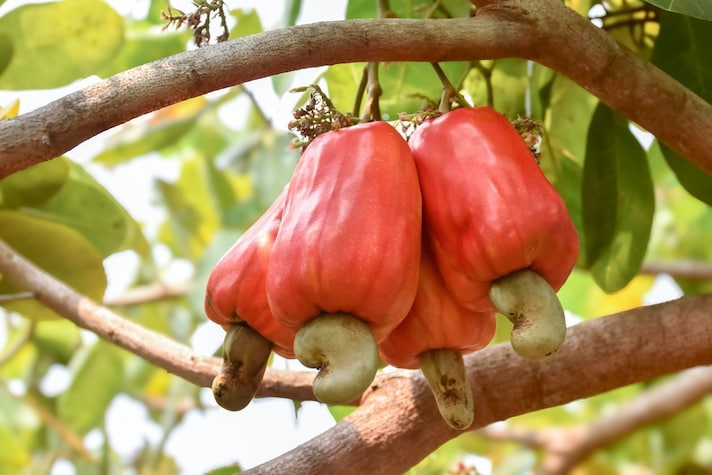
The cashew tree (Anacardium occidentale) is an evergreen tropical tree native to Brazil, but now widespread in many tropical regions of the world, including India, Vietnam, Africa, and Latin America. It can reach a height of 10–12 meters, with a short, branched trunk. It has large, oval, dark green leaves and small, greenish-white flowers clustered in panicle-like inflorescences. Its distinctive feature is the fruit, composed of two parts: the cashew apple, the false fruit, a fleshy, pear-shaped stalk, yellow or red, edible and rich in vitamin C; and the cashew, the actual fruit, with a gray-brown kidney-shaped shell containing the seed, or cashew nut.
Cashews Culinary Uses
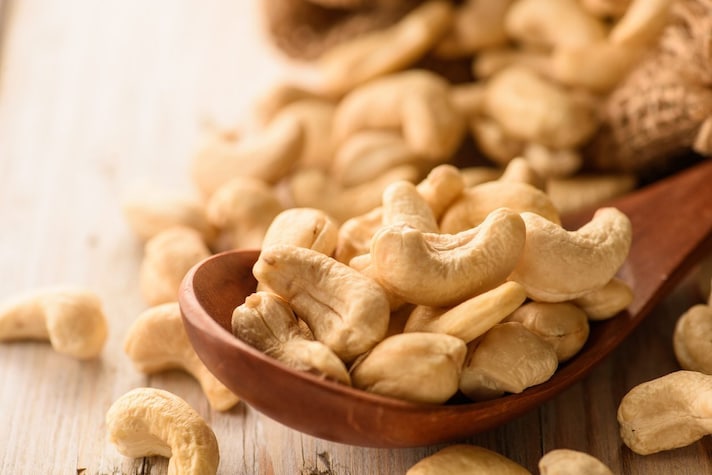
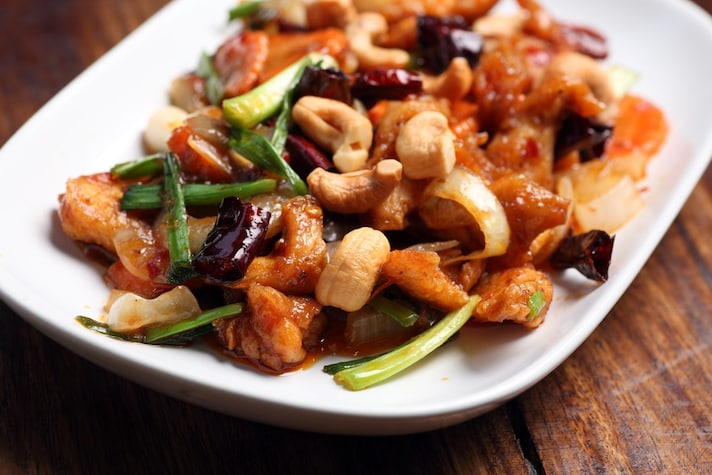
Whether alone or in sweet and savory recipes, cashews, which are sold roasted in the U.S., are a popular addition to brunches, serving as a crunchy, fragrant snack that's hard to resist. Used to make a peanut butter or vegan cheese, cashews can also simply enhance our mixed salads, adding a touch of crunch that never hurts; they also pair well with white meat, as in this recipe for cashew chicken. And in the world of baking? A delicate and delicious vegan panna cotta with almonds and cashews, an alternative dessert that's super easy to make.
;Resize,width=767;)
