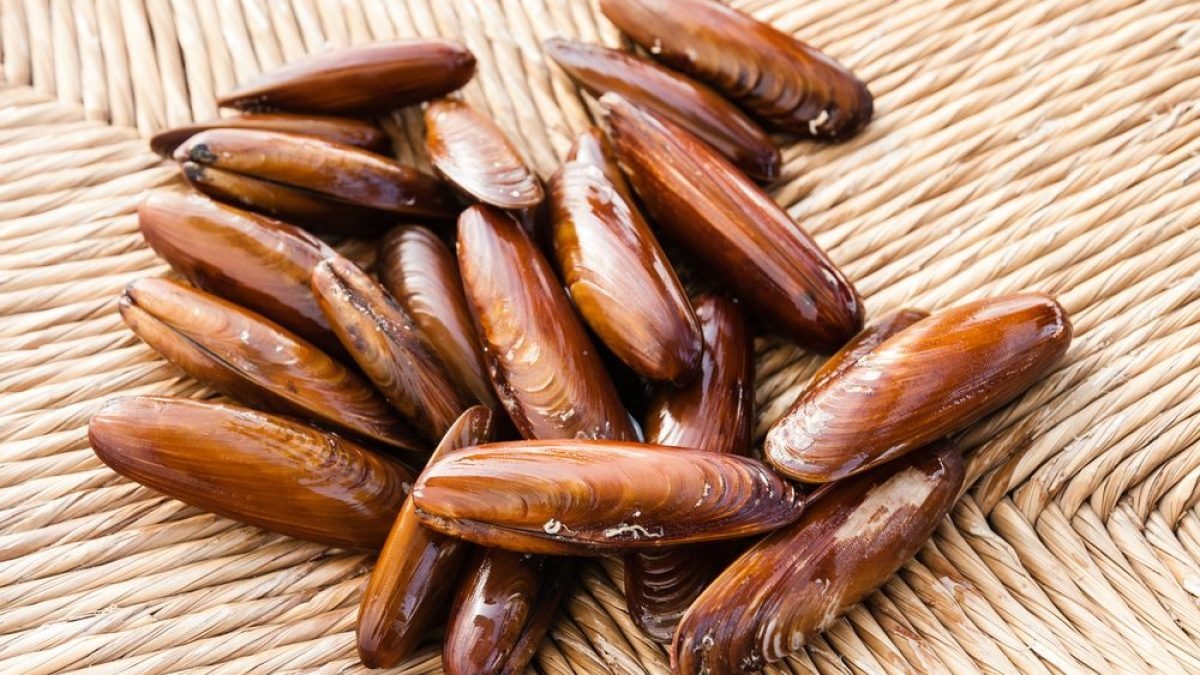
You'll find them on the back-alley menus of certain restaurants, served under the counter as "specialties for connoisseurs." They are sea dates, a protected mollusc whose fishing is prohibited throughout the European Union and regulated here in the U.S.. Behind their intense flavor, however, lies one of the most serious environmental crimes in the sea: to extract them, the rock in which they live must be broken, erasing in a matter of hours ecosystems that nature has built over centuries. It's not just a crime, punishable by hefty fines and even arrest: it's an irreversible wound to the sea. Yet, the black market thrives, fueled by those willing to pay—and destroy—just to taste a "forbidden dish."
What Are Date Mussels?
The date mussel (Lithophaga lithophaga) is an elongated, brown bivalve mollusk, similar to a small date. It lives nestled in the limestone rocks of the Mediterranean coasts, particularly in well-oxygenated areas subject to wave motion. Its growth is extremely slow: it can take up to 20 years to reach a length of just a few centimeters.
In the past, the date mussel was highly prized for its intense flavor and tender texture. It was eaten raw or lightly seared, often seasoned with lemon. But the problem isn't the mussel itself, but the way it's harvested.
The Environmental Problem
To extract a date shell, in fact, it's not enough to simply "detach" it from the ocean floor, as you would a limpet: you have to break the rock in which it lives. This means destroying entire stretches of reef and wiping out the ecosystem that has formed there over decades. In this way, corals, sponges, algae, small fish, and other invertebrates also die or lose their habitat. And, since the regrowth of these environments is extremely slow (even more than a century), the damage is practically irreversible.

In the U.S., date mussels (also known as pen shell mussels or date clams) are heavily regulated and protected under various state and federal laws. Although there is no nationwide ban, certain states have enacted strict harvesting restrictions due to concerns over sustainability and environmental protection. In states like California, Florida, and Hawaii, the collection and sale of date mussels are prohibited or restricted, especially in areas where they are endangered or habitat is protected.
The National Oceanic and Atmospheric Administration (NOAA) and the U.S. Fish and Wildlife Service (USFWS) also oversee marine resources, including shellfish, and have regulations in place to protect these species from overfishing and illegal harvesting. Violating these laws can result in substantial penalties, including fines and seizure of equipment. The fines can be significant, and in some cases, individuals caught illegally harvesting or selling date mussels could face criminal charges.
Despite the legal restrictions, illegal fishing of date mussels continues in some regions, particularly in areas with weak enforcement or where there is high demand for shellfish. In some cases, black market trade in date mussels occurs, where unscrupulous vendors may sell them under the radar to unknowing customers. This underground trade not only damages marine ecosystems by depleting already vulnerable species but also poses serious health risks. These mussels, when not properly monitored or harvested under unsafe conditions, can accumulate harmful bacteria, toxins, or pollutants, making their consumption dangerous.
Efforts to curb illegal trade include stricter enforcement of marine conservation laws and educating consumers about the risks associated with buying shellfish from unregulated sources. As with other illegal wildlife trafficking, the ongoing illegal trade in date mussels also funds criminal activity and undermines efforts to preserve marine biodiversity.

The Message is Simple: Say No!
If someone wants to sell or offer you sea dates, refuse without hesitation. There is no "traditional" or "gastronomic" justification that can compensate for the destruction of a marine ecosystem that took centuries to form. Every sea date served on a plate is the result of shattered reefs, destroyed habitats, and annihilated species.
Consuming sea dates isn't a connoisseur's prank, but an act that fuels a dangerous black market, finances illegal activities, and contributes to environmental crime on a massive scale. Saying no means protecting the sea, upholding legality, and choosing to stand with those who truly love the Mediterranean.
;Resize,width=767;)
