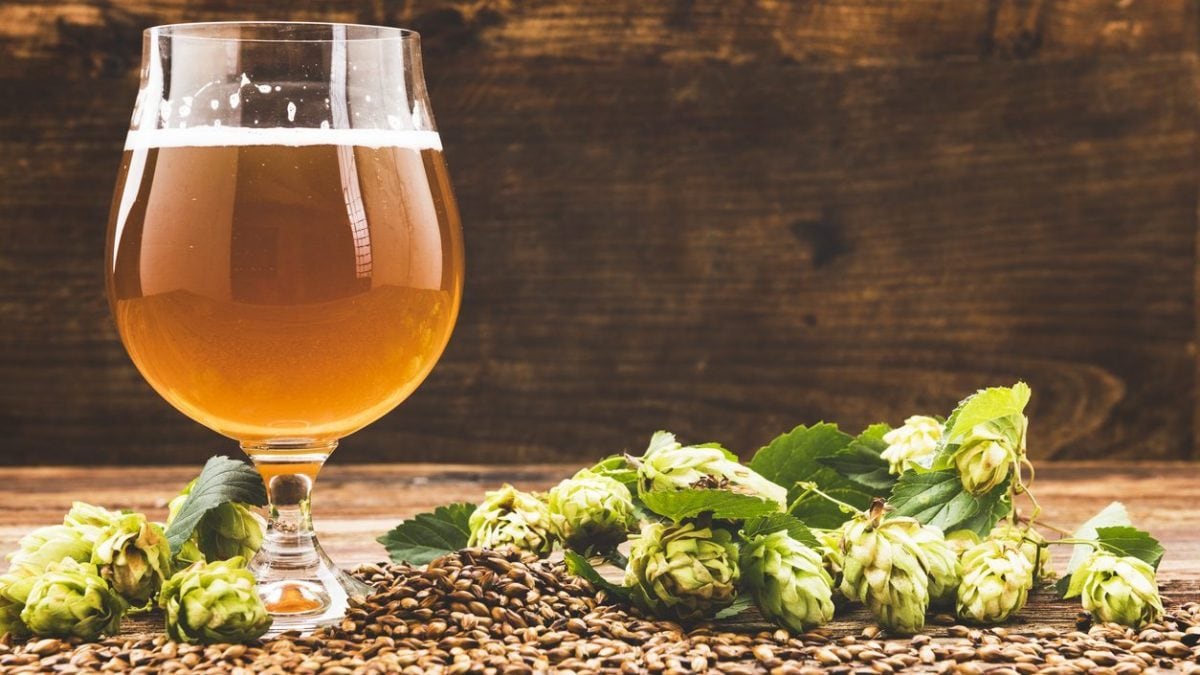
Hops are much more than just an ingredient: they are the true protagonist, giving beer its pleasant bitterness , floral, citrus, or resinous aromas, and even part of its longevity. If you love beer and have ever wondered what role hops play in this ancient beverage, you're in the right place. Let's discover together what hops are, how many types there are, and when and why they're used in beer production.
What Are Hops?
Hops, scientifically known as Humulus lupulus, are a climbing plant belonging to the Cannabaceae family. The female flowers, called inflorescences or hop cones, are used in beer production. Inside these cones is a yellow resinous substance, lupulin, which is the true treasure of hops: it is rich in bitter acids and essential oils, the main factors responsible for the aroma and flavor you so appreciate in a well-made beer.

Lupulin contains alpha and beta acids: alpha acids are those that, during the boiling of the wort, are chemically transformed and develop the bitterness of the beer. Essential oils, on the other hand, do not like heat and are therefore often used at the end of cooking or once fermentation has already begun, to impart fresh and intense aromas. From a botanical perspective, hops grow vigorously in temperate environments, love cool climates, and require many hours of light per day. Its plants can reach up to six meters in height, climbing on support wires in cultivations called lupolaie.
How Many Types of Hops Are There?
When you approach the world of hops, you should know that there are literally hundreds of different varieties, each with unique characteristics that can radically transform a beer's profile. It's not just differences in flavor or bitterness: each hop brings with it a wealth of aromas, essential oils, and chemical properties that you need to learn if you want to truly understand how and when to use it.

Traditionally, hops are divided into three broad categories: bittering, aroma, and dual-purpose.
- Bittering hops are the ones you need to give beer its classic bitterness. They're rich in alpha acids, often exceeding 10%. These acids, during the boil, transform, developing the bitterness that balances the sweetness of the malts. If you're looking for memorable names, the most common are Magnum, Nugget, and Target. These are robust, effective varieties, and are also popular in industrial brewing, precisely because they allow for stable bitterness without significantly affecting the aroma.
- Aroma hops, on the other hand, focus entirely on the most subtle and fascinating part of hops: essential oils. Here, you're not looking for bitterness, but rather intense aromas that can range from citrus and tropical to floral, resinous, and even balsamic. It's thanks to these hops that beers can evoke, from the very first sip, the scent of an orchard or pine forest. Some famous examples? The Czech Saaz, typical of Pilsners, the German Hallertau, or the more British Fuggle. If you love more modern styles, like American IPAs, you should know about Amarillo, Citra, and Mosaic, true champions of the craft beer world.
Then there are dual-purpose hops: versatile varieties that can offer both a good dose of bitterness and interesting aromas. They're ideal if you want to create balanced beers without having to combine too many different varieties. Two names to note are Cascade and Chinook, key to the American craft beer boom.
In recent years, however, the hops landscape has become even more interesting. More and more breweries are focusing on experimental hops, new varieties born from targeted crosses, designed to offer previously unheard-of flavor profiles. Some of these hops are still protected by patents and can only be used by certain companies, making some beers truly unique and impossible to find elsewhere. There's another phenomenon we can't ignore: the return to native hops, which grows wild in many regions, and are being rediscovered. Some craft breweries are working to enhance their potential, creating beers that truly reflect their local area, with more rustic, green, and sometimes spicy aromas.
When and Why Are Hops Added to Beer?
Hops come into play at various stages of beer production, and the "when" makes all the difference in the final result you find in the glass. During the wort boil, hops are added primarily to extract bitterness. If you add them at the beginning of the boil, the intense heat transforms alpha acids into water-soluble iso-alpha acids, responsible for the typical bitterness that balances the sweetness of the malts.

As you approach the end of the boil, hop additions become less for bitterness and more for fresh, volatile aromas: citrus, tropical fruit, flowers, and aromatic herbs. If you want a highly aromatic but not overly bitter beer, like modern NEIPAs (New England IPAs), you should add hops at the end of the boil or even in a "whirlpool" (a rapid cooling phase of the wort). Another now essential technique is dry hopping. In this case, hops are added directly during fermentation or after primary fermentation. This way, you avoid the extraction of additional bitterness and focus solely on the aromatic contribution, enhancing intense, modern aromas, such as mango, pineapple, lime, or pine. Finally, hops also serve as a natural preservative. The essential oils and polyphenols present in lupulin possess antimicrobial properties that help the beer last longer and resist oxidation better, especially in hoppier and more alcoholic beers.
;Resize,width=767;)
