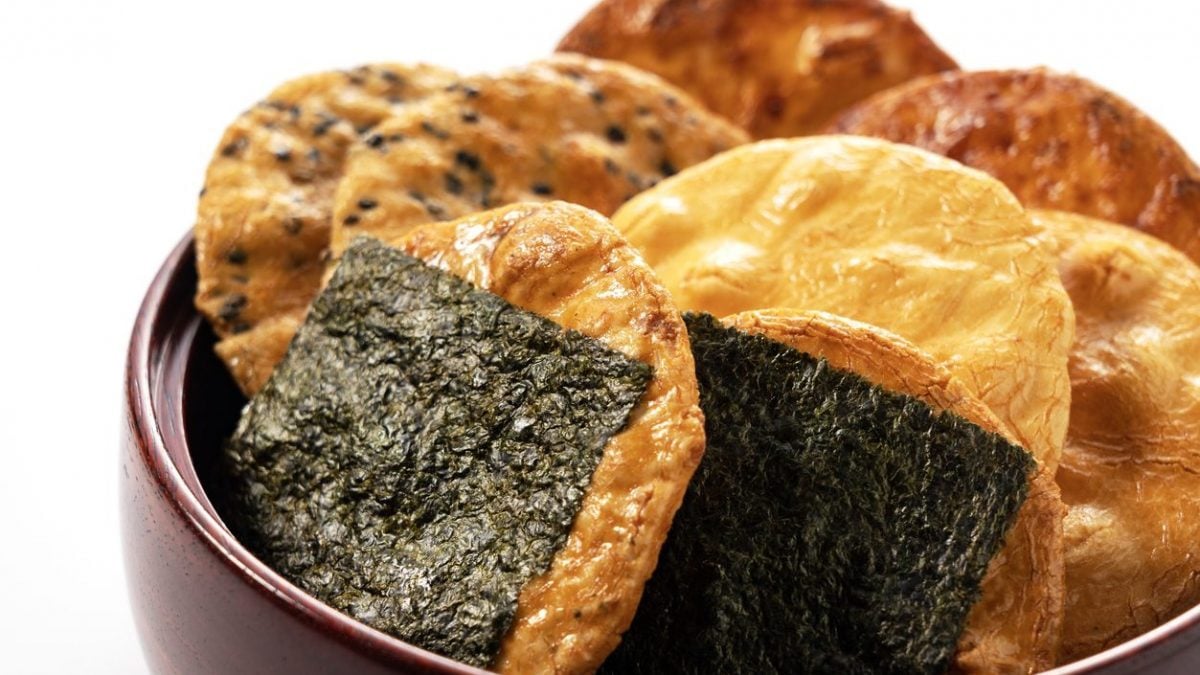
How many times have you found yourself reaching for a packet of crackers when you're feeling hungry but don't want to ruin your appetite? Instead of these or the classic breadsticks, there's a snack that's been a staple for centuries: Japanese senbei. These thin, golden-brown rice papers are crispy and delicious. These crackers combine tradition, ritual, and modernity in a single bite. Let's find out what they are and why they're so popular.
The Legend About Senbei's Origins
Senbei are grilled or baked rice biscuits, usually seasoned with soy sauce and, in some variations, wrapped in a sheet of nori seaweed. As for flavor, these snacks can be both sweet and savory, and are enriched with flavors such as shrimp, octopus, or brown sugar. In the Land of the Rising Sun, they are found everywhere: in konbini (24-hour mini markets), street food stalls, and can even be given as refined gastronomic souvenirs (omyage – お土産) purchased at stations and airports.
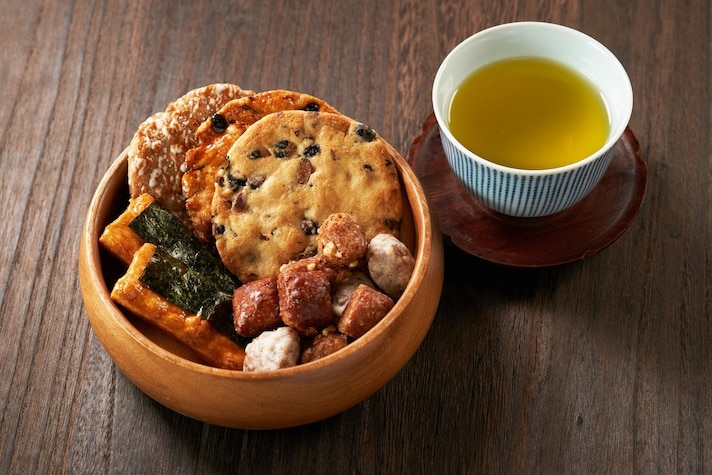
To understand the origins of these traditional biscuits, you have to go back a long way. Originating in Ancient China, some written accounts suggest they arrived in Japan between the 6th and 8th centuries. The recipe, initially based on wheat and potatoes, evolved over the decades until its most famous version (the current one) was created during the Edo period (1603-1868). It was here that soy sauce entered the scene, and since then, senbei have become the quintessential Japanese snack, enjoyed with green tea or during relaxing breaks.
There's an urban legend about senbei that has captivated many fans of foreign and Asian cuisine. It's said their spread is linked to Osen, a woman who transformed leftover glutinous rice cakes (dango) into roasted sheets. This is how senbei were "born," first in their sweet version.
Why Are They Given as Gifts?
In some parts of the world, it's customary to give gastronomic gifts: it happens in various circumstances, such as when visiting a recovering relative or perhaps when they've "inaugurated" a new home. These gifts usually consist of cured meats or fine, aged cheeses, which are given as a symbol of good luck. A similar custom exists in Japan as well. In some contexts, very expensive fruits are given (there are veritable boutiques selling fine fruit) or small biscuits like senbei.

As we mentioned previously, senbei aren't just a snack, they're actually an omyage, and the reason they're given as gifts is very simple. They're easy to carry, lightweight, have a long shelf life, and reflect the regional customs of the places where they're produced. Each area of Japan has its own sweet or savory variation, often based on local ingredients.
;Resize,width=767;)
