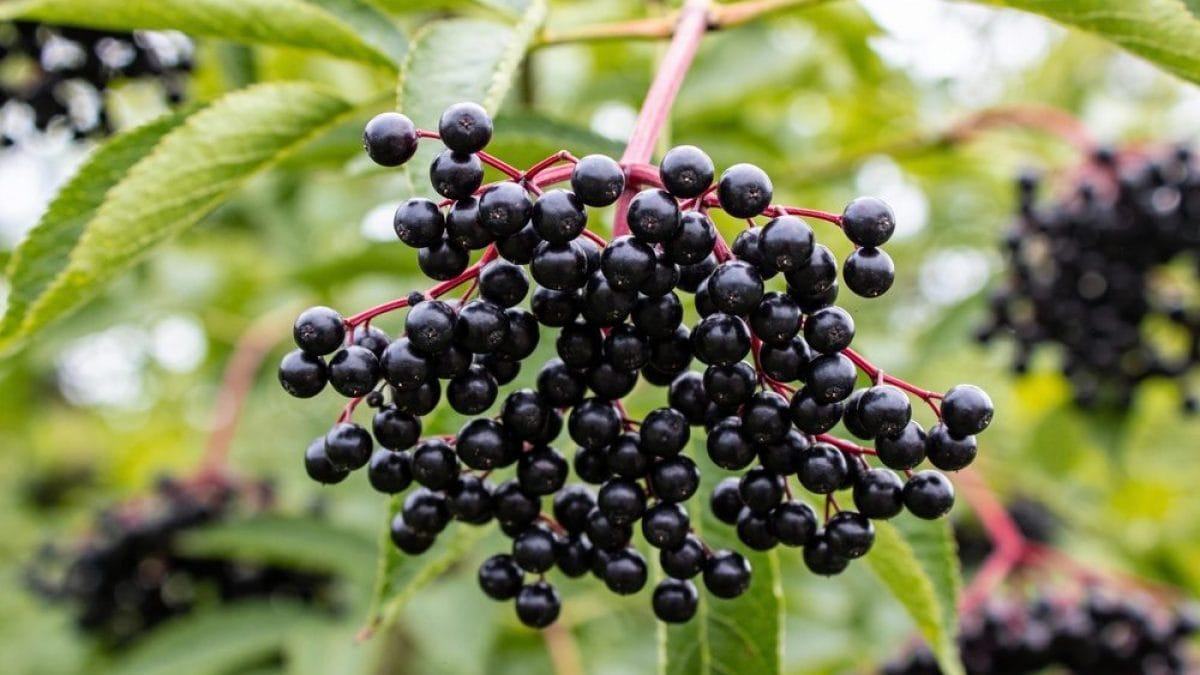
Among the plants best known for their culinary uses – often very delicious – is the elderberry. Specifically, the one that is enhanced in fritters, syrups and jams is the Sambucus nigra, also known as black elderberry or common elderberry, a perennial plant belonging to the Caprifoliaceae family that grows throughout the U.S. on the plains and in the mountains up to 1500 meters: we frequently find it in the countryside, near waterways, or in the woods, and what attracts us is the intense scent of its white flowers, which delicately bloom in spring, between April and May, while in summer the fruits take center stage: round, dark and juicy berries.
What Does Black Elderberry Look Like?
Elderberry is one of the wild edible plants that are traditionally harvested, prepared, and served in a variety of ways. Black elderberry is recognized by its bushy, small-tree-like appearance: it is a shrub that branches out from the base, with woody branches, and can reach a height of 5-6 meters. Its fronds, folded in on themselves, are composed of dark green, oval-shaped leaves with a pointed tip and serrated edges. The tender, five-petaled flowers appear romantic and “enchanting,” resembling abundant, creamy-white, and very aromatic umbels (a botanical term used to indicate certain inflorescences). During the summer, they are replaced by fruits, round berries that initially appear light green, gradually becoming more purplish until they turn black, ready to be harvested. Sambucus nigra – to the less expert eye – can be confused with the other two species of Sambucus present in our territory.
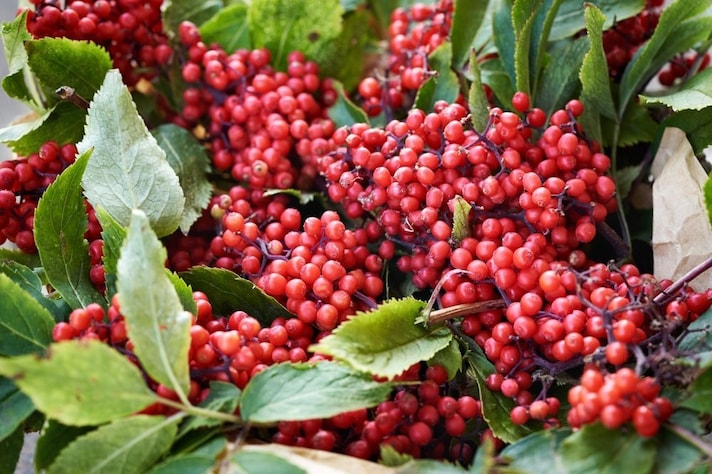
Sambucus racemosa, better known as red elderberry, produces panicle-shaped inflorescences and bright red berries.
Sambucus ebulus, or elderberry, also known as dwarf elder or danewort, is a small herbaceous plant.
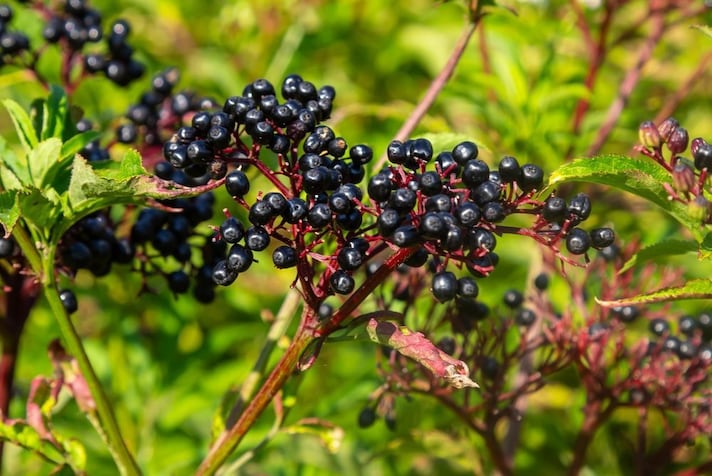
Particular caution is required with the latter, as it is toxic. The advice, as with mushrooms and other wild herbs and plants, is not to collect or consume them if you have even the slightest doubt.
What are the differences? Black elderberry is a large, woody tree with scented flowers with yellow stamens and clusters of berries that hang downward, while elderberry is a toxic herbaceous plant that grows no taller than 1.5 meters. This dangerous species is easily recognized by its unpleasant odor, its flowers with pink-purple stamens, and its clusters of fruit that remain rigid and upright.
How to Use Elderberry in Cooking
Black elderberry enjoys an excellent reputation in the food industry: not only is it versatile, but the preparations in which it is used as an ingredient are also very tasty. The delicate and fragrant flowers are used above all to make the famous syrup, fresh and pleasantly sweet, perfect for flavoring ice cream, sorbets, panna cotta, cocktails (see Hugo), and biscuit dough and baked goods. There is also room for infusions and herbal teas, to create drinks to be sipped hot or cold, and liqueurs, great classic digestifs; they are also excellent as an edible flower, adding a refined and graceful aesthetic touch to fruit salads, and also decorating cheese, meat, and fish dishes.
One of the tastiest ways to enjoy the inflorescence is to fry it in a light batter, just like acacia flowers. The fresh, open umbels (you have to be quick because they wilt quickly) are washed, patted dry, and dipped in a mixture of flour, potato starch, beer (or ice water), a pinch of salt (and an optional egg). They are then fried in hot seed oil until the casing is golden brown. You can enjoy them as is or sprinkle them with a little sugar.
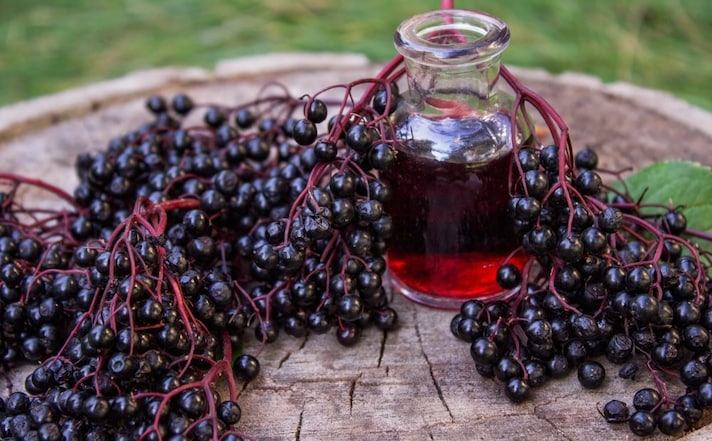
You can also use the flowers to make elderberry jam, while if you want a more lively flavor, in perfect balance between sour and sweet, then choose the fruits: the berries, dark and pulpy, are ideal both for this type of preparation and for liqueurs and syrups, with a stronger consistency and a colour that does not go unnoticed.
Properties, Benefits and Some Safety Tips
Sambucus nigra, particularly in mountain folk tradition, has always been known for its medicinal properties: it is used as a remedy for viral infections, a cure-all against the symptoms of colds and flu, and its flowers and fruits are attributed with purifying, diuretic, and laxative properties. These are the only two truly edible parts of the plant, which as a whole contains an organic compound called sambunigrin, potentially poisonous because it can release hydrocyanic acid. The quantities ingested normally do not cause any kind of concern, but, for example, to avoid unpleasant effects such as nausea, vomiting, diarrhea, abdominal pain or headaches it is always advisable to pick the berries when they are completely ripe, therefore black and shiny, as they have a lower sambunigrin content than the unripe ones. When using them in recipes, cook them well by boiling them and never eat them raw, as the toxic molecules degrade with heat.
;Resize,width=767;)
