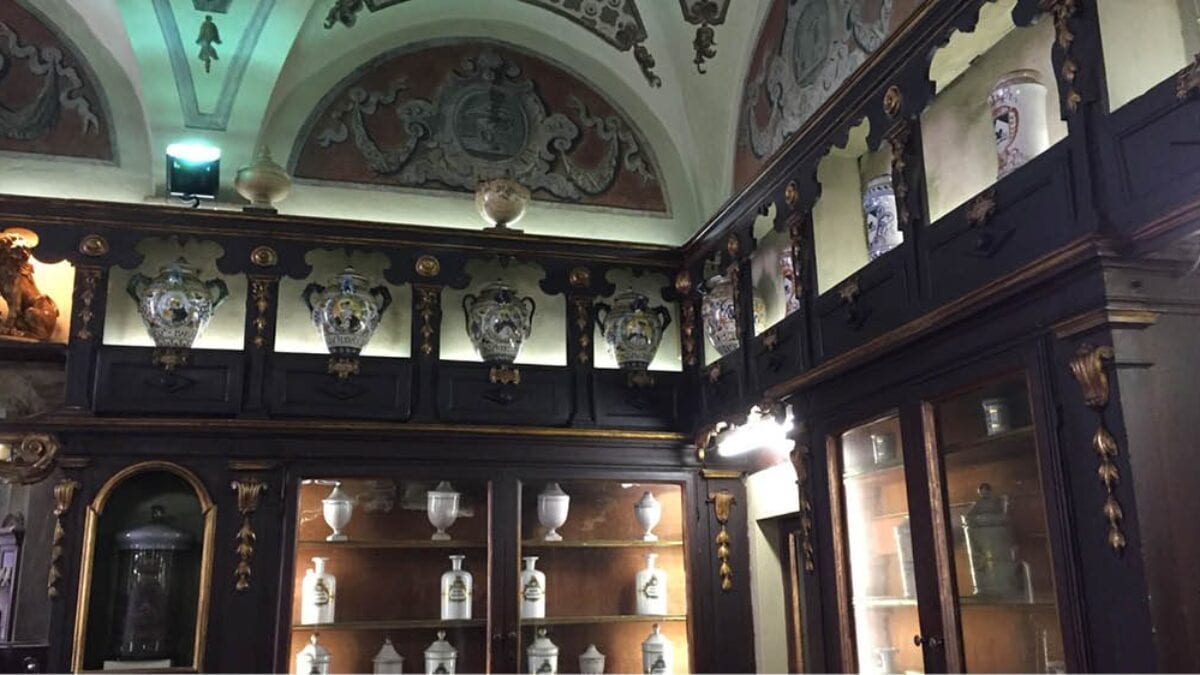
Before becoming the world's best-selling soft drink, Coca-Cola was certainly a medicine. And even before that, there existed throughout Europe an entire category of tonics based on coca leaves that pharmacies prepared and sold legally, often inside convents.
It is with this awareness that we should read the discovery announced by the weekly magazine Toscana Oggi and reported by ANSA: in Florence the Dominican friars have found an advertisement for an elixir that, on paper, looks a lot like Coca-Cola.
What is The "Restorative Wine Elixir" of The Friars of San Marco?
The document in question is an advertising leaflet from the mid-19th century, which resurfaced during the reorganization of the historical heritage of the ancient Pharmacy of San Marco, on Via Cavour. It was found by Father Manuel Russo, the rector of the convent, who is keen to underline how the drink was one of the most requested products of the convent dispensary.
The document describes it as a tonic against physical and mental fatigue, headaches and weaknesses due to age (or "extraordinary fatigue"), and the composition is precise: thirty grams of kola nut and ten grams of Bolivian coca leaves, infused in a liter of mixed alcohol.
These ingredients most likely reached the facility through the hands of Dominican missionaries active in Latin America and Africa. According to the rector, the recipe dates back to the eighteenth century, and then spread widely between the late nineteenth and early twentieth centuries.
Why It Reminds Us of Coca-Cola
This is the fact that makes the discovery interesting. As proclaimed to the world by the Coca-Cola Company, the most famous carbonated drink in the world was born in 1885 in Atlanta, when pharmacist John Stith Pemberton marketed his French wine coca, a miraculous potion based on wine, coca leaf extract, kola nut, and damiana (an aromatic South American shrub).
The following year, the city of Atlanta and Fulton County passed a prohibition ordinance, forcing the Georgia apothecary to remove the alcohol, which was promptly replaced with carbonated water and sugar syrup. From that reformulation, in 1886, modern Coca-Cola was born.
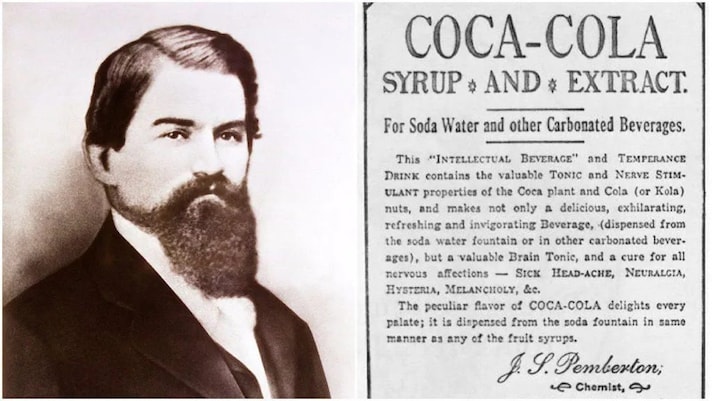
To be honest, however, French wine coca was not an original invention: it followed the recipe of Vin Mariani, the coca wine created in 1863 by the Corsican chemist Angelo Mariani, which in the 1880s became the most famous and imitated tonic in the West.
It is speculated that the Dominican friars themselves were inspired by Mariani's recipe, but added an ingredient, kola nut, which was precisely the addition that differentiated Pemberton's product from the French one. In short, the document of St. Mark puts "coca and kola" together before him.
Who Drank The Wine Elixir and When It Disappeared From Circulation
According to the reconstruction reported by Toscana Oggi, during the period when Florence was the capital, between 1865 and 1871, even officials and employees of the Ministry of Finance would stop at San Marco to sip the tonic. A coffee break ante litteram, with a decidedly more interesting pharmacological profile.
Production continued until the 1930s, when advances in pharmacology and new knowledge about active ingredients led to the abandonment of many preparations considered obsolete. Of the elixir, Father Russo says, only the original labels and a few empty bottles remain.
Is There a Connection Between the Two Drinks?
It's important to be clear about this: there is no document proving a connection between the Dominican elixir and Pemberton's formula. Newspapers report it, and the monks themselves reiterate it, urging caution.
No one has found evidence that the Florentine recipe landed in Atlanta, and the simplest explanation remains that both laboratories drew on the same nineteenth-century pharmaceutical repertoire, that of coca tonics popular throughout Europe.
;Resize,width=767;)
