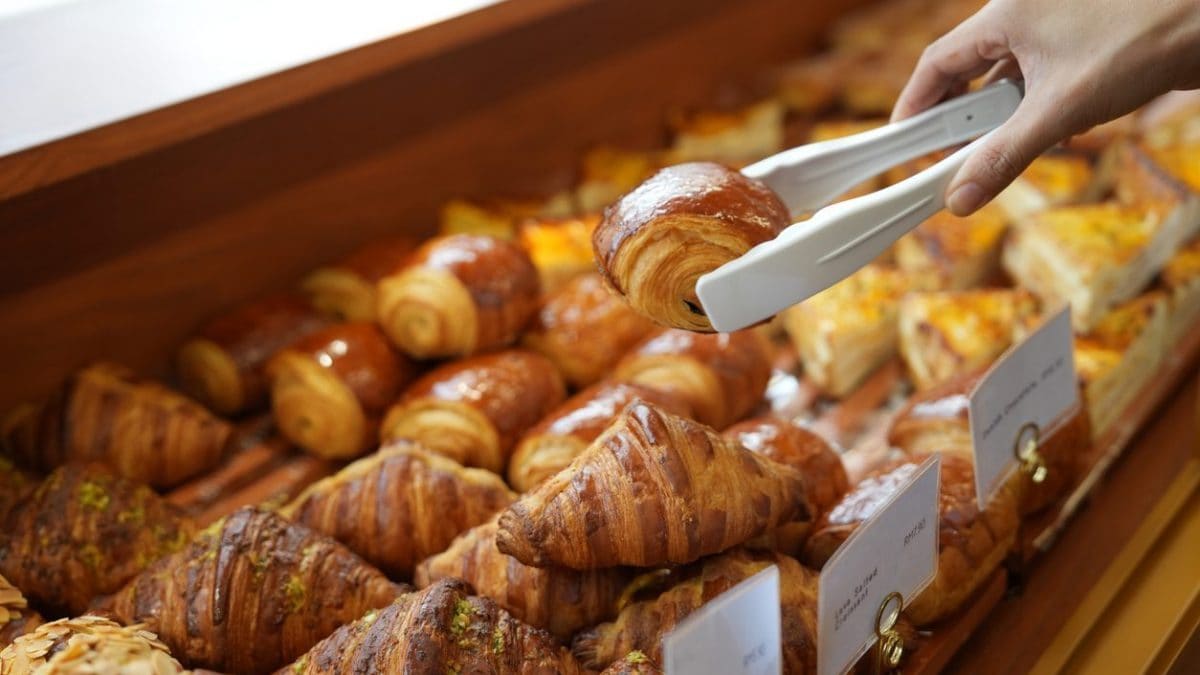
We now have dozens of reasons to travel: but, as if those weren't enough, it's become trendy to organize a last-minute trip just to taste a cube-shaped croissant or the best Danish wienerbrød. This isn't an exaggeration or a metaphor: it's bakery tourism, a constantly growing phenomenon, thanks above all—it almost goes without saying— to the advent of social media. The British newspaper The Guardian reported on it, reporting several experiences in which people recounted hours of travel by train, car, or bike just to try this or that product.
In Search of Authentic Flavors
The internet now gives everyone the opportunity to discover those curious local experiences that, without social media, would remain the preserve of a select few. Yes, because all it takes is a reel on Instagram or TikTok to discover even that tiny pastry shop located in a village of a thousand inhabitants, where the owner inherited that little shop that seems straight out of the fabulous world of Amélie and where they bake the best pain au chocolat in all of France. Then you ask yourself, "Who am I not to try it?!" and you set off with your backpack to see if the internet crowd is telling the truth or not.
Of course, it's not just about unknown producers: we're also talking about influential figures in this world, like Cédric Grolet in Paris or Iginio Massari in Brescia. But what is the reason for this widespread and specific food and wine tourism? Probably a greater awareness and knowledge of certain products and ingredients: the almost obsessive, yet justified, attention of producers —be they pastry chefs, bakers, or pizza makers—to quality products, and above all, those that are more artisanal than industrial, has opened the door to very interesting experiments in which consumers want to participate. Because you want to be the protagonists of a unique experience that can't be had anywhere else – perhaps because you use purely local products or prepare classic delicacies but with a technique specific to that activity, like Ansel's cronut for example – and experience what is defined as experiential tourism, in which, precisely, the tourist doesn't simply leave to unwind, but also to discover small local realities or customs, perhaps still unknown to most.
And what better emotion than the one that food provides? It's one of those attractions that most strikes travelers, as we know, and it's something that isn't just about taste: a gastronomic experience is lived through all the senses. And, in this case, bakeries are no exception: it's not just about tasting that product, but about the anticipation which, as everyone knows, increases desire, in which you begin to savor that wonder that has already won you over just by looking at it, and then comes the smell, that intoxicating fragrance of freshly baked pastries that alone would be enough to make you happy and, finally, comes the tasting, the precise moment in which you realize whether it was really worth it or not.

Around the World to Find the Perfect Bread
Obviously, this phenomenon doesn't just concern our country: even South Korea has already coined a term for this type of trend, bbangjisullae, a compound word from bbang, meaning "bread," and seongjisullae, meaning "pilgrimage." Many testimonies have been reported by the Guardian, such as Darcie Maher, baker-owner of Lannan in Edinburgh, who declared that "people come from all over the world. It's incredible to me. We just had someone come from Canada to try the bakery. Last year, we had a New Zealander who booked his trip just to come to Lannan." Or even a couple made up of a librarian and his scientist wife, known as "bakery pilgrims" precisely because of these pilgrimages in search of the perfect bread, who "walked 360 kilometers across Scotland just for a brioche at the Bakehouse in Mallaig."
The most daring even travel at night to arrive at dawn so as not to miss the freshly baked goods. And if all this may seem crazy to you, you'll be surprised to know that there are even bread maps, like the one published by Taste Atlas. In short, these are true pilgrimages just to experience that perfect moment when you open that brown bag and enjoy a product made to perfection.
What Are The American Destinations?
How could the United States be missing from a list of places worth traveling for great baked goods? From coast to coast, bakery tourism here is less about one single tradition and more about regional identities shaped by immigration, agriculture, and local obsession. In San Francisco, naturally leavened sourdough is still the star, prized for its tangy crumb and crackling crust. Head east to New York City, where bagels are boiled, baked, debated endlessly, and treated as cultural currency — especially when paired with smoked fish and cream cheese. And in New Orleans, bread takes on a very specific supporting role: the airy-yet-sturdy po’ boy loaf, designed to soak up gravy without falling apart.
If laminated dough is your love language, Los Angeles has quietly become a destination for world-class croissants and viennoiserie, thanks to a new generation of bakers trained in both French technique and California sourcing. Chicago has its own quiet bread culture too, from old-school rye loaves to the sturdy Italian bread that underpins the city’s sandwich canon. Sweet-toothed travelers might detour to Boston for classic Parker House rolls, or to Pennsylvania Dutch Country for shoofly pie and soft pretzels that still follow centuries-old methods.
Then there’s the South and Southwest, where baked goods are inseparable from place. Texas is a pilgrimage for kolaches, brought by Czech immigrants and now found at gas stations and bakeries alike. Santa Fe and Albuquerque blur the line between bread and pastry with biscochitos, sopaipillas, and horno-baked specialties tied to Pueblo and Hispanic traditions. And if islands are your thing, Hawaii’s bakeries tell their own story through Portuguese sweet bread, malasadas, and hybrid creations you won’t find anywhere else.

;Resize,width=767;)
