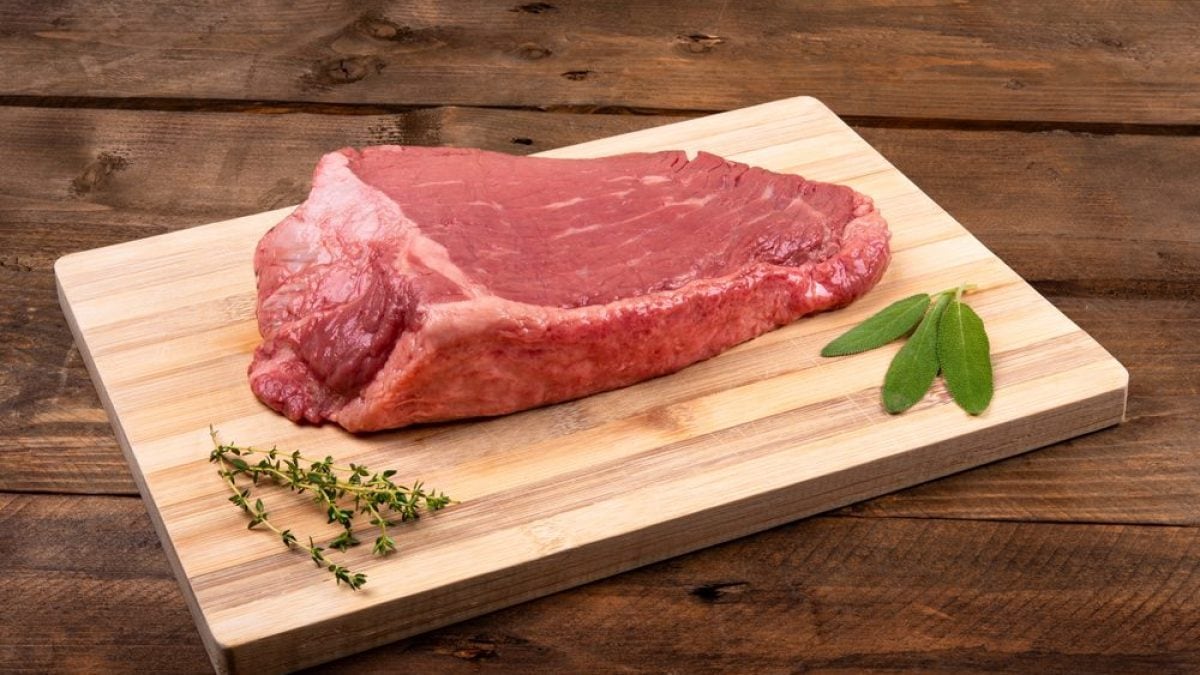
When it comes to beef, or veal to those in the know, few cuts embody simplicity quite like beef topside. It's a discreet meat, lean yet flavorful, the star of simple yet refined dishes. From everyday grilled slices to Sunday roasts, to the carpaccios served in restaurants, topside is one of the most versatile cuts, able to adapt effortlessly to different contexts and cooking methods. Whether you've never used it before or want to experiment with different cooking methods and combinations, here's everything you need to know about beef topside: how it's made, the best ways to try it, and how to best choose when purchasing it.
A Noble Cut From The Beef's Round
The rump of beef —also known as topside/silverside, as we'll see—is found on the inside of the thigh, near the rump and the round. It's made up of muscles that work very little, which is why the meat is tender, firm, and low in fat. At the butcher's, it's recognizable by its bright red color and fine, almost velvety grain. It's a "noble" cut of the hindquarter, prized by those seeking a light meat that cooks perfectly.
The inside topside is the most prized, tender, and uniform; the outside, which many recognize as the silverside, is slightly more fibrous, yet still tasty and ideal for slicing. Both versions share versatility: it can be sliced thinly and cooked quickly, or tied and roasted whole for a more substantial preparation.
A Light and Versatile Cut
Nutritionally, beef rump is one of the lightest and most balanced meats you can bring to the table. It contains a very low fat percentage, often less than 3%, but a high concentration of high-quality proteins: those that the body uses optimally for tissue maintenance and regeneration. With approximately 120 calories per 100 grams, rump is among the "lightest" red meats, which is why it is recommended for balanced, sports, or low-calorie diets, but also for those who simply want a genuine, digestible meat with a "clean" flavor and composition.
It is also a good source of heme iron, the most easily assimilated type of iron, as well as zinc, phosphorus and B vitamins, particularly B12 and niacin, which are essential for energy metabolism and the proper functioning of the nervous system.
Flavor-wise, rump steak has a subtle yet distinctive character: its flavor is sweet and mellow, free of iron notes, and its uniform texture lends itself to a variety of interpretations. Its aromatic neutrality is what makes it a valuable addition to both home kitchens, where simplicity is key, and professional kitchens, where it's used as a base for customization.

It welcomes the scent of fresh herbs —from thyme to rosemary—but also thrives with more modern contrasts: a citrus marinade, a yogurt and herb sauce, or a slightly acidic red wine reduction.
It is precisely this ability to absorb and reflect seasonings that makes rump steak a versatile ingredient: it can be the star or a discreet accompaniment, a main course or an integral part of a more complex dish.
In short, rump is the ideal meat for those seeking a balance between well-being and gastronomic pleasure: light, nutritious, versatile and capable of interacting with any style of cooking — from the most simple tradition to the most creative contemporary interpretation.
How to Use Beef Topside in the Kitchen
As we mentioned, this is a versatile cut, but it does require some attention. When cooking, it's important to avoid overheating or overcooking: just a few minutes are enough to obtain tender, juicy meat. This type of meat pairs well with simple, fresh herbs: sage, rosemary, thyme, and lemon are perfect for enhancing its delicacy. Those seeking a more assertive flavor can deglaze with a young white or red wine, or add a pinch of mustard or black pepper for contrast.
Beef rump is ideal for grilled slices, scallopini in white wine or lemon, or small rolls stuffed with herbs or cheese. With a little experience, rump can be transformed into a refined roast: tied and oven-roasted with white wine, thyme, and rosemary, it retains its compact shape and slices perfectly. Served hot with the cooking juices or cold with a drizzle of oil and a few flakes of salt, it reveals a surprising tenderness.

Topside is also at its best when prepared raw: sliced very thinly for elegant carpaccios or hand-chopped tartares. In these versions, the meat expresses all its elegance: bright color, clean aroma, and delicate flavor, without excess iron or fat.
As for wine, fesa pairs well with light, fragrant reds: a young Chianti, a Bardolino, or a Montepulciano d'Abruzzo. Served chilled or as a carpaccio, it can also pair well with full-bodied whites or aromatic rosés.

How to Choose Beef Topside at the Butcher's
Recognizing a good beef topside is a careful process that begins at the butcher's counter. It's a cut that, precisely because of its leanness, can't rely on fat to mask defects: quality must be immediately visible and noticeable.
The first thing to look at is the color, which should be a bright red, shiny but not too dark. A shade that is too pale may indicate a young animal or excessively short-aged meat, while a brownish red tends to signal meat that is no longer fresh.
To the touch—or to the sight, if you can't touch it—the rump should appear dried but not dry, with a compact surface and a fine, even grain, almost velvety. The presence of small filaments of pure white fat is not a defect: on the contrary, a slight marbling helps keep it tender during cooking. It's important to ask for it to be cut "in the grain," that is, following the natural direction of the fibers: a simple trick that makes all the difference in terms of tenderness.

A good butcher will also be able to distinguish between the inside topside and the outside topside.
- The first, more tender and uniform, is ideal for carpaccio, cuts or slices;
- the second, a little more compact, is better suited to roasts or stews.
Origin also plays a crucial role. It's best to choose meat from certified American cattle, sourced from farms that guarantee natural nutrition and traceability. A uniform color and fresh aroma — never sweet or iron-like —complete the picture of quality meat.
Finally, a tip from true connoisseurs: ask the butcher when the meat was slaughtered. A rump aged for at least 7-10 days will offer a softer texture and more harmonious flavor, because the fibers will have had time to relax.
Choose Beef Topside if You Have To…
Here's a checklist to save and refer to when you need to shop at the supermarket or butcher's.
- prepare slices or scallopini: its thin and compact fiber allows for short and uniform cooking without stiffening;
- make rolls or roulades: it holds its shape during cooking and goes well with light fillings of herbs, vegetables or cheeses;
- cooking a lean roast or a delicate roast beef: it holds the binding well and absorbs the aromas without losing liquids;
- serve cold dishes such as sliced roast or meat salad: the regular structure ensures clean cuts and a neat presentation;
- propose carpaccio or tartare: the fine texture and leanness ensure an elegant raw product, with a sweet and clean flavour;
- obtain a neutral base for sauces or complex condiments (wine, citrus fruits, light spices): the rump does not overpower the other ingredients.
Don't Choose Beef Topside If You Have To…
- cooking long-cooked dishes such as braised, stewed or boiled meats: its lean fibre tends to dry out and harden;
- prepare full-bodied stews or ragùs: the rump releases little juice and does not develop the gelatinous softness of more connective cuts;
- obtain succulent, marbled meat for the grill: it lacks the fatty infiltrations that make cuts like rib or rump tender;
- facing prolonged high-temperature cooking, such as barbecue or direct grilling: the risk is a dry and fibrous consistency;
- create melting or sticky dishes (ossobuco, wine stews), where collagen that melts is needed: the rump contains very little of it;
- look for meat with an intense and “rustic” flavor: its delicacy is ideal for clean dishes, less so for strong or spicy recipes;
- working with minced meat or hamburgers: the low percentage of fat compromises the juiciness and structure during cooking;
- Replace cuts rich in connective tissue in traditional recipes: it will not develop the same creaminess or aromatic depth.
;Resize,width=767;)
