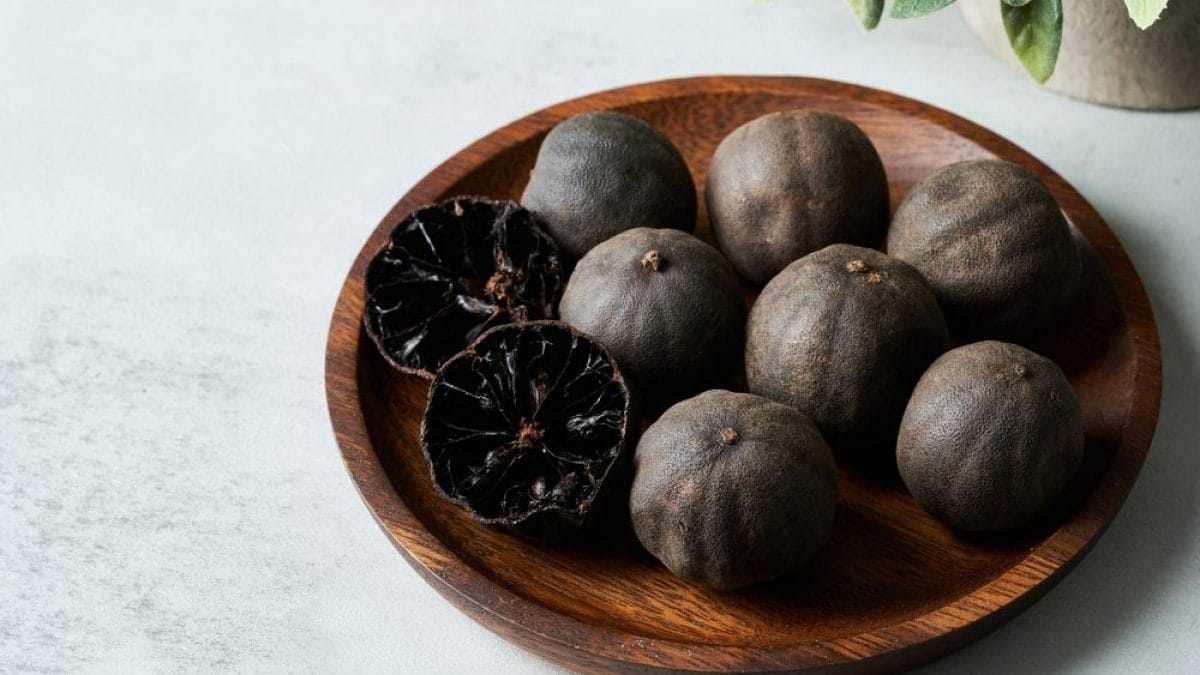
At first glance, it might seem like just a small, dried fruit, dark as night and light as a handful of sand. But as soon as you bring it close to your nose, you realize that the black lime is anything but ordinary. Behind its rough exterior lies a world of intense aromas: citrusy and smoky, tart but with a bitter, deep, almost mysterious undertone.
Born under the scorching sun of the Persian Gulf, this dried lime is much more than a spice: it is a fragment of culinary history, a silent witness to generations who have learned to preserve its essence to face the harshest months and transform it into an indispensable ally in the kitchen.
From the tables of Oman and Iran to the most daring contemporary restaurants, black lime has crossed borders, eras, and traditions. Today, it is making a comeback, not only as a symbol of Middle Eastern authenticity, but as an ingredient capable of lending voice to modern dishes with unexpected aromatic power. This is the story of a fruit forgotten by time, rediscovered by taste. A journey through deserts, steaming pots, and flavors that leave their mark.
What is Black Lime and Where Does It Come From?
Black lime, also known as loomi, noomi basra, or limoo omani, is a traditional dried lime from the Persian Gulf countries, made by boiling green limes in salted water and then drying them in the sun until they become dry and dark brown or black. During this process, the flavor becomes more concentrated: the acidity becomes more intense, smoky notes emerge, bitterness emerges, and a unique aromatic profile distinguishes it from fresh limes.
Black lime originates from Oman, hence the name limoo omani, but it is also widespread in Iran (as limoo amani) and Iraq (noomi basra). It originated as a preservation method to survive the hot seasons in arid climates, but quickly became a signature ingredient in traditional cuisines like Persian and Iraqi, appearing in dishes like khoresh sabzi and legume soups.

To become a black lime, limes are first blanched in boiling salted water, then left in the sun for weeks. The pulp dries out, and the peel oxidizes, turning black and becoming brittle. The result is a very light fruit with a very intense aroma.
Black lime offers a rich and layered sensory experience: a more intense acidity than fresh lime, a pronounced bitterness especially in the peel and pips, smoky and earthy tones, and a surprising presence of umami, similar to dried mushrooms or miso. It's this blend of flavors that makes black lime so popular: an ingredient that adds depth to rich, structured dishes.
Black Lime's Benefits
Black lime contains vitamin C, antioxidants, fiber, potassium, calcium, iron, folate, magnesium, and thiamine. Consuming it can help support immune function (vitamin C), aid digestion and reduce bloating or indigestion, help regulate blood pressure and cholesterol (thanks to potassium and pectin), and offer potential antibacterial and anti-inflammatory effects.

How to Use Black Lime in Cooking
In the kitchen, black lime is used in various ways:
- Whole or pierced: It is added to stews, soups, and rice dishes; it is pierced or crushed to slowly release the flavor during cooking and then removed before serving.
- Ground into powder: Used as a spice on meats, fish, roasted vegetables, or in blends like baharat or kabsa to add acidity and complexity.
- Infusion/herbal tea: Chai noomi basra is a traditional hot drink made by boiling pieces of black lime, often sweetened with sugar or honey and sometimes enriched with saffron; it is used as a digestive remedy.
In recent years, black lime has won over chefs and enthusiasts in the West. It's used in salads, sauces, marinades, vegetarian dishes, meats, fish, and even desserts. Chefs like Yotam Ottolenghi use it to add depth without overpowering the overall balance of the dish. Some modern interpretations include its use in cocktails (as a sautéed lime rim) or in chocolate mousse, where its bitter acidity balances the sweetness in a sophisticated way.

How Long Does It Last and How to Store It?
Whole black limes can be stored in an airtight container in a dry place for up to two years, retaining much of their flavor; the powdered version loses its flavor within a few months and is best consumed within about a year.
;Resize,width=767;)
