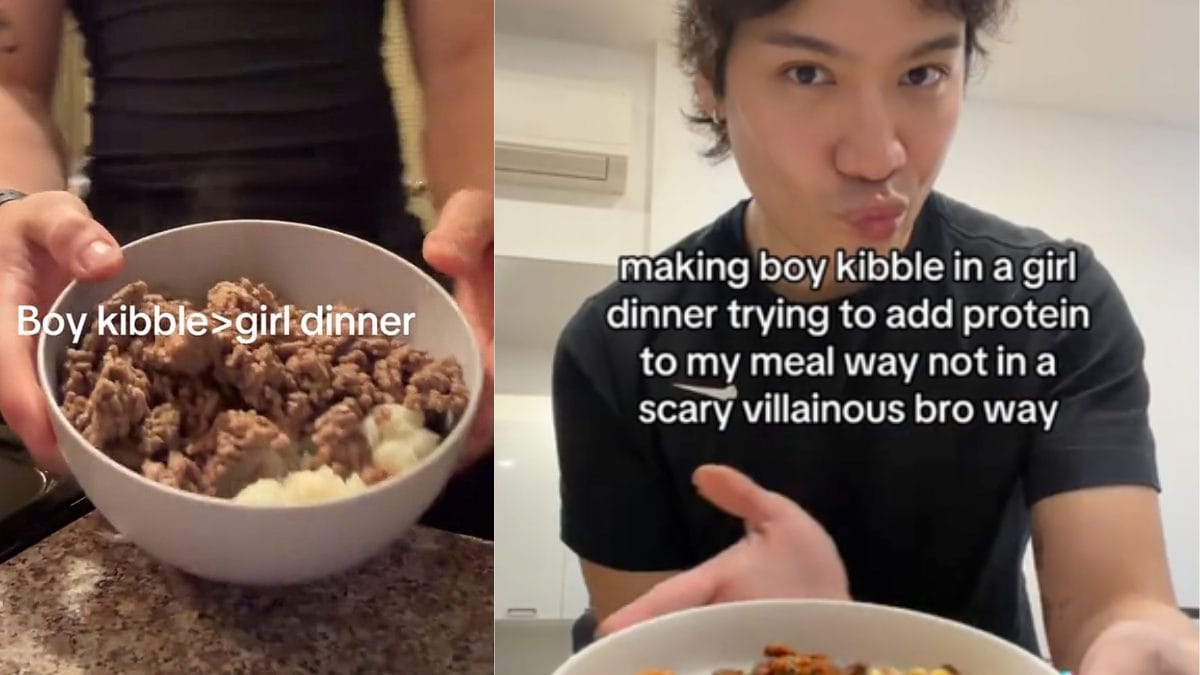
The internet has a talent for turning the most basic meals into cultural moments — and the latest example is boy kibble, a viral eating trend dominating TikTok, gym culture, and male‑coded online spaces. Despite the pet‑food‑adjacent name, boy kibble is simply a minimalist bowl of ground beef and rice, sometimes topped with eggs, avocado, or hot sauce. It’s intentionally plain, intentionally repetitive, and intentionally unfussy — the human equivalent of kibble. The trend has exploded across social media because it promises what many young men say they want: high protein, low cost, zero decision‑making, and no cooking skills required.
What Exactly Is Boy Kibble?
At its core, boy kibble is a simple, bulk‑prepped meal built around two ingredients:
- Ground or minced beef (the protein)
- White rice (the carbohydrate)
Optional add‑ins include eggs, frozen vegetables, onions, garlic, or sauces — but the defining aesthetic is beige, basic, and brutally efficient. The dish is often cooked in large batches and portioned out for several days, making it a favorite among gym‑goers and young men who want to “set it and forget it.” The name riffs on the earlier “girl dinner” trend, positioning boy kibble as its protein‑heavy, no‑frills counterpart.
Why Young Men Are Obsessed With It
Boy kibble’s appeal is surprisingly layered. According to nutrition experts and cultural analysts, the trend resonates because it hits several key needs at once:
1. It’s Cheap and Convenient
Rising grocery prices have pushed many young adults toward bulk cooking. Boy kibble uses inexpensive staples and requires almost no culinary skill.
2. It’s High in Protein
Ground beef delivers complete protein, iron, zinc, B12, and other nutrients essential for muscle maintenance — a major draw for fitness‑focused men.
3. It Reduces “Decision Fatigue”
Many followers say they eat the same bowl every day because it eliminates the mental load of choosing meals. It’s food as fuel, not food as experience.
4. It Fits Into a Performance‑First Mindset
Culturally, boy kibble reflects a shift toward utilitarian, macro‑driven eating in male‑dominated online spaces — a reaction to more aesthetic, expressive food trends.
The Masculinity Behind the Meme
While boy kibble is often shared with humor — creators joking that men should “eat like dogs to look like gods” — the trend also reveals deeper dynamics around masculinity and food. Experts note that boy kibble frames eating as efficiency, discipline, and optimization, rather than pleasure or creativity. It’s the culinary embodiment of gym culture, macro tracking, and the idea that meals should be functional above all else. Some commentators even describe it as a “coming‑of‑age meal” for young men learning to feed themselves for the first time.
Is Boy Kibble Actually Healthy?
Nutritionists say boy kibble can be healthy — but only with modifications.
The Good:
- High in protein
- Easy to batch cook
- More nutritious than fast food
- Supports muscle maintenance and growth
The Not‑So‑Good:
- White rice is low in fiber and micronutrients
- Eating the same meal daily can create nutritional gaps
- Lack of vegetables limits vitamins and minerals
Experts recommend adding:
- Frozen vegetables
- Onions, garlic, or peppers
- Beans or lentils
- Different protein sources (turkey, tofu, chicken)
These additions boost fiber, vitamins, and flavor without compromising the trend’s simplicity.
Why the Trend Isn’t Going Anywhere
Boy kibble has become more than a recipe — it’s a cultural shorthand for a generation of young men navigating adulthood, fitness culture, and economic pressure. It’s cheap, it’s filling, it’s easy, and it fits neatly into the hyper‑efficient, hyper‑optimized lifestyle that dominates male‑coded corners of TikTok. And because it’s endlessly remixable, endlessly batch‑cookable, and endlessly meme‑able, boy kibble is poised to stick around — even if nutritionists hope fans will add a vegetable or two.
;Resize,width=767;)
