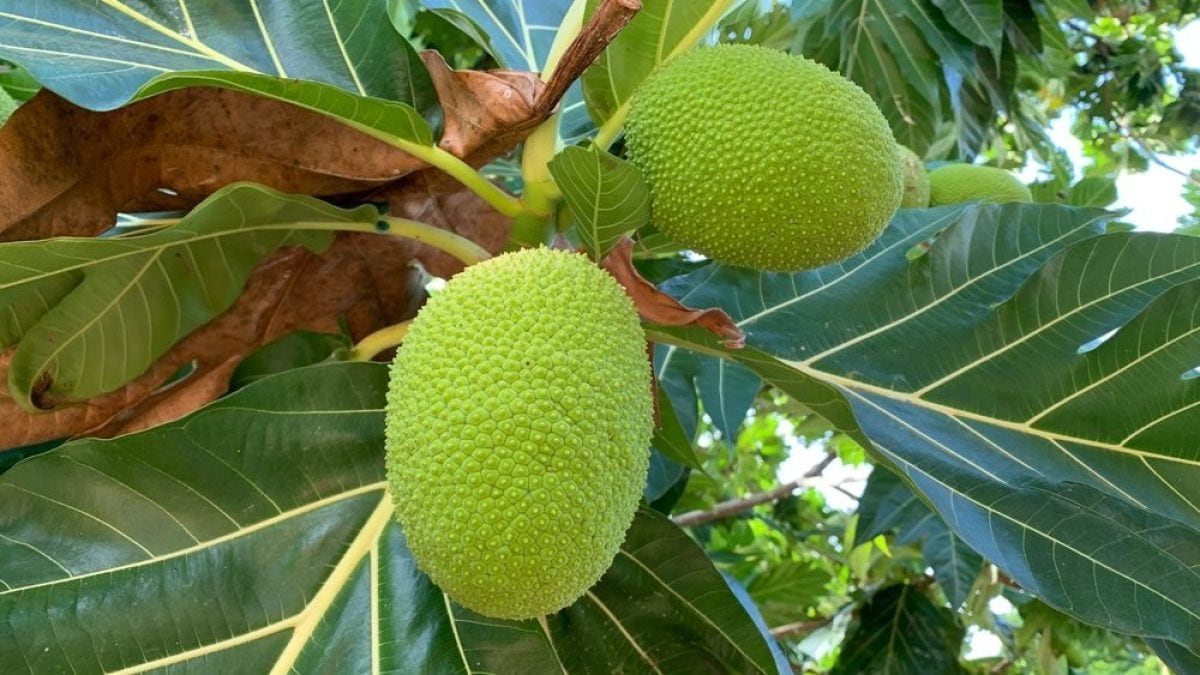
Imagine walking along a dusty road on a Caribbean island and behold, a majestic tree bearing large, wrinkled, green fruits hanging from its branches like natural lanterns. It's Artocarpus altilis, the breadfruit tree. At first glance, the name seems paradoxical—bread, a symbol of the European oven and table, growing spontaneously on trees. Yet in the Caribbean, and in many parts of the Pacific, breadfruit has been a fundamental food resource for centuries, shaping culinary customs and even popular festivals.
The breadfruit tree requires no special care: it grows vigorously in tropical climates, produces hundreds of fruits each year, and has found its ideal habitat in the Caribbean. Once used to feed slaves, it has now become an ingredient of cultural pride and gastronomic identity, celebrated in festivals like the one in Saint Vincent, which every August dedicates an entire month of recipes, dances, and traditions to the breadfruit.
What is Breadfruit?
Artocarpus altilis belongs to the Moraceae family, the same as mulberry and fig. It is an evergreen tree that can reach 18 meters in height, with large, glossy, lobed leaves. The fruits, which can weigh several kilos when ripe, have a wrinkled green skin and mealy pulp, ideal for cooking.
A mature plant can produce over 200 fruits a year, with a higher yield than crops like rice and wheat, which require more maintenance. The name itself, derived from the Greek artos (bread) and karpós (fruit), testifies to the importance of this food in tropical cultures.

Native to New Guinea and the surrounding islands (Melanesia and part of East Malaysia), from there, thanks to Polynesian navigators, it spread throughout Polynesia, Micronesia, and Melanesia, becoming a staple food for the Pacific populations. Only later, in the 18th century, was it introduced to the Caribbean by Europeans (the famous voyage of the ship Bounty, 1787–1789, intended specifically to transport breadfruit seedlings to the British colonies, is a given).
Properties and Benefits of Breadfruit
Breadfruit is a nutritious and balanced food: rich in complex carbohydrates and fiber, low in fat, and naturally gluten-free. It contains minerals (potassium, magnesium, iron, calcium), vitamins (C, A, and B vitamins), and phenolic compounds with antioxidant properties. It is useful for:
- Improve digestive health. The dietary fiber in breadfruit promotes intestinal transit, helps prevent constipation, and promotes a healthy gut microbiota.
- Regulate blood sugar. Some immature varieties or breadfruit flours have a moderate to low glycemic index, due to their resistant starch content, which can slow the absorption of carbohydrates.
- Supports the cardiovascular system. Thanks to its potassium, mineral, antioxidant (phenol) content and low saturated fat content, regular consumption can help keep blood pressure under control and reduce oxidative stress that affects the arteries.
- Help protect against inflammation. The phenolic compounds in breadfruit—and in some cases, leaf extracts—display free radical-scavenging activity, which may help protect cells from oxidative damage and chronic inflammation.
Furthermore, breadfruit flour is naturally gluten-free and is suitable as a substitute for wheat flour or other gluten-containing flours for those with celiac disease or gluten sensitivity.

Uses in The Kitchen
Breadfruit is one of the most versatile ingredients in tropical cuisines. Depending on its ripeness, it can take on different flavors and textures, making it suitable for both simple and elaborate dishes.
- Unripe fruit. The unripe fruit is boiled or steamed, often served as a side dish in place of potatoes or cassava. In Jamaica, for example, it is common to find it steamed alongside saltfish.
- A mid-ripe fruit. When medium-ripe, the flesh becomes slightly sweet and is suitable for frying. In many Caribbean islands, breadfruit chips are made, crunchy and flavorful, and served as a street snack. Also in Jamaica, breadfruit is often roasted over a wood fire, then cut into wedges and served with ackee and saltfish.
- Ripe fruit. The ripe fruit can be baked or roasted, and the pulp takes on the consistency of soft bread; in this form, it becomes the basis for one-pot meals or hearty side dishes. In Trinidad and Tobago, oil down is popular, a rich stew made with breadfruit, meat or fish, vegetables, and coconut milk, considered the national dish.
Not just savory dishes: the dried pulp produces a naturally gluten-free flour, which is used for breads, focaccias, pancakes, cakes, and biscuits. In Pacific Rim countries, breadfruit flour is also traditionally used to prepare fermented desserts or batters reminiscent of puddings.

In some areas, such as Samoa and Hawaii, breadfruit is cooked in traditional underground pits (umu or imu), wrapped in banana leaves and slowly roasted until soft and aromatic.
Even the seeds, when present, have their uses: toasted and lightly salted, they become a nutritious and highly appreciated snack. Finally, in some cultures, fermented or non-alcoholic breadfruit drinks are produced, taking advantage of the natural sweetness of the ripe fruit.

;Resize,width=767;)
