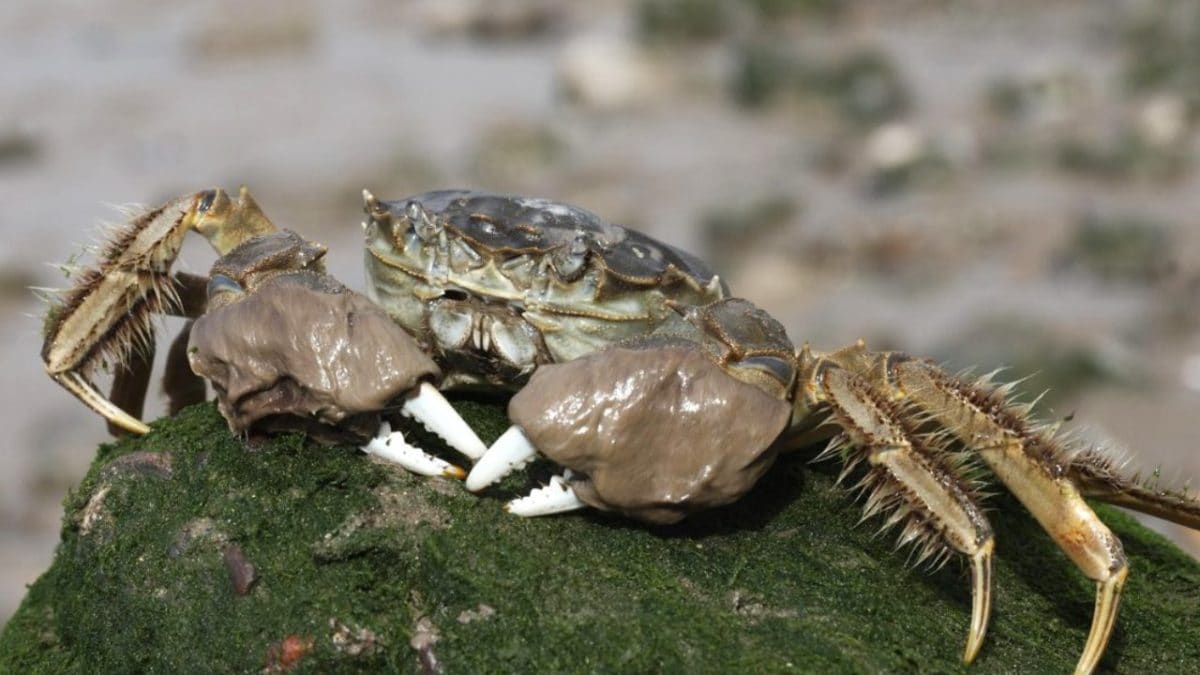
It's object of numerous seizures around the world. But what is this animal, and why is its commercialization (and other activities, as we'll see) prohibited? Scientifically named Eriocheir sinensis, it is an alien, invasive species, capable of endangering ecosystems other than its own, precisely because it is non-native and particularly aggressive toward other local species (a bit like the blue crab, for example).
What is The Chinese Mitten Crab and Why is It Called That?
This is a unique type of crab, with claws covered in thick, dark hairs, capable of adapting to and living in both salt and fresh water. It appears to have been introduced to the U.S. from the East in the late 1980s, and was mapped out in the early 1990s following a dangerous increase in its numbers.

Like any non-native and aggressive species, it has created problems related to the preservation of various local ecosystems. The danger associated with their consumption also lies in the crab's ability to live even in particularly polluted waters, thus absorbing and concentrating toxins and substances dangerous to human health in their tissues.
In the United States, the Chinese mitten crab (often marketed overseas as “hairy crab”) is treated less like a delicacy and more like a biosecurity problem. Since 1989, live mitten crabs have been listed as injurious wildlife under the federal Lacey Act, which means they’re prohibited from being imported into the U.S. because of the risk they pose if they escape or are released. On top of that federal restriction, many states add their own rules; for example, California’s wildlife officials warn that mitten crabs are invasive and have been linked to ecosystem disruption and damage to waterways and infrastructure, including erosion from burrowing.

In the U.S., the enforcement headlines tend to come from ports, airports, and express shipping hubs, where live Chinese mitten crabs are intercepted before they can enter the food supply. In recent years, U.S. Customs and Border Protection (CBP) and the U.S. Fish & Wildlife Service have reported multiple large seizures, including hundreds of pounds of live mitten crabs discovered in express consignment facilities. Federal agencies have also carried out broader crackdowns—like “Operation Hidden Mitten,” a multi-port effort that seized nearly 15,000 live crabs from illegal shipments that were falsely declared as ordinary goods.
;Resize,width=767;)
