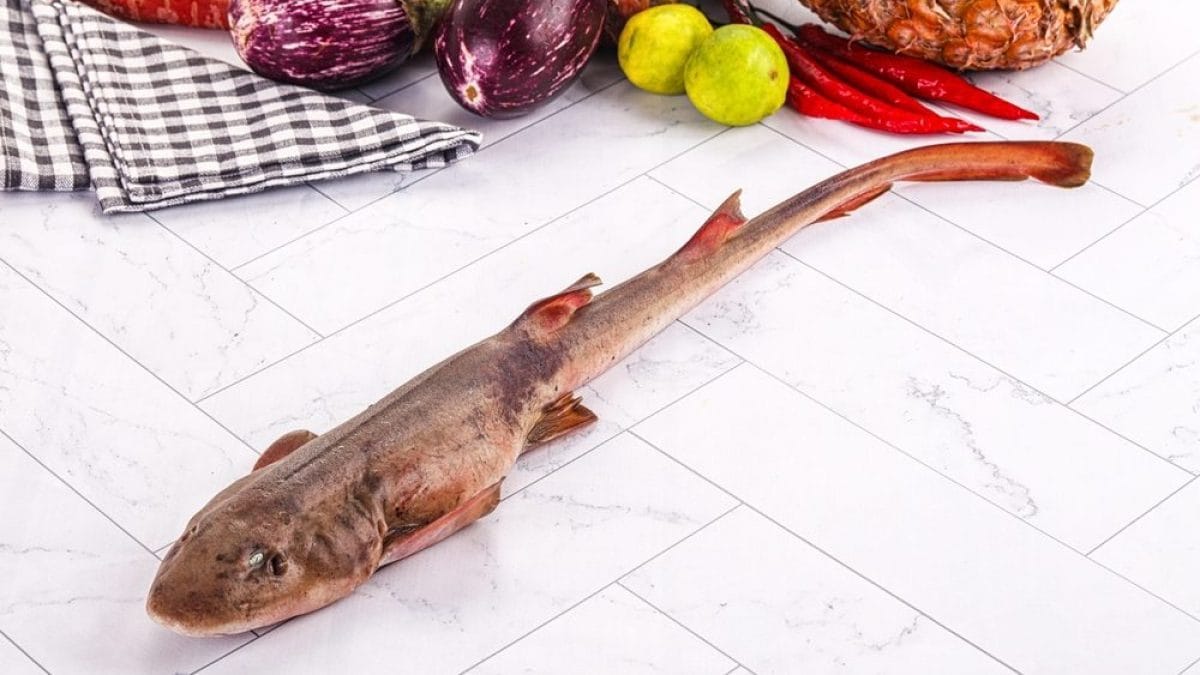
Often relegated to the role of "poor man's fish," the dogfish actually turns out to be a surprising ingredient. It is, in fact, a shark, but a species that poses no threat to humans: it lives on the sandy and gravelly seabeds of the Mediterranean, and is a fish that can be cooked in simple yet tasty ways. Yet, despite its seemingly unassuming appearance, the dogfish is not without its own precautions when it comes to consumption. Being a shark, in fact, it should be eaten in moderation, both for sustainability reasons —since indiscriminate fishing can endanger some marine species—and because of its propensity to accumulate heavy metals, such as mercury, along the food chain. Despite these characteristics—in common with other species, not just sharks—the dogfish is a nutritious, economical, and easy-to-cook fish: today we'll tell you all about this underrated species.
What is Dogfish And Where Is It Most Commonly Used?
The dogfish (Scyliorhinus canicula), with its slender appearance and skin covered in thin cartilage, is a shark that mainly inhabits the Mediterranean seabed, from shallow waters to about 400 meters deep. It is not a rare species; in fact, it is quite widespread, and is fished mainly in the Adriatic Sea, but also along the Sicilian and Sardinian coasts, where it is particularly prized for its delicate, boneless flesh, which makes it easy to prepare in the kitchen. According to the International Union for Conservation of Nature (IUCN), it is classified as “Least Concern (LC)”.
In Sicily and Sardinia, dogfish is a true protagonist of coastal cuisine. In Sicily, for example, it is often found in fish soups, dishes that combine different types of fish and fresh herbs, while in Sardinia, dogfish is used in a typical, boldly flavored dish, Burrida alla Cagliaritana, where it is cooked with a sauce made of vinegar, walnuts, and garlic. Both islands, with their maritime traditions, use dogfish in a simple yet tasty way, respecting the authentic flavors of the sea.
Though dogfish isn’t a household name in the U.S., it’s very much eaten — just not as widely as in Europe. This small shark, often called spiny dogfish, is abundant along the Atlantic and Pacific coasts, especially in New England and the Pacific Northwest. Despite its mild, firm, cod-like flavor and strong sustainability credentials, most of the U.S. catch is exported to the U.K. and Germany, where it’s a staple in fish and chips under the name “rock salmon.” Within the States, you’ll find dogfish on the menus of sustainable seafood restaurants and coastal markets, often pan-fried, smoked, or tucked into fish tacos. It’s one of the most responsibly managed fisheries in North America, and chefs have been working to rebrand it with friendlier names like “Cape shark” in hopes of winning over American diners.

Dogfish's Benefits and Properties
Although dogfish is often considered a "cheap" or low-value fish, it is actually a healthy source of nutrition with many benefits. Dogfish meat is lean and contains good-quality protein, with little fat and a low calorie count, equal to approximately 110 kcal per 100 grams. It is also a suitable fish for those following low-fat diets, such as the ketogenic diet, and can be a valid alternative to fattier or more expensive fish. Furthermore, it is rich in omega-3s, which are known for their benefits for the heart and cardiovascular system, and in B vitamins, including B12, which supports the production of red blood cells and the proper functioning of the nervous system.
However, as mentioned in the introduction, it is important to consume it in moderation. Being a shark, the dogfish is prone to accumulating heavy metals, such as mercury, which can concentrate in its tissues due to its position in the food chain. Therefore, despite being a nutritious fish, it is not recommended to consume it too frequently, especially for pregnant women and children, who are more vulnerable to the negative effects of contaminants

Sustainability and Conscious Consumption
When it comes to sustainability, the dogfish falls into a gray area. Although not considered an endangered species, shark fishing in general raises ecological concerns, as these animals have long life cycles and low reproductive rates, making them vulnerable to overfishing. The short-nosed dogfish (Scyliorhinus canicula) is not yet listed as endangered, but its over-harvesting could have negative effects on the marine ecosystem, especially since the catshark plays an important role in the balance of populations of other marine organisms.
Furthermore, fishing techniques such as trawling, which is often used to catch catshark, can seriously damage marine habitats. Therefore, it is essential to choose responsibly caught dogfish, perhaps opting for products certified by organizations like the Marine Stewardship Council (MSC) , which guarantee sustainable fishing. Finally, as with all fish, the advice is to consume it in moderation and vary your seafood choices so as not to depend too much on a single species.
How to Use Dogfish in The Kitchen
Dogfish is an extremely versatile fish, suitable for a variety of simple yet flavorful preparations, perfect for those who love fresh fish but want to maintain a rustic, traditional feel. On the islands, for example, dogfish is often stewed, a method that allows the meat to remain tender and flavorful. One of the most common preparations is stewed with tomatoes: simply cook the fish in a sauce made with fresh tomatoes, onion, garlic, a little white wine, and herbs like rosemary or wild fennel.
In Sardinia, in addition to the aforementioned burrida, dogfish is also grilled or pan- fried. In these cases, it's essential to handle it gently and not cook it too long, to avoid drying it out. If you opt for grilling, you can brush it with extra virgin olive oil, add a pinch of salt, pepper, and a little lemon juice to bring out the freshness of the fish. After a quick cook, the meat will remain tender and flavorful, perfect for a light yet tasty dish.

Alternatively, you can also try frying the dogfish, perhaps in a light batter, for a crispy outside and soft inside. This is a popular preparation, especially in more rustic dishes, where the lightness of the dogfish meat pairs perfectly with the crispiness of the batter.
When it comes to pairings, dogfish pairs well with fresh herbs like lemon, garlic, and olive oil, which enhance its delicate flavor without overpowering it. It's also excellent with crunchy vegetables like zucchini, peppers, or cherry tomatoes, which balance the meat's texture. If you want a richer side dish, you can pair it with new potatoes or green beans, which perfectly complement the dish with a hint of sweetness and freshness.
Finally, if you want a fresh and light dish, you can also serve it cold in a salad, perhaps dressed with olive oil, lemon juice, capers, olives, and a few parsley leaves, for a simple yet flavorful dish. This dish is ideal for a summer day or as an appetizer, but it can also be a light choice for dinner.
In the U.S., dogfish is cooked in a variety of simple, coastal-inspired ways, though it’s still more of a chef’s secret than a home-cooking staple. Its firm, lean flesh and mild flavor make it versatile and easy to prepare — similar to cod, halibut, or haddock — and it holds up beautifully to high heat and bold seasoning.
You’ll often find dogfish battered and fried, especially in New England, where chefs serve it as a local alternative to traditional fish and chips. It’s also grilled or pan-seared, taking well to marinades with lemon, garlic, and herbs, or a dusting of Old Bay for a distinctly East Coast touch. In the Pacific Northwest, dogfish sometimes appears smoked or cured, as its dense texture stands up well to curing salts and smoke. And because it stays firm in liquid, it’s occasionally used in chowders or fish stews, lending gentle flavor without falling apart.
Handled fresh — since dogfish can develop an ammonia taste if not cleaned promptly — it becomes a clean-tasting, sustainable seafood option that chefs love for its adaptability. It’s not yet common in supermarkets, but as awareness of sustainable fishing grows, dogfish might just be the next under-the-radar American catch to earn a spot on home menus.
;Resize,width=767;)
