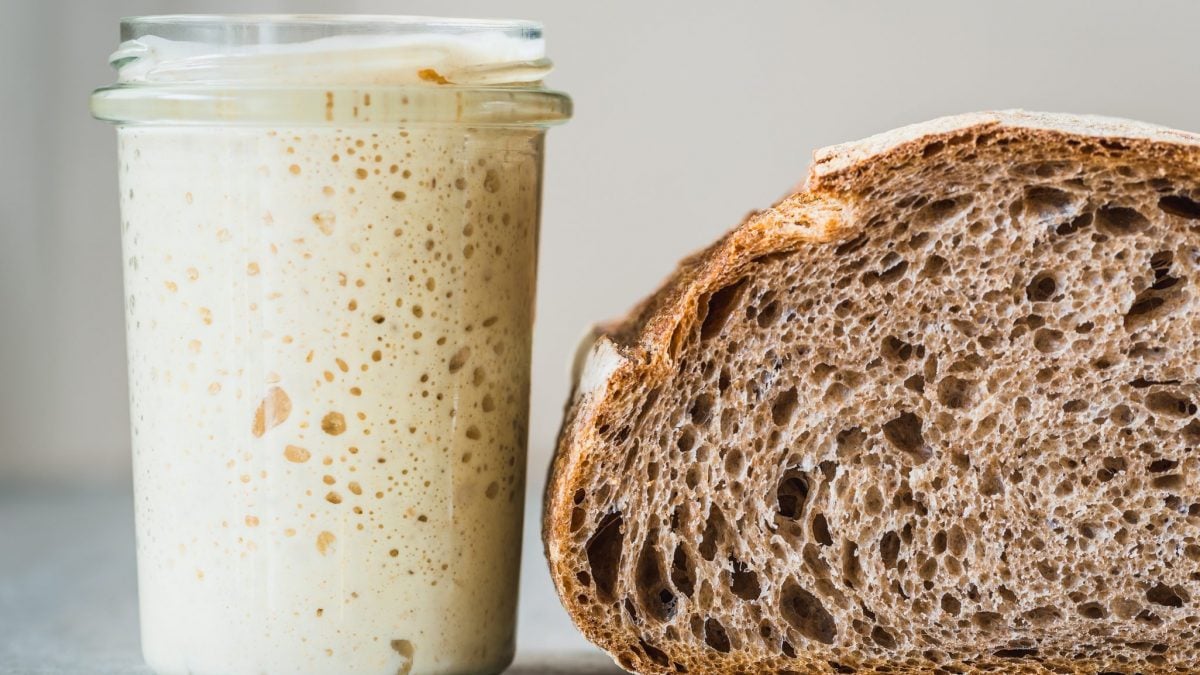
How beautiful and complex the world of leavened goods is: we work for hours, we spend our days thinking about the dough, whether it will rise, whether it will be good, tall, beautiful, puffy, honeycombed. And yet, the joy that comes from a bread, a pizza, or a panettone made with our own hands, is something no one else can give us.
But as we all know, it's a tortuous road, and it's not enough to simply mix any flour with water and any type of yeast: there are many ways to achieve a specific flavor, a particular structure, and a predominant aroma. And we're sure you're already familiar with things like sourdough starter, biga, or poolish, but have you ever heard of licoli? It's a sort of liquid sibling of sourdough starter, and in this article, we'll analyze in detail what it is and when, how, and why you should use it.
What is Licoli?
Let's start with the name, which already gives us an idea of what we're dealing with: it's an acronym for liquid culture yeast and is simply a different type of sourdough starter. Unlike the latter, however, it's much more liquid, because it involves the combination of equal parts water and flour: these two ingredients are mixed by taking yeast and bacteria from the flour and partly from the surrounding environment, producing, thanks to fermentation, organic acids and carbon dioxide, essential for the flavor and leavening of the final product.

Licoli is particularly prized for making bread, focaccia, and pizza for its thin crust and well-aired crumb. Thanks to its high water content, the bacteria and yeasts within it work actively, allowing for fairly rapid fermentation and a generally quick leavening. Furthermore, it is very easy to manage because, especially compared to sourdough, it requires fewer refreshments, being more hydrated and less acidic, and therefore remaining stable longer.
Licoli Vs. Solid Sourdough Starter
As we mentioned before, licoli is nothing more than semi-liquid sourdough starter: this means they serve the same purpose even if they have slightly different characteristics. A first and clearest distinction is the percentage of water: licoli is much more hydrated – having a quantity of water equal to that of flour – while solid sourdough starter usually has a hydration of 45-50%. This difference also leads to a change in the flavor of the final product: the higher percentage of water favors the development of a more delicate and less acidic aroma, unlike sourdough starter which has lactic and more acetic notes.

Licoli, being much more hydrated, usually has the ability to develop larger alveoli and a thinner crust than solid sourdough starter, which results in a more compact crumb. Consequently, the former is used more for products such as bread, pizza, and focaccia, while the latter is ideal for panettone and colomba cakes, for example, which require a more solid and stable structure. Finally, licoli is more popular in the home setting for its ease of management compared to sourdough starter: it requires refreshing less frequently than solid sourdough starter.
Licoli, Sourdough Starter, Brewer's Yeast, Poolish and Biga
As we mentioned at the beginning of this article, the world of baking and leavened products is extremely complex, and the presence of yeasts, direct and indirect doughs, preferments, and various friends certainly doesn't simplify things. So, without going into too much detail, we'd like to give you a brief overview, explaining some of the differences between all these products.
We have already spoken extensively about licoli and solid sourdough: it is a simple mixture of water and flour, in different percentages, in which yeasts and bacteria present in the flour will start the fermentation process, creating carbon dioxide necessary for the subsequent leavening.
Brewer's yeast, on the other hand, has practically the same function as the previous two—it helpsthe dough rise —but it's made only of yeast —specifically, Saccharomyces cerevisiae, a fungal microorganism—and not of various other microorganisms. Furthermore, it's sold in grocery stores, while sourdough starters are made at home. Finally, brewer's yeast has an expiration date —which can range from a month for fresh yeast to one to two years for dry yeast —while the other two can last for several years: the important thing is always remembering to refresh them.

We conclude with biga and poolish, which, although they may seem very similar to licoli and sourdough, have slightly different functions and characteristics : they are always made from water and flour, to which, however, a small percentage of yeast is added, unlike the other two, which draw bacteria from the surrounding environment. These pre-doughs —as the name itself suggests—are made before the actual dough is mixed and used at that point, providing particular characteristics with regard to aroma, preservation, digestibility, and lightness, and are used for a single product. Solid sourdough and licoli, on the other hand, are used for leavening, last over time, and are used in multiple recipes.

