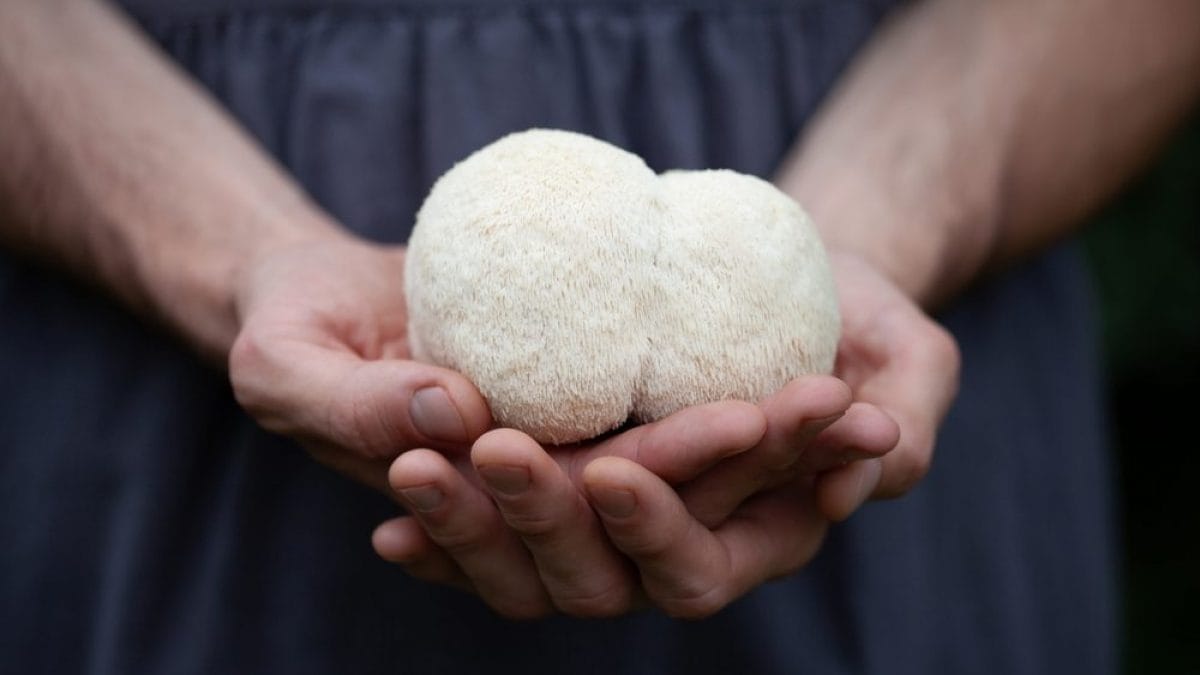
Exploring the world of edible mushrooms is always fascinating. Recently, thanks in part to social media, the so-called lion's mane mushroom (scientific name Hericium erinaceus), originally from Asia and used for both food and medicinal purposes, has sparked curiosity. It's sparking interest because it combines two key characteristics that are making it go viral: its decidedly unusual appearance compared to common mushrooms, instantly noticeable when scrolling, combined with the benefits of a superfood as a supplement useful for the brain and gut, making it an increasingly popular and sought-after product in the world of natural remedies. Let's get to know it better.
Lion's Mane Mushroom's Characteristics
Hericium erinaceus is one of the strangest edible mushrooms in the world, known internationally as Lion's Mane, Monkey's Head, especially in China, and yamabushitake in Japan, in reference to the hermit monks who live in the mountains. It belongs to the Hericiaceae family and grows spontaneously on the trunks of broad-leaved trees, where it hardly goes unnoticed: its shape, in fact, is not the classic one with a stem and cap, but is similar to a velvety white mass composed of filaments that resemble a lion's mane, or a pure white pompom. It is found in East Asia, Oceania, North America, and Europe, but it is not an especially easy mushroom to find.

Lion's Mane Mushroom's Properties
More than for its culinary use, Hericium erinaceus is known as a medicinal mushroom, linked to improving physical and mental well-being: in Chinese and Japanese healing traditions, it has been used for millennia in mycotherapy, along with other mushrooms boasting healing properties such as reishi, shiitake, and cordyceps. In particular, its primary action is said to be protective of the gastrointestinal tract, as a natural remedy for gastritis, ulcers, and inflammation, supporting the microbiota, and of the nervous system, associated in particular with supporting cognitive functions and memory during aging, as demonstrated by several studies. In fact, this mushroom species contains bioactive substances, such as erinacins, which are considered potential candidates for future application in pathologies such as Parkinson's, Alzheimer's, and stroke, but are still under study. On the market, Hericium erinaceus is available as a food supplement (in capsules, powder, soluble mixes with which to create an alternative to coffee), with extracts that derive from the mycelium (i.e. the vegetative apparatus of the fungi, which allows nourishment and is usually located underground) or from the fruiting body (the visible part): the EFSA, the European Food Safety Authority, for example, has not yet validated any of the beneficial effects of these supplements and before consuming them it is advisable to consult your doctor.

Lion Mane's Mushroom's Role in Cooking
As an ingredient, Hericium erinaceus does not appear so frequently on American tables, because it is still considered a specialty mushroom. From a nutritional point of view, it can be compared to other mushrooms in general. Rich in water, it is low in fat and calories, contains fiber and protein, a good quantity of vitamins (especially precursors of B and D) and minerals such as zinc, selenium and potassium, which have an antioxidant effect against cellular aging: the low calorie content and high nutrient density make it perfect for inclusion in a balanced diet, especially for those seeking plant-based protein sources, rather than those of animal origin. In this context, its compact texture makes it ideal for preparations in which you want to achieve a meaty consistency without using meat, while the flavor is delicate, reminiscent of shellfish and chicken. One of the simplest ways to cook it is chopped and sautéed in a pan with extra virgin olive oil, garlic, and herbs, but it can also be grilled or breaded like a steak or vegetable cutlet, seasoned with spices, and served with creamy sauces like mayonnaise or yogurt. In Asian cuisine, it is often added to soups or stir-fried with vegetables.


