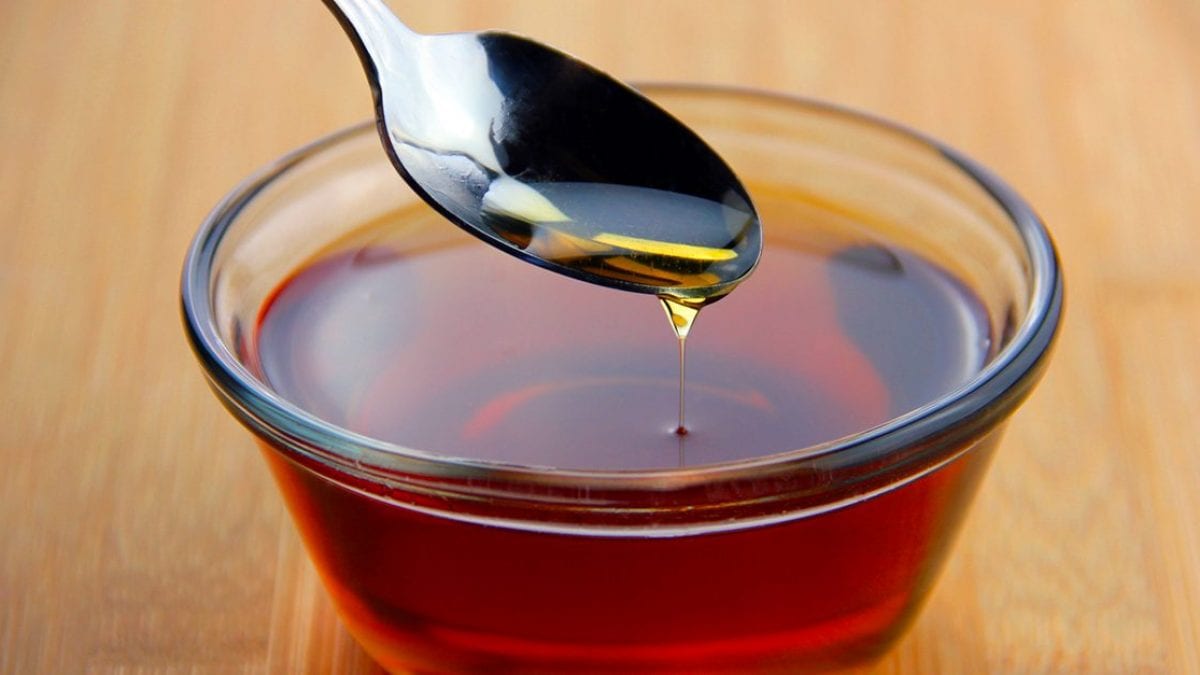
It's such a recognizable symbol that it proudly stands on the Canadian flag. The maple tree isn't just a tree: it's a true national emblem, as well as an almost unparalleled economic engine. From its trunk comes one of the country's most beloved and iconic products, maple syrup, which moves millions of dollars every year and conquers more and more kitchens and bakeries around the world. It's a product you're probably already familiar with if you're a fan of slow breakfasts of pancakes or steaming French toast, with that amber drizzle that slowly slides across the plate to sweeten your breakfast. Let's take a look at how it's made and the origins of this natural sweetener that speaks of an entire territory, authentic and perhaps even a little wild, just like the true essence of Canada.
In 2023, Canada produced over two-thirds of the world's syrup and exports to dozens of countries, with Quebec being the heart of the industry, accounting for approximately 90% of the country's production. In 2024, Canada produced a record 19.9 million gallons thanks to favorable weather conditions, and according to official estimates, the country accounts for approximately 71–73% of the world's supply.
What is Maple Syrup, Really?
Maple syrup is a natural sweetener obtained from the sap of certain North American maple species (especially sugar maple and black maple). It is not a flavored syrup, but rather a concentrate of the sap itself with a small amount of aromatic compounds and minerals that give it character and complexity. It is among the lowest-calorie natural sweeteners (about 260 kcal per 100 grams), surpassed only by molasses and stevia.
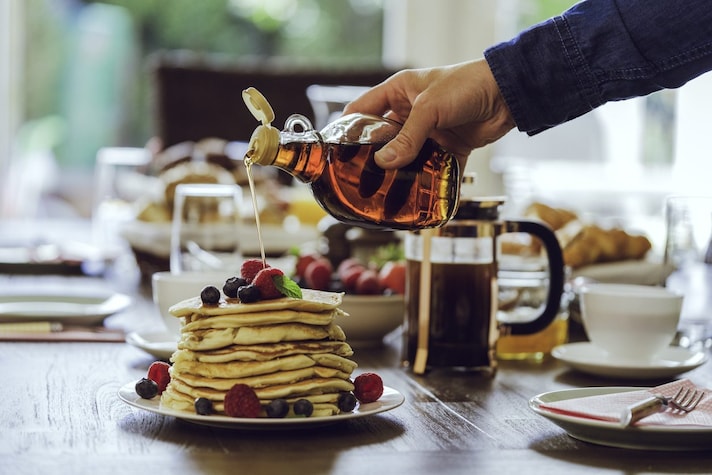
It's an excellent alternative to regular granulated sugar and is rich in minerals. Precisely because of its energy and nutritional value, it is often used in countries with very cold climates like Canada. This product has a long history and, it is said, was already used by the indigenous people of Northeast America. They collected the sap from maple trees and cooked it over a fire to make syrup and maple sugar. This process was not just a preservation technique, but a true seasonal ritual that marked the end of winter and the return of life to the woods. When Europeans arrived on the continent, it was the indigenous people who taught them the art of harvesting and processing maple, a knowledge that later evolved into modern production techniques. Today, these ancient traditions are being rediscovered and celebrated as an integral part of Canada's cultural heritage.
How is Maple Syrup Obtained
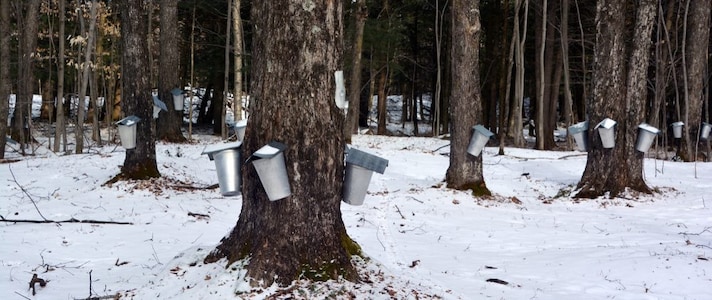
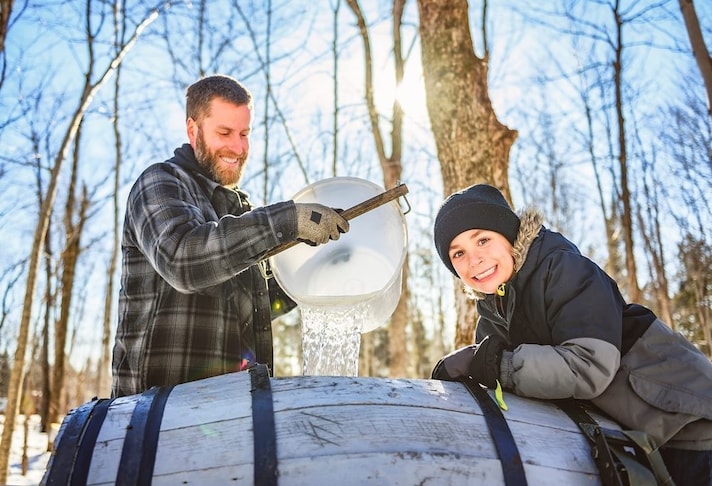
The ideal time to begin the maple syrup production process is early spring. Once the long Canadian winter is over, people head into the woods, where small incisions are made in the trunks of the maple trees to collect the sap. It's typically left to collect in a container (similar to a bucket with a lid) for about four to six weeks and is harvested between mid and late April. The second part of the process involves boiling the sap, which is cooked to concentrate the sugars and evaporate the water. The syrup is then filtered to remove any impurities and packaged.
The sap contains a lot of water and about 2-3% sugars and, to become syrup, it is boiled together with other flavorings until it reaches the right degree of density (66° Brix, or 66% soluble solids), which is the Canadian standard for Grade A, the highest. This is where the color and notes of caramel, wood, and spices arise.
Returning to the alcohol content, grade A is classified according to four intensities: Golden (delicate), Amber (rich), Dark (robust), and Very Dark (intense flavor). In short, if you love pancakes for breakfast, the most recommended is Golden, while to glaze meats, vegetables, or add depth to a dish, experts recommend using Dark or Very Dark.
Maple Syrup's Benefits
On the health front, several researchers have begun to investigate the benefits of maple syrup for our health. It should be handled honestly: despite everything, it remains an added sugar and therefore should be consumed in moderation. The ratio of maple syrup to table sugar, according to values (54 vs. 65), shows this product with a relatively lower glycemic index, but it is not "diabetes-proof."
Other studies have identified specific polyphenols, including quebecol, formed during sap concentration. In vitro and animal studies suggest potential antioxidant and immunomodulatory effects, but more clinical research in humans is needed to draw firm conclusions. Even more recent experiments have measured phenolic content and antioxidant capacity, confirming that the polyphenolic component is integral to the product's quality.
In short, whether you're booking or already have your bags packed for Montreal or Vancouver, or you're simply planning on making pancakes, as the Canadians say: maple syrup is an invitation to slow down the frenetic pace of the day.
;Resize,width=767;)
