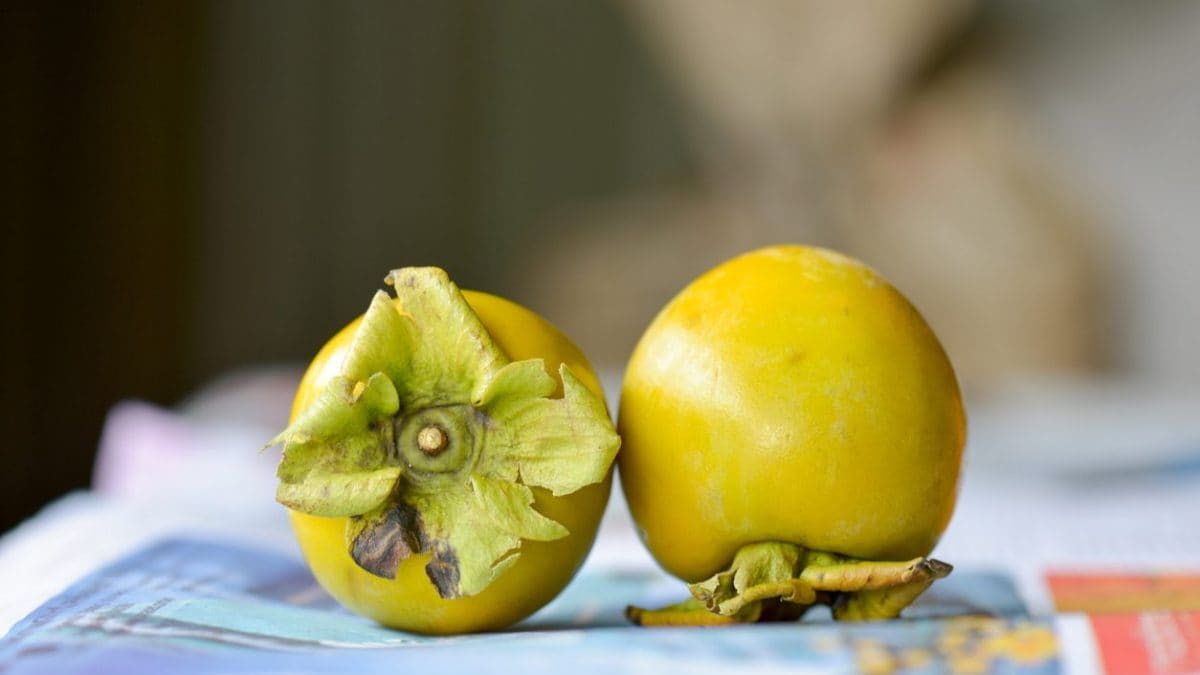
We've all experienced it: biting into an unripe persimmon or apple and finding our mouth suddenly dry, scratchy, almost "stuffy." And it doesn't just affect unripe fruit, but also over-steeped tea, drinking a particularly "tannic" red wine, or even chewing wild leaves and berries. It's a surprisingly widespread phenomenon in our daily diet, yet often poorly understood. Why do some foods give us this sensation? What exactly happens in our mouth, and what natural mechanisms are responsible? To understand, we need to closely explore the role of certain substances found in plants and the unique way they interact with our saliva.
What is Astringency?
Astringency is a sensation that is primarily tactile rather than gustatory. It's not a true "taste," but a physical response felt in the mouth: sudden dryness, a rough tongue, a slight tingling sensation, a feeling of constriction of the mucous membranes, and a marked reduction in salivation. It's as if the mouth instantly loses its natural softness.
At the heart of this phenomenon are tannins, polyphenolic compounds found widely in the plant world. These molecules perform numerous functions in plants, but for us, they have one key characteristic: the ability to bind to proteins present in saliva. When tannins and proteins meet, they form aggregates that precipitate: saliva, thus "stripped" of its proteins, becomes less viscous and less lubricating.
The result? The surfaces of the mouth slide less easily against each other, generating that typical sensation of roughness and constriction we recognize as astringency. In other words, astringency is a sort of temporary "sandpaper effect": the more tannins present and the more soluble they are, the more intense the sensation will be. This is why some unripe fruits or certain beverages, such as tea and red wine, can vary greatly in their ability to astringent depending on the variety, degree of ripeness, or processing.
Why Plants Produce Tannins
Tannins aren't found in fruits by chance: they represent one of the most effective defense mechanisms developed by plants throughout evolution. Many plant species use them as a natural deterrent against herbivores and predators, as their bitter taste and strong astringent properties make leaves, bark, and uneaten fruits less palatable.
Tannins are present in high concentrations in unripe fruits, in particular: this is because, at this early stage, the seeds are not yet ripe and are therefore not ready to be spread by animals that would ingest them. For the plant, it is essential to "protect" this crucial stage of development, discouraging premature consumption by causing an unpleasant sensation on the tongue and palate.

As ripening progresses, however, the situation changes completely. Tannins are progressively modified, polymerized, or rendered insoluble: they no longer interact with salivary proteins and consequently lose much of their astringent capacity. At the same time, sugars, aromas, and the softness of the pulp increase. This is what happens to traditional persimmons—hard, tannic, and almost inedible when unripe—which become sweet, soft, and completely free of tartness only when fully ripe. In this way, the plant "chooses" the ideal moment for consumption, transforming an initially protected fruit into a ripe and desirable one, ready to perform its ecological function of dispersing its seeds.
The Most Astringent Fruits
Not all fruits contain the same amount of tannins: some species are naturally richer in them, especially in the early stages of ripening. The most common examples include:
- unripe persimmons, among the most famous for their intense astringency
- green apples and some varieties rich in polyphenols
- grapes not fully ripe, especially in the skins
- unripe pears, often more tannic than their ripe versions
- green bananas, which gradually become sweeter and less acidic
- unripe pomegranates and medlars, which also experience a significant drop in astringency as they ripen.
The process that leads to the reduction of astringency is twofold. On the one hand, tannins are transformed through polymerization, oxidation, and enzymatic degradation, becoming less soluble and therefore less reactive with saliva. On the other hand, the increase in sugars and aromas contributes to making the fruit more pleasant, further masking the perception of astringency.
In short, ripening is a true process of "sensory softening": the fruits pass from a defensive phase to an attractive phase, changing not only their flavor but also the way they interact with our palate.

How to Reduce Fruit Astringency
There are several methods —some traditional, some more modern—to reduce astringency and make the fruit more palatable. The simplest is also the most natural: let the fruit ripen. Over time, tannins transform, become less soluble, and lose their ability to bind to salivary proteins. This is what happens when an unripe persimmon rests for a few days: the pulp softens, the sugar content increases, and the astringency fades.
Another very effective method uses ethylene, a natural plant hormone produced by many fruits: apples and bananas, in particular, release large quantities. Placing an unripe fruit, such as a persimmon or pear, next to them accelerates the ripening process, rapidly reducing the tannic component responsible for the acidity.
Finally, there's drying, a process that completely alters the fruit's texture and composition. By removing water, the tannins change shape and bind to new structures, becoming much less perceptible. This is why, for example, dried persimmons are sweet and free of astringency, despite being made from tannin-rich fruit.
When Astringency is a Virtue
Although often perceived as a nuisance, astringency can be a valuable element in some food preparations. In red wine, for example, tannins are essential for providing structure, complexity, and aging potential: they contribute to the wine's body and persistence and define an important part of its character.

In black tea, a slight astringency gives a "clean" sensation on the palate, enhancing the aroma and making it easier to pair with sweet or fatty foods. Many enthusiasts seek precisely that subtle balance between smoothness and tannicity.
Finally, even some red fruits, such as currants and blueberries, benefit from an astringent note that counteracts the natural sweetness and makes the flavor more lively and harmonious. Astringency, in short, isn't always a flaw: it can become a valuable ingredient in the tasting experience.

