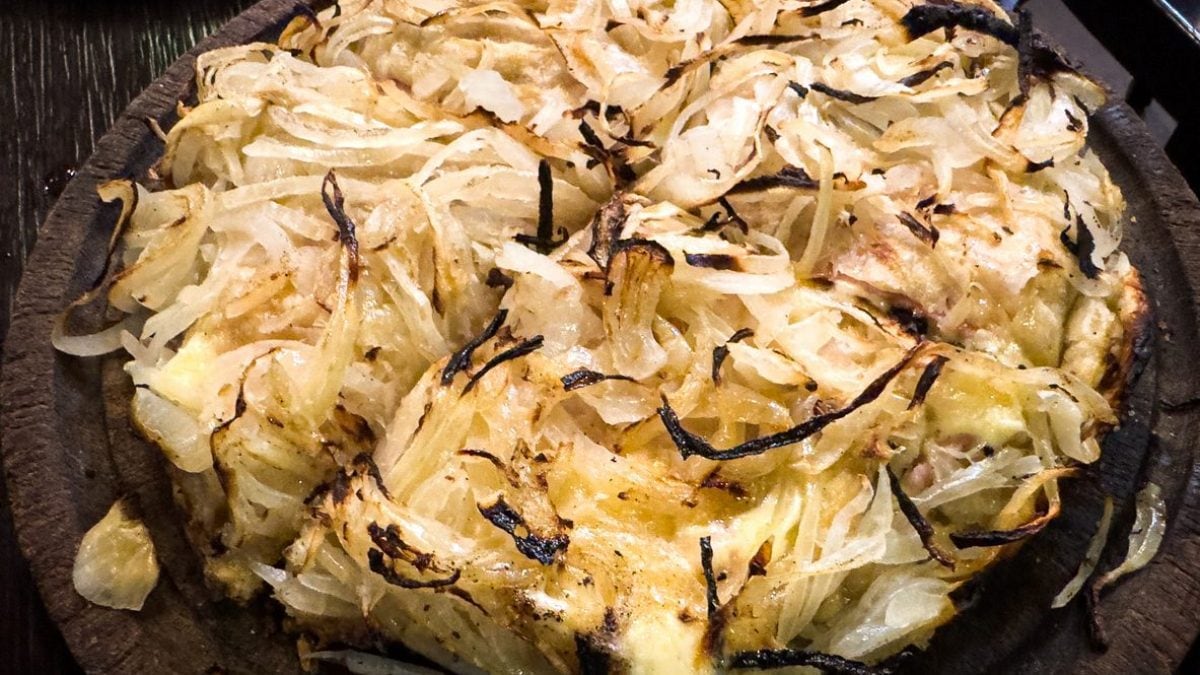
When we talk about pizza, it's no longer possible to refer solely to Neapolitan pizza or, more generally, Italian pizza: today, pizza styles come from all over the world, and we welcome them all as delicious discoveries. This time, we want to tell you about a variation that comes directly from Argentina and is called pizza porteña —from the term used to refer to the people of Buenos Aires, the porteños —in which several styles coexist.
Where Does Argentinian Pizza Come From?
If you think about it, it's not so strange that one of Italy's most popular dishes became popular in a country like Argentina: between the late 19th and early 20th centuries, millions of Europeans arrived in Argentina, and a significant portion of them came from Italy, bringing with them some of their most iconic dishes. Thus was born what is now called pizza porteña, which comes in various styles, the most famous of which is called pizza al molde, which literally means "pan pizza," characterized by a soft, almost bread-like consistency, more like a focaccia than a pizza as it is known in Italy. Alongside this type, we also find the so-called pizza a la piedra, cooked directly on a stone and with a thinner base: it originated in the middle of the century but especially exploded in popularity between the 1970s and 1980s.
A typically Argentine ritual has also developed around this product: in many historic pizzerias in Buenos Aires, pizza is served with fainá, a chickpea flour-based dish derived directly from Italian Ligurian farinata. This combination is called pizza a caballo and, over time, has become an integral part of the local gastronomic experience.
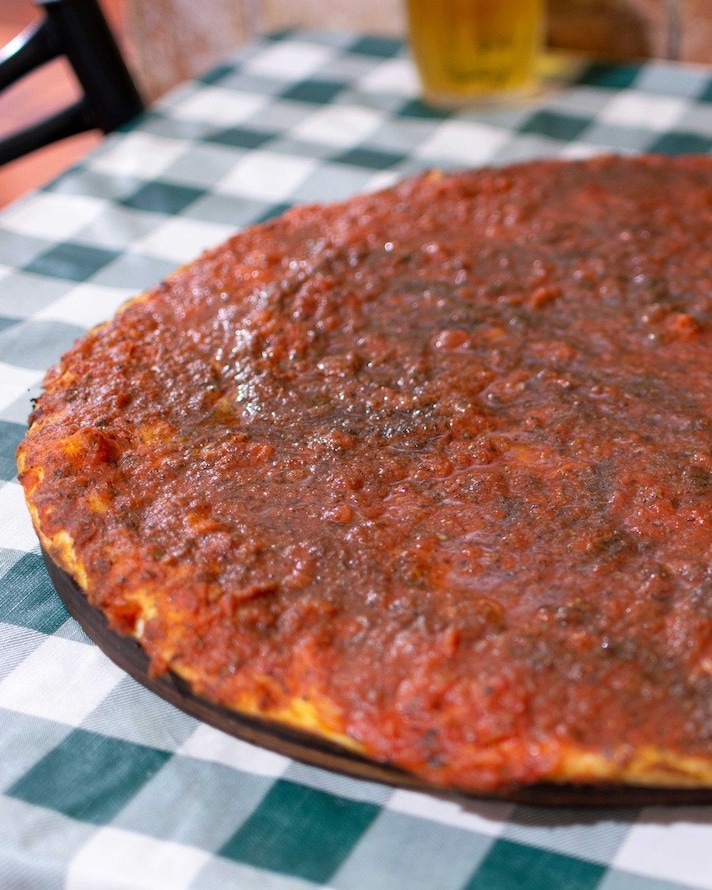
Finally, among all the variations of the Porteña pizza, we can also find the pizza canchera, or pizza de cancha, one of the most unique interpretations of Buenos Aires. Unlike most Argentine pizzas, it does not include cheese and is topped with a very tasty tomato sauce enriched with garlic, oregano, and a pinch of chili pepper (hot or sweet). Its origin is linked to Oscar Vianini, founder of the historic pizzeria Angelín, who began selling it by the slice outside stadiums during football matches: it is from this habit that the name cancha derives, which in Argentina means the sports field or stadium.
From The Ligurian Fugassa to The Fugazzeta
If there's one family of pizzas that truly expresses the bond between Italy and Argentina, it's the fugazza, fugazza con queso, and fugazzeta: three preparations often confused with each other but actually different, even if they all fall within the category of pizza al molde. The fugazza takes its name from the Ligurian fugassa and represents one of the most direct interpretations of the Genoese heritage in Argentina: it's a cheese-free pizza composed of a disk of dough topped with onion, oregano, and grains of salt. From this base, the fugazza con queso —also called American fugazza in some pizzerias —is born, which maintains the same structure but adds mozzarella to the surface. The fugazzeta, on the other hand, is another preparation and represents the culmination of this evolution: unlike the other two, it is made with two disks of dough that enclose the cheese inside, while the classic layer of onions remains on top. In the traditional version, the filling was not only made of mozzarella but also of queso cuartirolo, an Argentine cheese derived from the Lombard quartirolo, used in abundant quantities and considered one of the distinctive elements of the original recipe.
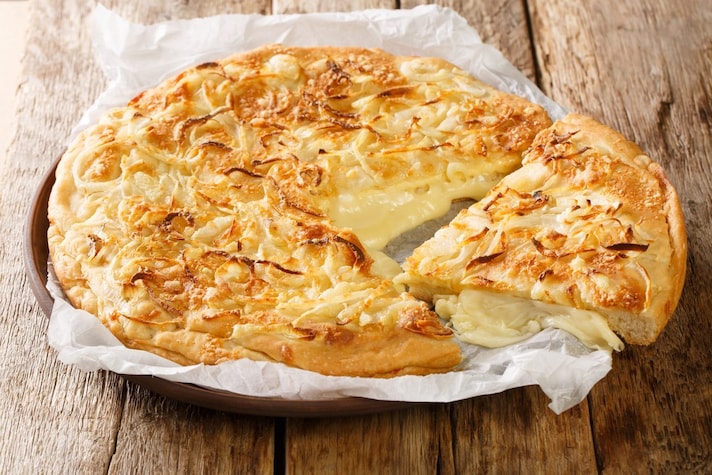
According to the most widespread version, the invention of the fugazzeta is attributed to Juan Banchero, son of the Genoese baker Agustín Banchero and a figure linked to the birth of one of the historic pizzerias in Buenos Aires still operating today. Legend has it that the idea arose almost by chance, in an attempt to revive a Genoese fugassa considered too dry: the bread would be cut in half and stuffed with cheese, giving rise to a dish destined to become a true icon. Over time, the line between fugazza con queso and fugazzeta has become blurred, and many pizzerias have begun using the names interchangeably. Some scholars of Argentine gastronomy, however, maintain that the correct distinction remains the original one: fugazza is the version with onion on top, while fugazzeta is the stuffed one.
;Resize,width=767;)
