Quinoa is a plant with ancient origins: a history spanning more than 5,000 years, from the pre-Columbian civilizations of South America to the present day, with varying fortunes. From a food destined for the Inca nobility —called the gold of the Andes—to nourishment for the poorest mountain populations of the Andes; from an essential superfood for a healthy diet to a potential environmental enemy due to increasingly intensive cultivation to meet its high demand. Without a doubt, quinoa, with its proven health benefits and culinary versatility, has become a staple in our diets, especially in summer, which requires the right amount of calories in fresh, quick, and light recipes.
What is Quinoa, The Plant That "Thinks" It's a Cereal?
In reality, we are the ones who think that quinoa is a cereal, it goes without saying. The reason is simple: in the kitchen, its use can be compared to that of barley, wheat, and rice, but when we talk about this vegetable we are referring to an annual herbaceous plant called Chenopodium quinoa Willd (named after the German botanist Carl Ludwig Willdenow, who classified it in the 19th century), belonging to the Chenopodiaceae family, like beets and spinach, and of which there are more than 3,000 varieties, including wild ones.

Quinoa originates from South America: today, the largest producers are Bolivia, Peru, and Ecuador, and its ability to adapt to diverse climates and soils allows it to be grown in other parts of the world, from the United States to Africa, including India and even Italy. The most common commercially available is Bolivian quinoa real, with its large, sweet grains, thanks to a lower amount of saponin. Saponin, the substance that coats quinoa grains (also found in other vegetables and legumes such as beans), imparts different flavors depending on its presence, dividing this food into three categories: sweet, semi-sweet, and bitter.
Quinoa's Properties and Benefits
Quinoa is a pseudocereal with proven nutritional properties, which make it particularly suitable for vegan and vegetarian diets: in fact, it contains all 8 essential amino acids useful for the well-being of the body, which makes it a food with a high protein value.

Quinoa combines the benefits of grains and legumes: it's rich in fiber (7 in 100g of raw product), which promotes regular intestinal function, vitamins (especially B vitamins), and minerals, especially calcium, phosphorus, and magnesium. It has a low glycemic index and balanced carbohydrate levels. This means quinoa helps provide antioxidants, fights high cholesterol, and is a valuable ally for bone health. Importantly, it's gluten-free, lactose-free, and nickel-free. All of this makes this food a substantial source of energy, with the advantage of being highly digestible and filling at the same time.

How to Best Use Quinoa in The Kitchen
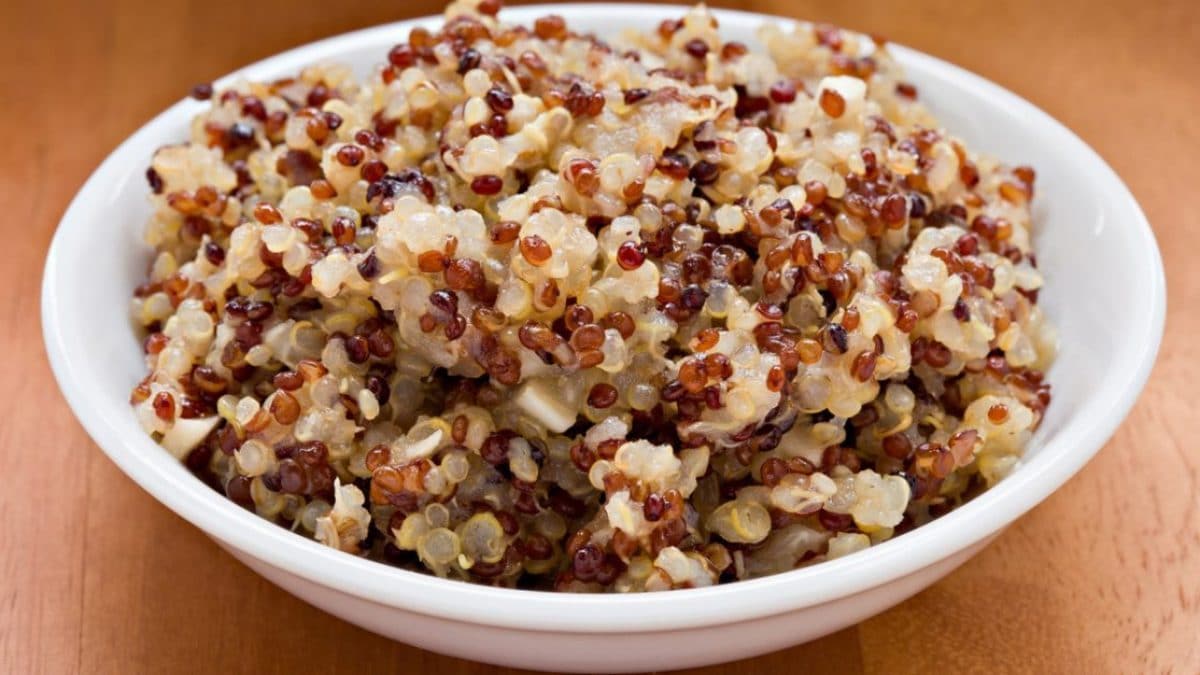
Both the seeds and leaves of the quinoa plant are edible, but there's virtually no trace of them in our diet. What we find on sale are the dried seeds, ready to cook, pre-steamed and ready to use, or as flour, suitable for bread, pizza, and crepes. When purchasing, it's best to rely on brands that guarantee the greatest possible sustainability, such as those labeled as organic or fair trade. Depending on the variety, the seeds come in three different colors— white, red, and black —both in separate packages and in a mix. Before cooking, quinoa doesn't need to be soaked, but it does need to be rinsed thoroughly under running water to eliminate any saponin residue, which, as mentioned above, can give the final dish an unpleasant bitter taste. There are essentially two cooking methods:
- By absorption, as when making classic risotto, the liquid part (water or broth) is gradually added.
- Boiled, in this case the proportions between liquid (water, broth or milk) and quinoa are 2:1.
- Once hydrated, quinoa doubles its initial volume.
From here, let your imagination run wild, because this food can be used in countless recipes. Let's start with savory ones: you can create fresh, light salads, like quinoa with vegetables, or fish-based main dishes, like quinoa with shrimp, or something tasty like the ever-delicious quinoa meatballs or healthy, tasty quinoa burgers. On the sweet side, we have quinoa biscuits, perfect for breakfast.

;Resize,width=767;)
