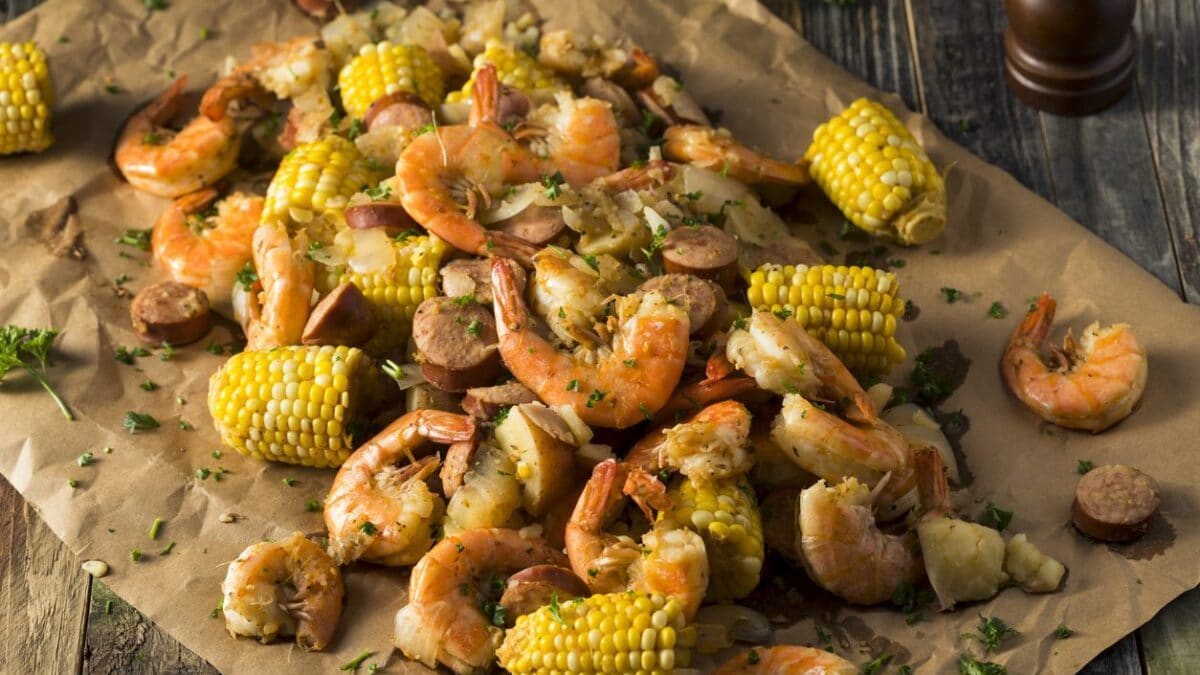
A bag filled with shrimp, crab, potatoes, corn on the cob, and mussels arrives at the table still hot, is opened, and the contents are dumped onto paper towels, without plates or cutlery: it's the seafood boil, a dish popular in the Southern United States that today can be found even in restaurants far from its native lands. Behind this unusual service are several regional traditions, from Louisiana crawfish to the shrimp boil typical of the coast between South Carolina and Georgia.
What is a Seafood Boil and What Are Its Origins?
The seafood boil is not a single recipe, but a collection of preparations born in the Southern United States, where seafood and inland waters play an important role in the local cuisine. The principle is to cook shellfish and side dishes in a large pot, flavoring the water with herbs and spices: the ingredients vary depending on the area, as do the level of spiciness and the method of seasoning. In Louisiana, the best-known tradition is the crawfish boil, prepared with crawfish, small freshwater crustaceans similar to shrimp. Their consumption has ancient roots, but the large collective boil, as we know it today, became especially popular in the twentieth century, becoming a typical springtime event and a popular outdoor gathering.
Further east, between South Carolina and Georgia, the Lowcountry boil developed, linked to the cuisine of the coastal region and the traditions of the African-American Gullah Geechee communities, descendants of Africans deported to the plantations on the southeastern coast of the United States. Here, the most characteristic combination includes shrimp, potatoes, corn, and smoked sausage. The two preparations have different ingredients and histories, but they share the same cooking in large quantities and serving at the center of the table.
Seafood Boil's Ingredients and Preparation Method
The most common versions combine shrimp, crab, potatoes, and corn cobs, to which, in contemporary cuisine, mollusks such as mussels are often added. In several traditions, such as the Lowcountry boil, smoked sausage is a key ingredient, while other recipes focus solely on shellfish: the choice depends on the regional variation and the availability of ingredients. Cooking begins in a pot of water flavored with salt, garlic, onion, and lemon: bay leaves, black pepper, and cayenne pepper, or pre-made spice blends, are often added. In Louisiana versions, the seasoning tends to be bold and spicy, while other preparations are more delicate and allow the flavor of the shellfish to shine through.
As for preparation, despite what you might think from the final appearance, the ingredients aren't necessarily immersed all at once: potatoes require longer cooking times than shrimp and shellfish, which risk becoming rubbery if overcooked. Once ready, they're drained and combined for serving. In many restaurants, the dish is finished with a sauce made from butter, garlic, and spices, sometimes enhanced with chili pepper. The dressing is spread over the ingredients and collects at the bottom of the bag or on the paper towel, along with the juices from the preparation.

Why Does Seafood Boil Get Spilled Directly Onto The Paper-Covered Table?
The service is one of the most recognizable aspects of a seafood boil. The ingredients are drained, placed in a bag or container, and then poured onto a table covered with food-safe paper: the food remains in the center, available to everyone, rather than being divided into individual portions. But the main reason for this arrangement is related to the way the dish is consumed: whole crabs and shellfish must be opened by hand to extract the meat, while shrimp are shelled before being eaten. The sauces also make the whole thing rather messy, so much so that in specialized establishments it's not uncommon to find bibs and napkins.
The bag, opened directly at the table, has become particularly popular in contemporary restaurants because it helps distribute butter and spices and makes the moment when the food is poured into the dish part of the experience. However, this is not the origin of the tradition: the seafood boil exists in different regional forms, and the bag is one of the ways it is presented today.

The Most Common Seafood Boil Variations
The Louisiana crawfish boil revolves around crawfish, which are cooked in large pots with potatoes, corn on the cob, and intense seasonings, often garlic and chili. In Louisiana, this preparation is especially associated with spring, local festivals, and outdoor gatherings. The modern spread of the crawfish boil has been accompanied by the growth in production and the popularity of events dedicated to the shellfish, such as the Breaux Bridge Festival.
The Lowcountry boil, also known as Frogmore stew, is typical of the coast between South Carolina and Georgia: the traditional ingredients are shrimp, potatoes, corn, and smoked sausage. The name Frogmore comes from a location on the island of St. Helena, South Carolina, while Lowcountry refers to the coastal region where the preparation has become part of the local cuisine. Alongside these two versions, there are boils focused on crab or other shellfish, with variations in spices and accompaniments. The ingredients and flavors vary, but the principle remains: a great dish to be brought to the center of the table and eaten with your hands.

