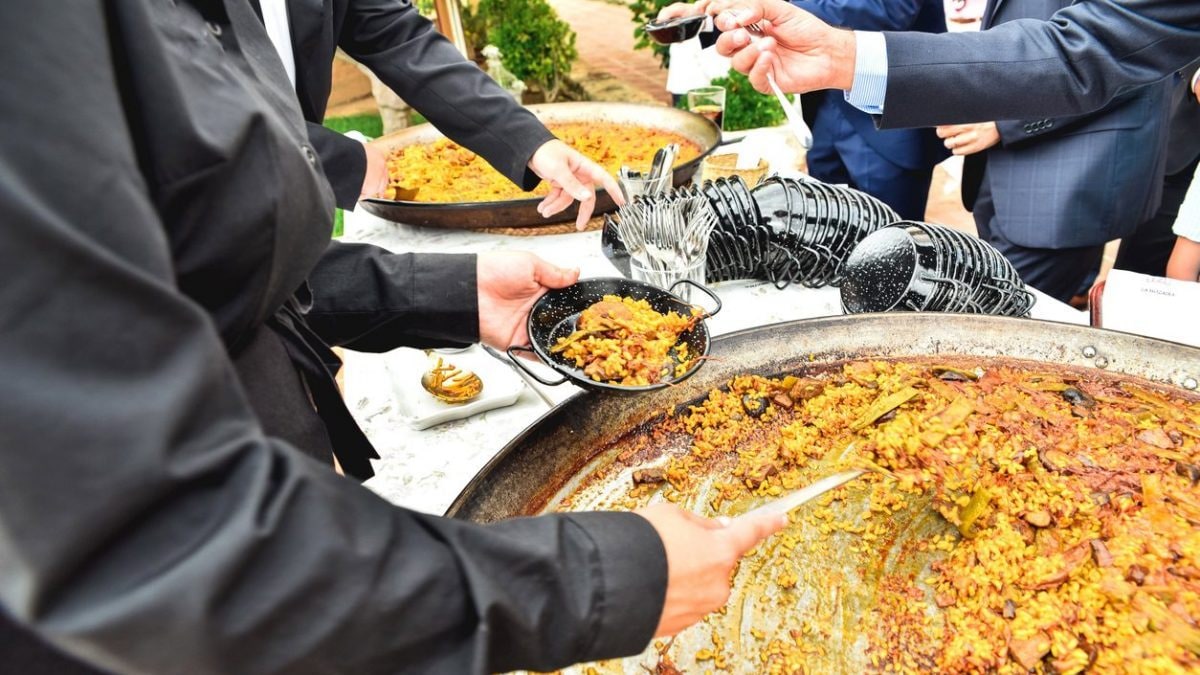
There's a precise moment, when the paella rests on the fire and the scent of rice and spices fills the air, when something magical happens. It's hidden beneath the golden layers of grains and ingredients, hidden beneath the socarrat, the crust that reveals the authentic soul of Valencia.
A Word That Smells of Tradition
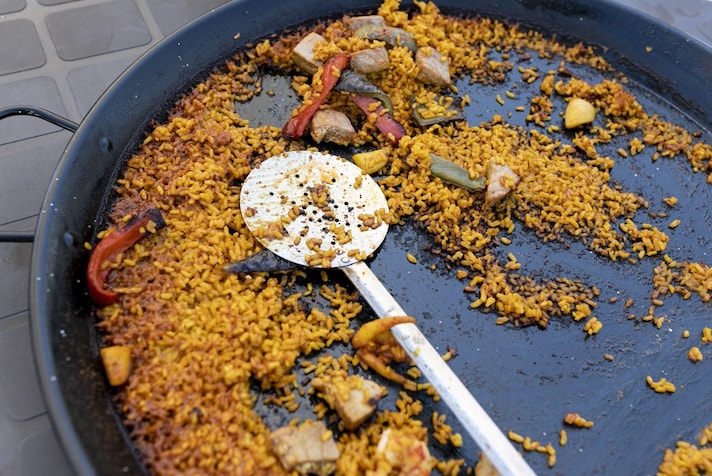
The term socarrat comes from the Valencian dialect and means "slightly burned." It's a misleading name, because it doesn't refer to burnt rice, but rather a thin, crispy crust that forms on the bottom of the paella pan, the large, wide, flat pan. Golden, fragrant, and irresistible, this part is considered the true heart of the dish, so much so that for Valencians, a paella without socarrat is like an unfinished story. It's no coincidence that there's a local saying: "Qui no menja socarrat, no sap què és menjar paella," meaning, "He who doesn't eat socarrat doesn't know what it means to truly eat paella."
The Art of Fire and Patience
The birth of socarrat is a moment suspended between technique and instinct: after the rice has absorbed almost all the broth, the direct heat of the flame evaporates the residual moisture and begins to caramelize the sugars naturally present in the ingredients. It is at that moment that the paella begins to "speak": a light sizzle announces that the long-awaited crust is forming beneath the surface. It is a fragile moment, in which the chef must be able to recognize the signals: a dry sound, a toasted aroma, the promise of an intense flavor.
Making socarrat requires experience, but also respect for the rice's timing. Once it's placed, it shouldn't be touched again: it's the heat, not the ladle, that works the magic. The heat must be lively at the beginning, gentle during cooking, and strong at the end, providing that final kick needed to caramelize the base. The cook relies on hearing and smell more than sight, letting the senses guide the perfect moment. In some families, the task of "listening" to paella is a ritual passed down from generation to generation: grandparents teach their grandchildren to recognize that unmistakable sizzle, as if it were a family secret.
A Pleasure to Share
Socarrat isn't just a technique, it's a ritual that unites. When the paella arrives at the table, everyone dips their spoon into their own section, but true enthusiasts know that the real reward is at the bottom. In Valencian families, that crust is often a source of smiles and petty disputes, and there are those who tell of grandparents who "scolded" the younger ones if they took too much socarrat without sharing it with the others. The chef, for his part, observes with satisfaction: the socarrat is proof that he has respected tradition, and offering a bit to everyone is a source of pride.
The Essence of Paella
In that hidden, crispy corner lives the very philosophy of paella: simplicity, care, and sharing. It's not a cooking error, but a reward, a milestone that transforms a popular dish into an unforgettable experience. Seeking it means discovering the true soul of Valencian tradition. So, the next time you taste paella, don't stop at the bright colors of the surface: dig to the bottom and be surprised by its most precious treasure, the socarrat.
;Resize,width=767;)
