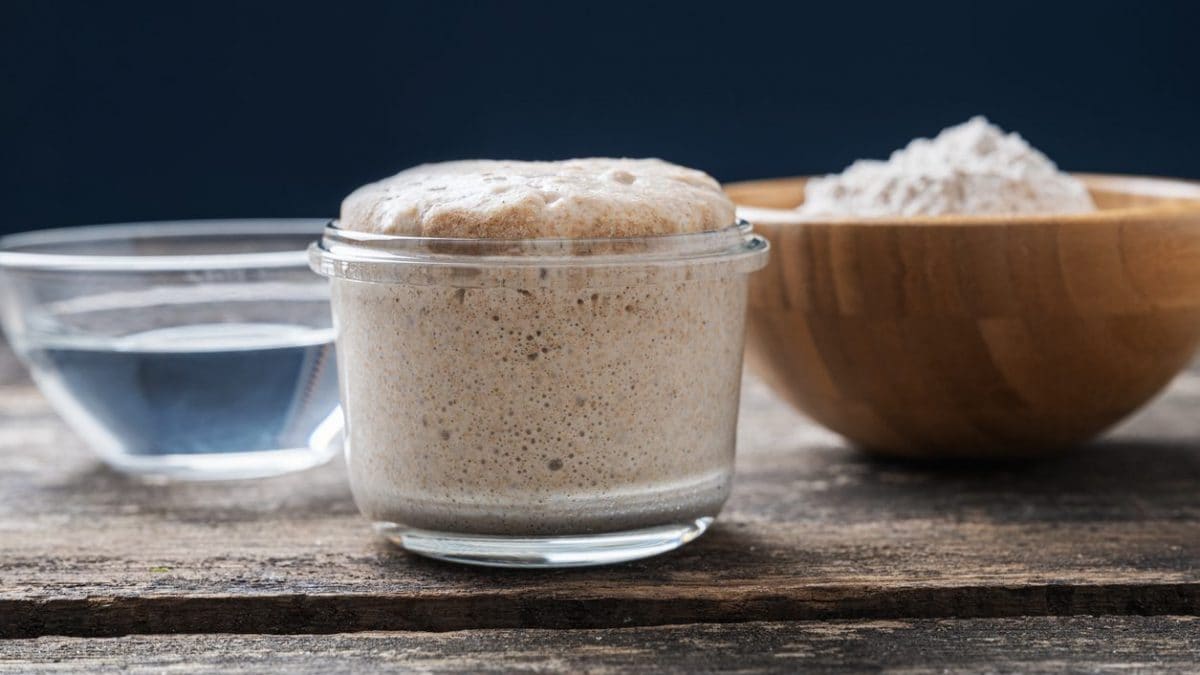
Anyone who makes bread and other leavened products with sourdough starter knows that caring for it requires consistency. To keep it healthy, it must be refreshed regularly, meaning fed with fresh flour and water, typically every 24 hours if used daily or kept at room temperature, or once a week if stored in the refrigerator. This process, which ensures the yeast's vitality, often requires discarding part of the previous dough: this is where the excess arises. However, this isn't an ingredient to be thrown away, but rather a portion that hasn't been refreshed and, while still having the same leavening capacity, can be easily recovered. Simply store it in the refrigerator, in a sealed container, for up to two days and it can be used in a variety of recipes, from piadina to breadsticks to pancakes. This reduces waste and gives the starter another chance.
What is Sourdough Surplus?
When we talk about sourdough, we're referring to a fermented dough usually composed of flour and water, containing a living community of yeasts and lactic acid bacteria that has its own life cycle (refreshment, leavening, maturation, and collapse). It can be solid or liquid. To keep it active, it needs to be refreshed by adding new flour and water in proportion to the desired level of hydration. Not all sourdough, however, is refreshed: only the amount needed for the recipes we need to prepare and to maintain the microorganisms is taken. Sourdough that isn't refreshed is called "surplus" because it's discarded. Where does it end up? Often in the garbage, as it has lost its leavening power and may have started to develop more acidic notes. The same sourdough left in the refrigerator for a long time (on average more than 5-7 days) without being revitalized can be considered surplus. These factors of decay, in reality, don't prevent its use.

How to Use Sourdough Surplus
Using sourdough surplus in the kitchen is an excellent strategy for experimenting with waste-reducing savory and sweet recipes that all require less time to rise, such as wraps, crackers, pancakes, waffles, shortcrust pastry, and biscuits. In these cases, sourdough surplus is a weak leavening agent: it can be added directly to the dough or dissolved in the milk or water required for the recipe. However, you must always consider its flour and water content to balance the quantities: we suggest two delicious ideas: croissants, soft and perfect for breakfast, and breadsticks, crunchy and ideal for enriching a bread basket or as an aperitif.
;Resize,width=767;)
