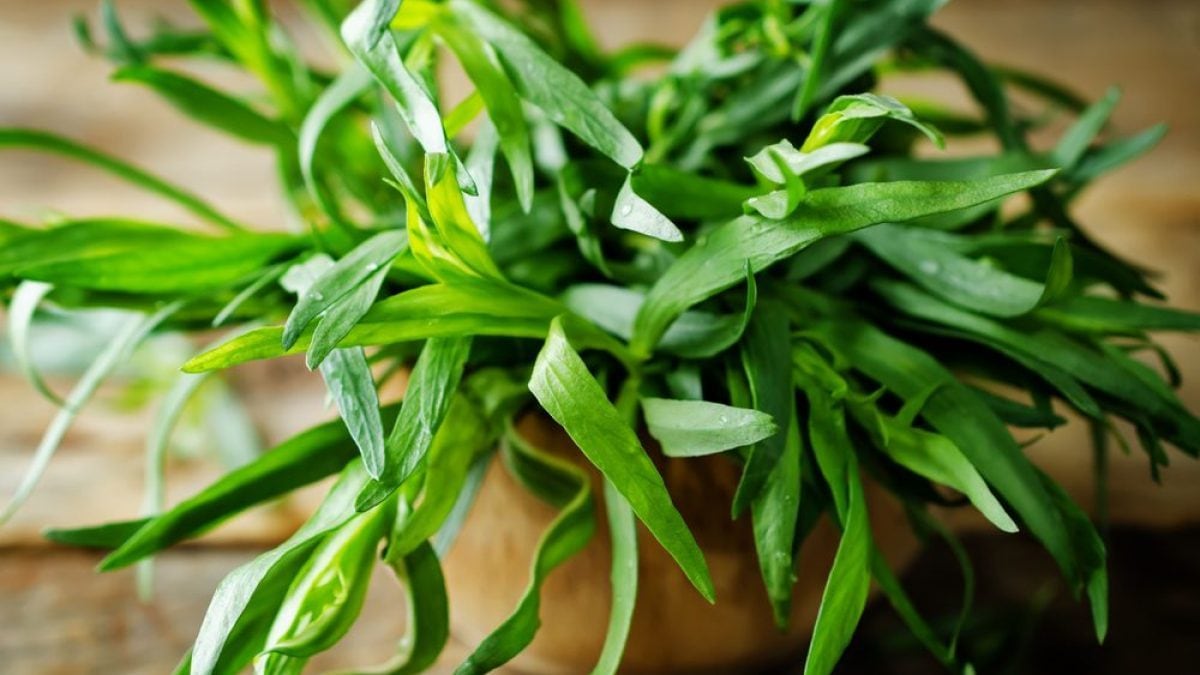
Tarragon, or estragon, is an ingredient halfway between a spice and an aromatic herb, fascinating even from its botanical name, Artemisia dracunculus, which hides a mysterious etymology, uniting characters from Greek mythology with legendary creatures. Artemisia, in fact, may derive from Artemis, the goddess of the hunt, from Queen Artemisia of Caries, the ruler who built the Mausoleum at Halicarnassus, considered one of the Seven Wonders of the Ancient World, or from the Greek word artemes, which literally means "healthy," referring to the therapeutic properties for which tarragon has been renowned for centuries.
Its leaves are dragons, or rather, dragon flames, and their tapered shape resembles tongues of fire spewing from its jaws. In short, we are faced with a vegetable that has something evocative and elegant: it belongs to the Asteraceae family, comes from Russia and Mongolia, and is grown almost all over the world, including Asia, America, and Europe. There are two main varieties: French tarragon (Artemisia dracunculus var. sativa) and Russian tarragon (Artemisia dracunculus var. dracunculoides), with the former prevailing in terms of value, thanks to its intense aroma, while the latter is more rustic and less odorous. All that remains is to discover this plant, from its properties to how to use it in the kitchen.
Properties and Benefits
Tarragon has long been used in traditional Asian medicine, as its medicinal properties have been attributed to it since ancient times: it is digestive, analgesic, antipyretic, antibacterial, and anti-inflammatory, all characteristics that modern scientific studies tend to confirm, with even potential antioxidant properties added. From a nutritional standpoint, it is a food composed primarily of water, which contains good quantities of vitamin A and vitamin C, important for vision, skin, and the immune system, and mineral salts, especially potassium, calcium, magnesium, and phosphorus. A positive overview, in which we can recognize the following benefits.
It Aids Digestion and Reduces Abdominal Swelling
One of the most traditional uses is that of tarragon in the form of a digestive and carminative infusion: in addition to contributing to the production of gastric juices, making digestion faster and more effective, it is used to reduce the formation of intestinal gas, alleviating the sensation of heaviness and bloating.
Antiseptic, Antibacterial and Anti-Inflammatory
Tarragon is known therapeutically for its antiseptic, antibacterial, and anti-inflammatory properties. In popular use, it is especially indicated as a soothing agent to soothe irritations in the mouth and throat.
Stimulates the Appetite
The slightly bitter taste typical of its leaves acts on the taste receptors, stimulating the appetite, just like what happens with other bitter vegetables, such as chicory or rocket: it thus helps the body prepare for digestion, making the entire process more efficient.
Antioxidant Effect
Tarragon leaves are rich in polyphenols and essential oils: pharmacological studies have highlighted their antioxidant power, thus acting against free radicals responsible for cellular aging.
Regulates Blood Sugar Levels
Some research, although still preliminary and not definitive, suggests that tarragon extract may promote better insulin sensitivity, contributing to the stabilization of blood sugar levels.
Salt Substitute
Tarragon's role as a salt substitute in seasoning foods should not be underestimated. Reducing sodium intake is increasingly important as part of a healthy diet, and spices and herbs in general are becoming valuable allies.
Contraindications
Let's get this straight: tarragon consumption is considered mostly harmless. As with all foods, however, it's important to be careful not to overdo it, especially during pregnancy and breastfeeding. This is because there's still no certainty about the potential harmful effects of estragole. This substance, found in tarragon essential oil and also derived from other plants, is classified as a natural genotoxic compound —meaning it can damage DNA—and a carcinogen. For example, in 2025, the EFSA was unable to declare its presence in fennel seed- based products for children and infants, such as infusions and spice blends, completely safe, having failed to establish a safe level of exposure.
How to Use it in Cooking
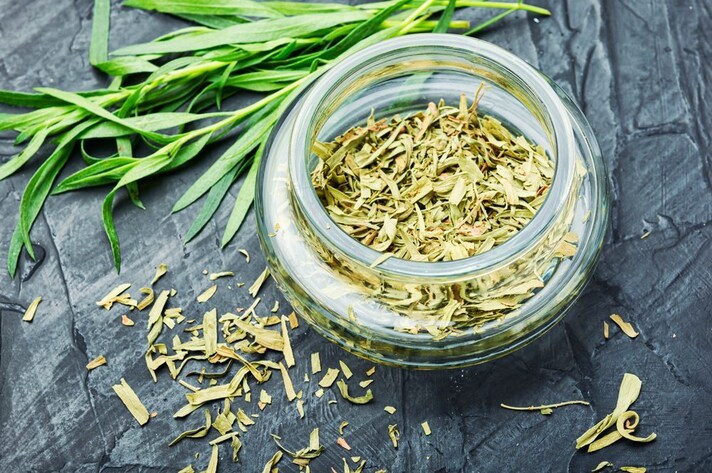
Compared to other herbs and spices, tarragon is less common in our pantries, widespread in the cuisine of the Northeast (especially New England), the West (California, Oregon and Washington) and in the Mid-Atlantic (New York, D.C. and Pennsylvania) where the protagonists are the leaves, both fresh (which maintain a beautiful bright green) and dried, with the latter concentrating the aroma more. What scents are we talking about? They are reminiscent of a cross between parsley and anise, and a small amount is enough, given that the scent is invasive. The most used variety is the French one, because, as seen at the beginning, it is more aromatic than the Russian one: to avoid losing the fragrance, it is added at the last minute, as a garnish or in sauces, above all Béarnaise, or based on yogurt, sour cream and vinaigrette.
In France, tarragon vinegar is very popular for seasoning salads and vegetables, and tarragon mustard, which stands out, in addition to its flavor, also for its bright green color. It pairs perfectly with white meats like chicken and turkey, with fish like trout and salmon, ideal as an ingredient in a wine or lemon marinade, and with eggs, adding a touch of class to frittatas and omelets. A top pairing? With avocado, for example, enriching a mayonnaise or a cream made with the fruit pulp.
;Resize,width=767;)
