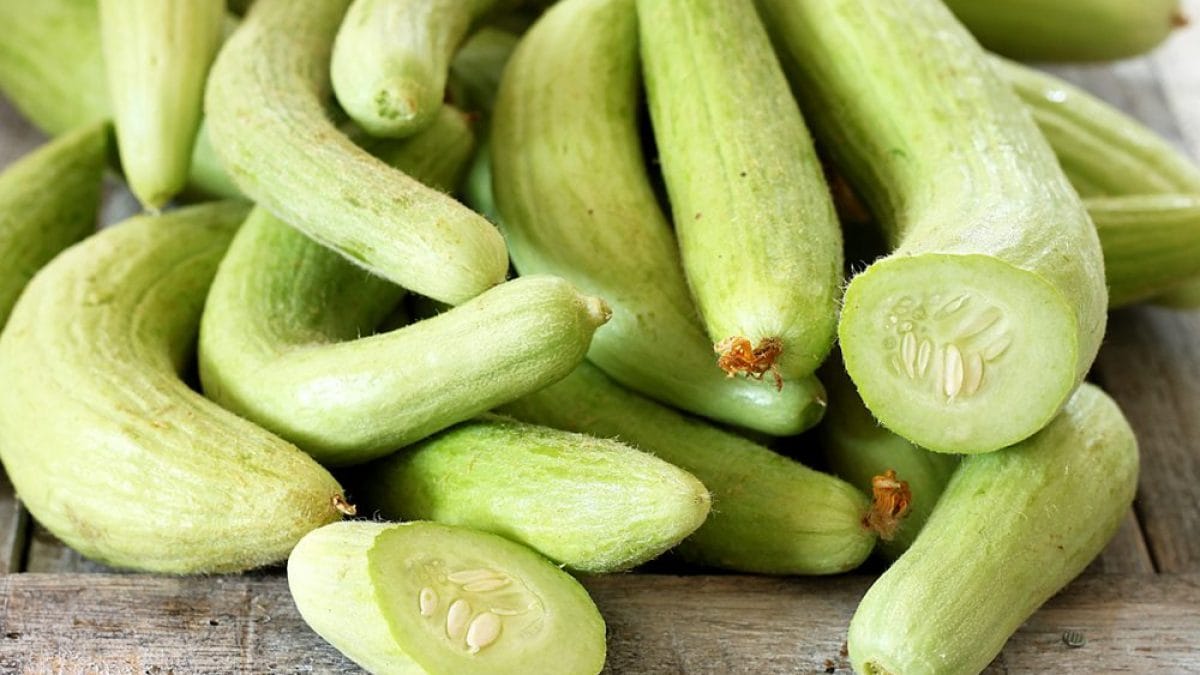
With the summer season proceeding in full force, the desire for fresh, thirst-quenching dishes is palpable. However, there's one variety that's bursting with anticipation: the Armenian cucumber. It's one of the earliest choices in the vegetable world, a true garden sprinter that can be harvested early in the season, several weeks ahead of traditional varieties that require months of full sun to ripen.
This fruit's appearance can be deceptive: it has an elongated, thin, and sinuous shape that resembles a cucumber. Known in the rural tradition of Central Valley primarily as snake melon (and closely related to the Cucurbitaceae family), this ingredient is botanically a melon, but it is consumed in a completely different way than the classic sugary slices served after a meal.
A Melon That is Eaten Like a Vegetable
From a scientific standpoint, the classification is clear: it is Cucumis melo var. flexuosus. Its uniqueness lies entirely in the timing of its harvest: while cantaloupe or melon are left on the plant until the flesh turns sweet and orange, snake melon is harvested immature, when the skin is still light green. In cooking, it is therefore used like a normal cucumber, but has an edge: it is free of cucurbitacin, the substance that makes cucumbers difficult for many people to digest. Snake melon is thus light, fresh, and tolerated by everyone. It is called the Armenian cucumber internationally because Armenia is one of its historical areas of distribution.
Its earliness is the real advantage of this plant, whose first fruits are ready for harvest as early as July thanks to its rapid growth, reaching and exceeding 50 centimeters in length in just a few weeks. Unlike other summer fruits, however, the snake melon has a thin skin that doesn't protect it from dehydration for long, which is why it isn't designed to last in the pantry and must be eaten within a few days to fully appreciate its typical crunchy texture. Inside, the flesh is light, firm, and uniform: if the fruit is picked at the right time, the central cavity hasn't yet formed, and the seeds remain so small and tender that they're almost imperceptible when chewed. The resulting flavor is very delicate, characterized by fresh, herbaceous notes and a distinctly thirst-quenching taste, with a slightly sweet finish that reveals its authentic botanical origins without having the intense aroma of classic melons.

How to Choose The Best Snake Melon
When purchasing it from the greengrocer or in local markets, it is important to evaluate the size, preferring young fruits that are between 30 and 40 centimeters long: if they are too large or thick, in fact, the pulp risks becoming spongy and the seeds inside harden, compromising the consistency.
You should then examine the rind, which should be opaque, light green, and covered with a fine fuzz, a sign that the fruit has been recently picked. Finally, check the consistency to the touch: the body should be firm and rigid, because if it bends too much or feels elastic, it means the melon is losing its natural freshness.

How to Use Armenian Cucumber
As a fruit that replaces salad greens, snake melon is at its best in cold and savory dishes. Peeling is not necessary, as the skin is thin and devoid of bitterness; if you want to eat it with the peel, choose an organic or untreated product, wash it carefully, remove the ends, and cut it into rounds or cubes depending on the preparation.
In the U.S., Armenian cucumber is often enjoyed fresh and simply, highlighting its crisp texture and mild, slightly sweet flavor. It’s commonly sliced thin for salads, served in sandwiches, or used as a crunchy topping for bowls and wraps. Some people pickle it, either whole or in spears, while others spiralize it as a low-carb noodle substitute. Like in Southern Italy, its appeal lies in its simplicity—often dressed lightly with olive oil, a sprinkle of salt, and a squeeze of lemon to let the natural flavor shine.
Another essential traditional use is that of acquasale: in this ancient peasant recipe, snake melon is combined with stale bread previously soaked in water, ripe salad tomatoes chopped by hand, finely chopped red onion, and a generous handful of dried oregano. The whole dish is then drizzled with plenty of extra virgin olive oil, leaving the dish to rest for a few minutes so that the juices of the melon and tomato blend with the bread.

In addition to classic preparations, the crunchy texture and total digestibility of this fruit allow it to be included in more contemporary summer salads. It pairs divinely with early-season cherry tomatoes and Tropea onions, but also creates a perfect contrast when paired with Greek feta or artisanal ricotta salata, where its natural sweetness balances the strong saltiness of the cheeses. Those who love fresh and aromatic flavors can serve it in an emulsion of delicate extra virgin olive oil, lime juice, freshly ground black pepper, and fresh mint or basil leaves. This combination enhances its thirst-quenching effect, making it an ideal side dish to lighten grilled fish dishes or white meats.
;Resize,width=767;)
